MARIANI’S
Virtual Gourmet
MARCH 29, 2026
NEWSLETTER
Founded in 1996
ARCHIVE

MILAN, Part Two
NEW YORK CORNER
PAOLA'S OSTERIA
By John Mariani
THE BISON
CHAPTER FIFTEEN
By John Mariani
NOTES FROM THE WINE CELLAR
MICHEL ROLLAND, WINE CONSULANT, DIES AT 78
By John Mariani
MILAN, Part Two
By John Mariani

The Galleria Vittorio
Emanuele II is set between the sacred (Il
Duomo) and the profane (La Scala) and has
never been more scrubbed to show off its
magnificence, which includes the legendary Savini
Milano 1867, here since 1884, that has
hosted everyone from Giuseppe Verdi and
Giacomo Puccini to Maris Callas and Frank
Sinatra. Taken over in 2008 by the Gatto
family, everything has been refreshed and the
food, once dated, is now very good––you must
have the spaghetti in a duck ragù with
autumn’s white truffles. Young chef Mario
Massa offers a five-course meal at €160 as
well à la carte, including risotto with
chestnuts, snails and bergamot; San Pietro
fish in casserole; and a date pudding with
mascarpone, caramel and orange.
 When it opened in
1962 Il Luogo di Aimo e Nadia (Via Privata
Raimondo Montecuccoli, 6 ) was
quite in the forefront of the la nuova
cucina movement, and, though the food
is now not so experimental it is better than
ever, and the colors and presentations of
everything in
the room are dazzling. Stefania Moroni,
daughter of Aimo and Nadia, together with
chefs Alessandro
Negrini and Fabio Pisani now
create unusual dishes like scampi with hot
chili pepper, lard and almonds; sweetbreads
with rosemary; and crustaceans,
roasted carrots, and cardamom in a French
Charon sauce and squab are among so many
sumptuous dishes. The cordiality and handsome
looks of the dining room are exquisite
reminders of elaborate Milanese design. The
cost is high but this is a special occasion
spot.
When it opened in
1962 Il Luogo di Aimo e Nadia (Via Privata
Raimondo Montecuccoli, 6 ) was
quite in the forefront of the la nuova
cucina movement, and, though the food
is now not so experimental it is better than
ever, and the colors and presentations of
everything in
the room are dazzling. Stefania Moroni,
daughter of Aimo and Nadia, together with
chefs Alessandro
Negrini and Fabio Pisani now
create unusual dishes like scampi with hot
chili pepper, lard and almonds; sweetbreads
with rosemary; and crustaceans,
roasted carrots, and cardamom in a French
Charon sauce and squab are among so many
sumptuous dishes. The cordiality and handsome
looks of the dining room are exquisite
reminders of elaborate Milanese design. The
cost is high but this is a special occasion
spot.
I was
very saddened to hear of the passing of the
owner of Al Matarel (Via L.S.
Mantegazza 2),  Giobatta
Comini,
in 2015, but this darling trattoria thrives
under the stewardship of his wife Elide, who
has always been the force in the
kitchen. The premises are cozy, with a huge
fantastical mural. The specials are always
wonderful, like the rustin n'ga, a
succulent layering of of pink veal and roast
potatoes cooked together. There is also osso
buco with saffron-scented risotto––one
of the best of this prototypical Milanese dish
in the city. Also a plate of tender ribbons of
pasta glossed with just butter and parmigiano
is simple and perfect. For dessert, the dense
chocolate cake will bring you to tears after a
meal so satisfying, so honest, so perfect.
Giobatta
Comini,
in 2015, but this darling trattoria thrives
under the stewardship of his wife Elide, who
has always been the force in the
kitchen. The premises are cozy, with a huge
fantastical mural. The specials are always
wonderful, like the rustin n'ga, a
succulent layering of of pink veal and roast
potatoes cooked together. There is also osso
buco with saffron-scented risotto––one
of the best of this prototypical Milanese dish
in the city. Also a plate of tender ribbons of
pasta glossed with just butter and parmigiano
is simple and perfect. For dessert, the dense
chocolate cake will bring you to tears after a
meal so satisfying, so honest, so perfect.
 Paper
Moon (Via
Bagutta, 1). Located smack within the
fashion district, Paper Moon may not have
invented the thin-crust pizza, though maybe
they did. In any case this is a very chic restaurant
as well as a place everyone goes for 13
varieties of pizza, along with potato
gnocchi lavished with Gorgonzola, and risotto,
simply cooked with butter and parmigiano. Pio
Galignani and his wife, Enrica Del Rosso
opened Paper Moon (named after an American
movie with Ryan and Tatum O’Neal) in 1977,
decked out in cool white, black and beige,
with reed table mats and wicker chairs, roses
everywhere and an array of Italian and
international movie star photos you'll
recognize.
Paper
Moon (Via
Bagutta, 1). Located smack within the
fashion district, Paper Moon may not have
invented the thin-crust pizza, though maybe
they did. In any case this is a very chic restaurant
as well as a place everyone goes for 13
varieties of pizza, along with potato
gnocchi lavished with Gorgonzola, and risotto,
simply cooked with butter and parmigiano. Pio
Galignani and his wife, Enrica Del Rosso
opened Paper Moon (named after an American
movie with Ryan and Tatum O’Neal) in 1977,
decked out in cool white, black and beige,
with reed table mats and wicker chairs, roses
everywhere and an array of Italian and
international movie star photos you'll
recognize.
Milan
has so many homey, family-run trattorias
throughout the vast city, and one of the best
near the  Brera
art musuem is Rovello 18 (Via
Tivoli 2). It’s been here since 1950,
now run by the third generation of the de
Liguoro family. Downstairs is small,
cozy room, upstairs a slightly more spacious
one, with beamed ceilings, modern Italian art,
a wine cabinet, white tablecloths, Murano
glassware and very good lighting throughout.
Prices are remarkably modest. You might begin
with artichokes with a creamy fonduta that
had been browned on the top with hazelnuts,
then move on to a risotto laced with strong
taleggio cheese or spaghetti
alla chitarra with hot chili
peppers, puntarelle greens
and guanciale ham.
Brera
art musuem is Rovello 18 (Via
Tivoli 2). It’s been here since 1950,
now run by the third generation of the de
Liguoro family. Downstairs is small,
cozy room, upstairs a slightly more spacious
one, with beamed ceilings, modern Italian art,
a wine cabinet, white tablecloths, Murano
glassware and very good lighting throughout.
Prices are remarkably modest. You might begin
with artichokes with a creamy fonduta that
had been browned on the top with hazelnuts,
then move on to a risotto laced with strong
taleggio cheese or spaghetti
alla chitarra with hot chili
peppers, puntarelle greens
and guanciale ham.
NEW YORK CORNER
1246 Madison Avenue
212-923-5820
By John Mariani

Pappadelle with boar ragù
Manhattan’s
Upper East Side has never lacked for good
Italian restaurants, with a long legacy of
excellence exemplified in the past by Parioli
Romanissimo, Il Monello, Il Nido, Coco Pazzo,
Sandro’s and others. One of the mainstays has
been Paola’s, which dates back more than three
decades, now in its present location in Carnegie
Hill for the past seven, under the ownership of
Fabrizio di Mitri and Armand Alicka. So it’s
a good place to know about if you’re visiting
the Guggenheim or Metropolitan Museum of Art.
 It's a smart
but comfortable dining room, rather loud until
8:30 o’clock but fine after that. The patterned
ceilings are timbered, the floors black-and-white
tiles, the chairs bentwood, the tables uncovered
but with mats, with a mirror on one wall that
expands the space a cross from the bar.
It's a smart
but comfortable dining room, rather loud until
8:30 o’clock but fine after that. The patterned
ceilings are timbered, the floors black-and-white
tiles, the chairs bentwood, the tables uncovered
but with mats, with a mirror on one wall that
expands the space a cross from the bar.
Paola’s clientele is very
local and very devoted, and the place draws a good
number of New York- and foreign based celebrities
that has included Scarlett Johanssen, Robert
DeNiro and Paul McCartney.
The wine
is 200 labels strong, with a cellar—and a very
lovely cellar it is for private dining—holding
about 3,000 bottles.  Prices have
fair-minded mark-ups, with most whites under $100.
Prices have
fair-minded mark-ups, with most whites under $100.
Like so
many trattorias these days, Paola’s serves
pizzas––11 of them––done in the soft-crust
Neapolitan style––ranging from $26 to $34.
I shared
an antipasto misto with a friend, but it
would certainly serve more, composed of a
selection of Italian sausages, prosciutto, cheese,
olives, truffle, honey and nuts. Supplì di
granchio are crabcakes with a creamy red
pepper sauce.
 There are
eight housemade pastas on the menu and I was able
to try four, in smaller portions, every one cooked
to the perfect firmness, beginning with a rich
version of cacio e pepe made with
tonnarelli,
and pasta once fashionable but rarely made
anymore––paglia e fieno, which means “straw
and hay,” referring to its two colors of tagliolini,
one white, the other spinach green, done in a
light cream sauce with mushrooms (right).
The tagliatelle alla bolognese was a
classic mix
There are
eight housemade pastas on the menu and I was able
to try four, in smaller portions, every one cooked
to the perfect firmness, beginning with a rich
version of cacio e pepe made with
tonnarelli,
and pasta once fashionable but rarely made
anymore––paglia e fieno, which means “straw
and hay,” referring to its two colors of tagliolini,
one white, the other spinach green, done in a
light cream sauce with mushrooms (right).
The tagliatelle alla bolognese was a
classic mix  of
beef and pork and not too much tomato, while the
heartiest was wide pappardelle with a
wild boar ragù (left). As main
courses these run from $30-$48.
of
beef and pork and not too much tomato, while the
heartiest was wide pappardelle with a
wild boar ragù (left). As main
courses these run from $30-$48.
There
are no surprises among the entrees, from chicken
with lemon and very good mashed potatoes to saltimbocca
alla romana, and a massive veal chop, either
gilled or flattened, alla milanese.
Expertly
cooked and de-boned, drizzled with golden olive
oil, was a branzino with spring’s string beans and
purple potatoes. Scallopine of veal alla  Marsala
was a dated dish in an all-purpose brown sauce
that had little flavor of the Marsala and only
white mushrooms.
Marsala
was a dated dish in an all-purpose brown sauce
that had little flavor of the Marsala and only
white mushrooms.
For
dessert they serve homemade cannoli along with the
usual tiramisù, though you may opt for a Nutella
lavished pizza. They also offer six different
artisanal gelatos
There is
a good deal to be said for the tried-and-true when
the emphasis is on the true, which Paola’s does
very well for guests who expect their favorite
dishes to be on the menu and always taste the way
they like it. As Aristotle once noted, “We are
what we repeatedly do. Excellence, then, is a
habit.” After 26 years at Paola’s, Chef Nelson
Guaman has certainly mastered that habit to a
turn.
Paola’s Osteria is open
for lunch and dinner daily.
THE BISON
By John Mariani
Sanchez called that evening while
Katie and David were relaxing by the pool at
their hotel. She said that Susannah would
see them the next day, Sunday, after Mass at
St. Edward on North County Road.
 “I guess she’s a good Catholic, too,”
said David.
“I guess she’s a good Catholic, too,”
said David.
“God works in mysterious ways. ‛Let
he who is without sin cast the first stone.’
Care to come along?”
David made a face and shook his head.
“I’m just going to zone out at the beach.
Catch some rays. Drink a bloody Mary and eat
guacamole. I’ll meet you later.”
The next morning Katie took the car
to the Church of St. Edward, done in a
Spanish mission style Katie thought
resembled the Alamo. The pews were about
half full of the usual complement of older
women with rosaries, younger women who were
praying intently for some minor miracle and
young children in tow. All the women wore
hats or shawls over their hair. The priest
said the Mass in English but gave his sermon
in Spanish, speaking on the need for his
parishioners to contribute to the church’s
annual fund raising event to repair the
roof.
Katie spotted Susannah in the rear of
the church but decided to leave her alone
during the Mass. 
When the Mass ended, Katie blessed
herself, and walked out to find Susannah
waiting for the priest to come out and meet
parishioners. She was dressed in a skirt to
her knees and blouse with long sleeves, her
hair tied with a scarf. She
wore no make-up.
The priest came out and began
speaking with the parishioners, mostly in
Spanish, then seeing Susannah, took her
hands and said, “Ah, Haley, thank you so
much for the gift from you and your friends.
It is very much appreciated.”
Katie thought, “So her real name must
be Haley and she confides that to her
priest.”
Susannah saw Katie and came over to
her, smiling like a schoolgirl, and said, “I
know a café where we won’t be bothered.”
 The
two women drove off to Washington
Avenue—Susannah drove a white Acura—and
parked across from the Cortadito Coffee
House, which had a good complement of
Cubans. Susannah ordered a café con leche
and a pastelito pastry filled with
cream cheese and guava, and Katie took her
lead.
The
two women drove off to Washington
Avenue—Susannah drove a white Acura—and
parked across from the Cortadito Coffee
House, which had a good complement of
Cubans. Susannah ordered a café con leche
and a pastelito pastry filled with
cream cheese and guava, and Katie took her
lead.
Katie was not going to mention about
Susannah’s real name, unless she was willing
to give it to her. At first they just
indulged in small talk about the beautiful
weather, rain coming in that afternoon and
where Katie had been eating. Susannah said
she’d give her a list of good places to try.
“So, the man I met, this David, he’s
an ex-cop?” asked Susannah.
Katie explained David’s presence and
role in their investigation, which was
zeroing in on the charges of sex
trafficking.
“It’s absolutely true,” said
Susannah. “I was one of the girls he
trafficked. It’s been going on for years,
but Madam Sanchez wanted nothing to do with
it. She was the one who got me out of
Epstein’s clutches.”
“Well, how did he get hold of you?”
“Jeremy himself is never involved.
It’s Ghislaine who finds the girls and
entices them. Me and a girlfriend—I’m from
Gary, Indiana—were down in Palm Beach for
like a long weekend, and we were at the pool
at our hotel when Ghislaine came up to us.
She’s very charming and has that like nice
little British accent. Seemed so nice, tries
to act like a sister. So, we start talking
and she tells us Jeremy’s having this party
at his big mansion and like there’d be a lot
of important people there, some celebrities,
and we really should come. For two girls
from Indiana, that’s like quite a
proposition. Then she clinched it by saying,
‛You girls are so pretty. Have you ever
thought of modeling?’ Which we hadn’t. I
once won homecoming queen but that’s as far
as that went.”
“So you agreed to go.”
“Not only that, she took us to a
boutique where she knew the owner and told
us to pick out some new clothes—with her
guiding us to some very sexy party clothes.
I don’t know what they cost, but they were
like real expensive.  We found
out just how much while we were trying them
on and looked at the tags. Then Ghislaine
just piled them on the counter, whipped out
her credit card and told her friend to wrap
them up. Then she said she’d send a car to
pick us up at five, which turned out to be a
limo. My first time in one of those, and
there was an open bottle of Champagne in the
back. I didn’t even drink, but I tasted it
and liked it.”
We found
out just how much while we were trying them
on and looked at the tags. Then Ghislaine
just piled them on the counter, whipped out
her credit card and told her friend to wrap
them up. Then she said she’d send a car to
pick us up at five, which turned out to be a
limo. My first time in one of those, and
there was an open bottle of Champagne in the
back. I didn’t even drink, but I tasted it
and liked it.”
“What was your friend’s name?” asked
Katie.
“That doesn’t matter now, does it?
She’s back in Gary, I guess.”
“So what happened when you got to
Epstein’s house?”
“Well, we thought five was like a
little early for a party, but what did we
know? When we got there, Jeffrey, who is a
nice-looking guy, came out all smiles,
welcoming us, telling us to just relax
because no one was getting to the party till
nine. He was dressed in shorts or maybe a
bathing suit with like a robe over it. He
and Ghislaine sat on this huge sectional
couch in this huge room by the swimming
pool. They’re like asking us like a million
questions as if we were the most important
people in the room, then after a while,
Ghislaine says, ‛Jeffrey, wouldn’t these
girls make great models? They’re so young
and so fresh.' And Jeremy says, ‛And so
WASPy.’ I didn’t even know what that meant
at the time. Apparently white girls with
blonde hair and blue eyes were rare among
local models.”
“So what happened next?”
 “By
then it was after six and Jeffrey excused
himself, said he was going to lie down, and
Ghislaine says, ‛Jeffrey’s got these
terrible knots in his back muscles. He’s got
to lie down and usually he has a masseuse
come over but he couldn’t find one today and
he’s going to be a mess this evening at the
party.’ She then asks us if we could
possibly help by just, y’know, rubbing his
back muscles for a few minutes.”
“By
then it was after six and Jeffrey excused
himself, said he was going to lie down, and
Ghislaine says, ‛Jeffrey’s got these
terrible knots in his back muscles. He’s got
to lie down and usually he has a masseuse
come over but he couldn’t find one today and
he’s going to be a mess this evening at the
party.’ She then asks us if we could
possibly help by just, y’know, rubbing his
back muscles for a few minutes.”
“That didn’t seem way out of the
ordinary?”
“My friend did, but I was, like, I
guess a little in awe of the whole set-up,
and I said, sure, I’d give him a little rub
down for a minute. So Ghislaine leads me
into this darkened little red room and
there’s Jeffrey naked on his stomach with a
towel over his rear end.”
“And what did he and Ghislaine tell
you to do?”
“Ghislaine left the room, saying,
‛I’ll let you two be together,’ closes the
door and Jeffrey tells me where I should
massage his muscles. So, do I have to tell
you what happened then?”
“I’ve got a pretty good idea,” said
Katie.
“I mean I had like some hand-job
episodes with boys back in Gary, but that
was mostly playing around. I was scared of
what was going on in that room, but Jeffrey
wasn’t aggressive about it, so I did it and
that was that.”
“And what happened afterwards?”
“Jeffrey just laid there. Ghislaine
knocked, cracked open the door and said
something like ‛You wanna freshen up before
the party?’ like nothing had occurred. She
showed me to this big bedroom, where my
friend was waiting and asking me what
happened. I told her I’d tell her later,
then I took a long hot shower and took a
nap.”
“So how was the party?” asked Katie.
“Unlike any
I’ve ever been to. Not a whole lot of
people, almost all men acting way younger
than their age, and about an equal number of
beautiful girls; most of them looked Cuban.”
“Were any as young as you and your
friend?”
“No, not that I could tell. So, we
were feeling real out of place but Ghislaine
came over, like I said before, acting like
our sister, and said she wanted to introduce
us to this guy or that guy. And Jeffrey was
standing around putting his arm around the
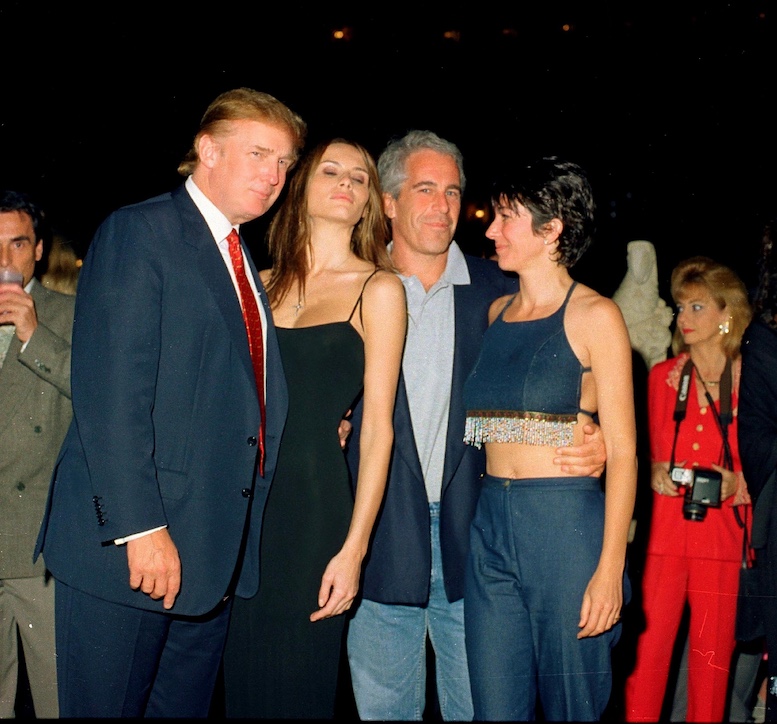
guys and the girls, with a photographer
taking pictures of everyone.”
“Did you see anybody famous at the
party?”
“I don’t read the papers, just like People
magazine, and there weren’t any of those
kind of celebrities there. Mostly older men
who looked like they were from up north,
‘cause nobody had a tan but the girls.”
“So what went on?”
“There was a lot of Champagne passed
around, and I drank a glass, maybe more, and
like everybody’s being friendly, the way
guys always are before they put the moves on
you. And Jeffrey introduces me to this one
guy, like maybe in his thirties, saying he’s
the head of a big modeling agency in New
York. Right away the guy—he said his name
but I forgot it—starts flattering me and
saying I like really had a great look and
he’d like to see what I looked like alone.
Jeffrey showed us to this room off to the
side, he closes the door and the guy like
tells me to strip. Just like that. I said no
way was I going to take my clothes off and
then he
pushes me on the couch.”
Susannah stopped talking.
“What happened then, Susannah?”
She looked intensely into Katie’s
eyes and said, “What do think? The little
prick raped me. And when he’s finished he
says he wanted to see me in New York. He’d
fly me up there and all this bullshit.”
“What did you say?”
“I just wanted to put my clothes on
and get out of there. I head for the door
and he says, ‛See you again soon.’ And when
I got out of the room, Ghislaine was like
still standing there, smiling that smile,
and noticing I was tearing up. She takes me
into the kitchen, gives me a Kleenex and
asks what happened. I told her, and she
says, like, ‛What did you expect?’ Like
nothing had happened! I said I just wanted
to go back to my hotel—my friend had already
left—and she put an envelope in my hand with
money in it, saying, ‛I wouldn’t tell anyone
about this. At your age it wouldn’t be a
smart idea. You’re in a lot of the photos
taken tonight,’ then says she’ll take me to
my room and that I could leave in the
morning.”
“Then?”
“I dropped my clothes bags
and looked into the envelope. There was
like two thousand dollars in there. I
fell asleep fast, and when I woke up
Ghislaine was in the kitchen with Jeffrey,
dressed in his shorts. He says, ‛Well, well,
you sure made an impression on” whatever his
name was and ‛he wants to shoot some photos
of you before you go home. He said he could
get you work fast because you’ve got a
special look and you’re so young.”
“And that’s how it started.”
“That’s how it started,” said
Susannah. “I never did go home. I never did
get to go to New York. Ghislaine said I
could like stay at the house for as long as
I wanted and swore that what had happened
the night before would never happen again.
But by then, I knew I could make the kind of
money I could only dream of back home. So I
stayed awhile.”
“How long?”
“I don’t know. Like four or five
months maybe. Then I turned eighteen, and it
was like Jeffrey didn’t want me around
anymore. That’s when I met Madam Sanchez,
who took me in but didn’t want to use me as
one of her girls. But a few weeks later I
was like out of money, so I started working
for Vargas. And here we are.”
Katie sighed, knowing any show of
sympathy would ring false. Instead she
asked, “During the time you were at
Jeffrey’s did you see any other underage
girls at parties?”
“All the time. Like every week,
unless Jeffrey and Ghislaine were in the
Caribbean or New York or wherever. Otherwise
the girls came and went.”
“Did you ever speak to any of them?
Warn them?”
Susanna rubbed the back
of her neck. “Whores don’t do that. Maybe I
felt guilty or maybe I felt like a sense of
satisfaction
that I wasn’t the only one they’d
corrupted.
I don’t know. I stayed away from
them.”
She paused, then said, “Wait, there
is one. Her name was Virginia Roberts (right).
Maybe that was a fake name, but I remember when
she arrived at one of the parties, she was
like seventeen, lived right here in town,
blond, blues eyes, the usual type, and
Jeremy hooked her up with this English
prince.”
“Was that Prince Andrew?”
“I don’t know. Is he like related to
the Queen?
“He sure is,” said Katie. “He’s her
son.”
“Well, that must have been him,
because I know what the other one looks
like, the one who was married to Princess
Diana? That was really sad what happened to
her.”
“Know anything more about this
Roberts girl?” asked Katie.
“Ghislaine told me she went to London
with her and to Jeremy’s place in the Virgin
Islands.”
“And seeing Andrew there?”
“Yeah, she even bragged about being
in the Queen’s castle.”
“Do you know where she is now?”
“Not a clue. Maybe
your cop friend can track her down.”
“Maybe so.”
With that Susannah said, “I hope you
get to expose all this bullshit, Katie. I’ll
be the first in line to testify, but,
nobody’s going to put a working girl in
front of a jury. Jeffrey’s lawyers would rip
me to pieces.”
“Have you thought of getting out of .
. . what you do?”
“All the time. I’m not like hopped up
on drugs like a lot of the girls. Never did
crack, no track marks on my lily white arms.
But it’s the life I’ve led now for a long
time, like three, four years, and Vargas is
not so bad. He knows I’m one his best girls,
best paid girls. The problem is,
what do I do if I get out? Like where am I
going to make the kind of money I do now?
What, go home and start college? Work as a
nurse’s aide? You ever
been to Gary? It’s not that easy a
decision, Katie.”
“No, I guess it isn’t.” Katie picked
up the check and thanked Susannah, wanting
to say, “You take care, Haley,” but stopped
herself.
Susannah said, “Y’know, Jeffrey’s very, very
well connected. He even threatened me—and
like, I’m nobody—if I ever told
anyone anything. He’s got a lot of power in
Palm Beach and a shitload of money. Watch
your back, Katie.”
With that she waved
goodbye, got into her Acura, honked twice
and drove off towards the mainland.
NOTES FROM
THE WINE CELLAR
By John Mariani

Controversial international
wine consultant––a job he largely created in the
industry––Michel Roland died
this week at his home in Bordeaux, France, at the
age of 78 from a heart
attack. In his position as advisor to wineries
around the world, he spent a
good deal of his time traveling, always first
class, from Napa Valley to Chile
and Australia, hired by estate owners who sought
to get the best from their
vineyards’ terroir.
Often his advice was crafted to produce
big, bold fruity wines with alcohol levels in excess
of 14% of a kind that won
awards and high ratings numbers from media like
Robert J. Parker’s influential Wine
Advocate and Wine Spectator that
consistently favored young red
wines that had not yet matured.
Known
for having a highly sensitive
connoisseur’s palate, capable of tasting a grape or
a wine to find its virtues
and deficiencies, Rolland sought to puzzle out how
to maximize a vineyard’s soil and
climate.
 His
clients included already
well-established and esteemed estates like
Bordeaux’s Château Figeac and La
Conseillante; California wineries Harlan Estate and
Screaming Eagle; and
Ornellaia in Tuscany. Often these wines went on to
win top awards and 95+
points from the wine media.
His
clients included already
well-established and esteemed estates like
Bordeaux’s Château Figeac and La
Conseillante; California wineries Harlan Estate and
Screaming Eagle; and
Ornellaia in Tuscany. Often these wines went on to
win top awards and 95+
points from the wine media.
Yet criticism within the wine world were
legion, with accusations that Rolland’s advice––long
hang time of grapes, over-ripeness,
low acid and early release––made his clients’ wines
taste very similar, in an
international style preferred back in the 1990s that
favored fruit and body. He
would often recommend a process called
micro-oxygenation by which small amounts
of oxygen are added to a wine to simulate the
effects of barrel-aging and lower
production costs by reducing  oak barrel requirements.
A 2004 documentary entitled “Mondovino,” a 2004 by
Jonathan Nossiter argued that
Rolland had diverted from the traditions of local
wine cultures in favor of
homogeneity.
Michel Noël
Rolland was born on Dec. 24, 1947, in Libourne,
France, and grew up at Château Le Bon Pasteur in
Pomerol, which his parents,
Serge and Geneviève Rolland, managed. He went on to
study oenology
at the University of Bordeaux, where he met his
wife-to-be, Dany Bleynie (below), a
medical student, with whom he bought Laboratoire
Rolland in 1976 where they
would analyze wines submitted by wineries. In 1979,
after Mr. Rolland’s father
died, he took over Le Bon Pasteur, spending his time
investigating vineyards
while his wife stayed in the testing lab.
 As
of the 1980s he had established his reputation as a
wine fixer,
and made no bones about the fact that he helped
wineries produce the style of
wines they wanted. “Wine
is a business,” he said
in 2006. “They want to make wine to sell wine. In
the U.S. they are honest
enough to tell you they want good ratings. They
don’t want loser wines.”
As
of the 1980s he had established his reputation as a
wine fixer,
and made no bones about the fact that he helped
wineries produce the style of
wines they wanted. “Wine
is a business,” he said
in 2006. “They want to make wine to sell wine. In
the U.S. they are honest
enough to tell you they want good ratings. They
don’t want loser wines.”
Tastes began
to shift in the 21st century as more
nations produced better wines
and offered more variety. Big trophy wines never
lost their appeal among rich
connoisseurs, but less massive
red wines offered more choice at lower prices.
The Rollands sold their laboratory in 2020, though
he still consulted with
clients around the world.
but less massive
red wines offered more choice at lower prices.
The Rollands sold their laboratory in 2020, though
he still consulted with
clients around the world.
I never
met Michel Rolland, nor do I have the oenological
expertise to debate his
methodology. But I am on the side of those who find
the massive, albeit
award-winning style that Rolland both championed and
was paid handsomely to
produce out of balance and often flabby. His
importance could hardly be
overestimated in the last century, but his future
legacy is now in flux.
Rolland
is survived by his wife and their children,
Stéphanie and Marie Rolland; five grandchildren;
and a brother, Jean-Daniel
Rolland.
❖❖❖

RESTAURANT NAMES OF
QUESTIONABLE TASTE
Make My Fish & Juice, Yonkers, NY
❖❖❖
Any of John Mariani's books below may be ordered from amazon.com.
 The Hound in Heaven
(21st Century Lion Books) is a novella, and
for anyone who loves dogs, Christmas, romance,
inspiration, even the supernatural, I hope you'll find
this to be a treasured favorite. The story
concerns how, after a New England teacher, his wife and
their two daughters adopt a stray puppy found in their
barn in northern Maine, their lives seem full of promise.
But when tragedy strikes, their wonderful dog Lazarus and
the spirit of Christmas are the only things that may bring
his master back from the edge of despair.
The Hound in Heaven
(21st Century Lion Books) is a novella, and
for anyone who loves dogs, Christmas, romance,
inspiration, even the supernatural, I hope you'll find
this to be a treasured favorite. The story
concerns how, after a New England teacher, his wife and
their two daughters adopt a stray puppy found in their
barn in northern Maine, their lives seem full of promise.
But when tragedy strikes, their wonderful dog Lazarus and
the spirit of Christmas are the only things that may bring
his master back from the edge of despair. WATCH THE VIDEO!
“What a huge surprise turn this story took! I was completely stunned! I truly enjoyed this book and its message.” – Actress Ali MacGraw
“He had me at Page One. The amount of heart, human insight, soul searching, and deft literary strength that John Mariani pours into this airtight novella is vertigo-inducing. Perhaps ‘wow’ would be the best comment.” – James Dalessandro, author of Bohemian Heart and 1906.
“John Mariani’s Hound in Heaven starts with a well-painted portrayal of an American family, along with the requisite dog. A surprise event flips the action of the novel and captures us for a voyage leading to a hopeful and heart-warming message. A page turning, one sitting read, it’s the perfect antidote for the winter and promotion of holiday celebration.” – Ann Pearlman, author of The Christmas Cookie Club and A Gift for my Sister.
“John Mariani’s concise, achingly beautiful novella pulls a literary rabbit out of a hat – a mash-up of the cosmic and the intimate, the tragic and the heart-warming – a Christmas tale for all ages, and all faiths. Read it to your children, read it to yourself… but read it. Early and often. Highly recommended.” – Jay Bonansinga, New York Times bestselling author of Pinkerton’s War, The Sinking of The Eastland, and The Walking Dead: The Road To Woodbury.
“Amazing things happen when you open your heart to an animal. The Hound in Heaven delivers a powerful story of healing that is forged in the spiritual relationship between a man and his best friend. The book brings a message of hope that can enrich our images of family, love, and loss.” – Dr. Barbara Royal, author of The Royal Treatment.
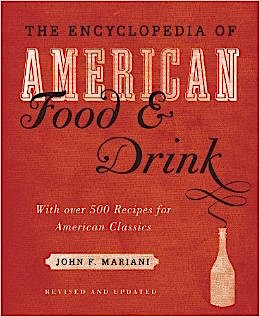 |
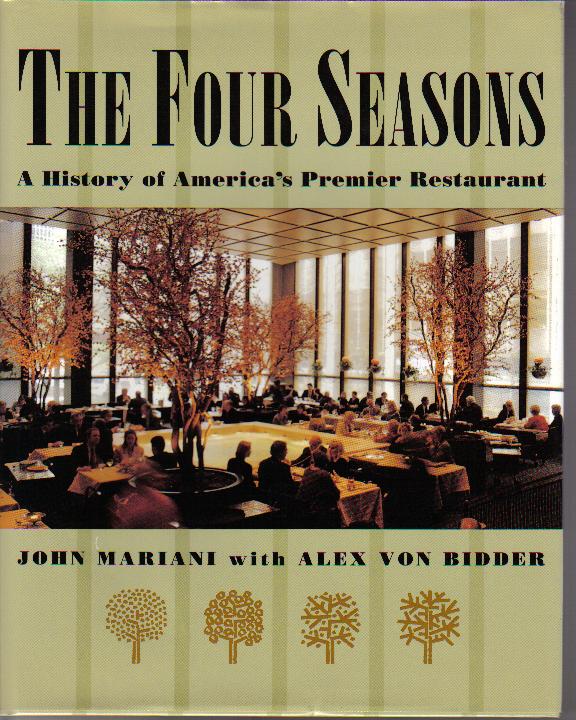
The Encyclopedia of American Food and Drink by John F. Mariani (Bloomsbury USA, $35) Modesty forbids me to praise my own new book, but let me proudly say that it is an extensive revision of the 4th edition that appeared more than a decade ago, before locavores, molecular cuisine, modernist cuisine, the Food Network and so much more, now included. Word origins have been completely updated, as have per capita consumption and production stats. Most important, for the first time since publication in the 1980s, the book includes more than 100 biographies of Americans who have changed the way we cook, eat and drink -- from Fannie Farmer and Julia Child to Robert Mondavi and Thomas Keller. "This book is amazing! It has entries for everything from `abalone' to `zwieback,' plus more than 500 recipes for classic American dishes and drinks."--Devra First, The Boston Globe. "Much needed in any kitchen library."--Bon Appetit. |
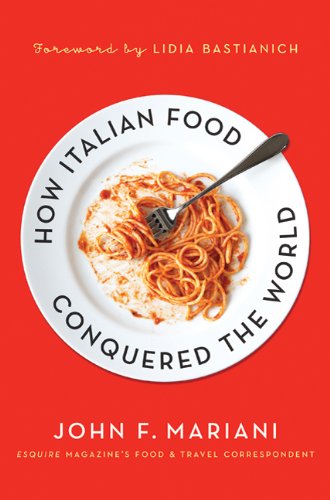
"Eating Italian will never be the same after reading John Mariani's entertaining and savory gastronomical history of the cuisine of Italy and how it won over appetites worldwide. . . . This book is such a tasteful narrative that it will literally make you hungry for Italian food and arouse your appetite for gastronomical history."--Don Oldenburg, USA Today. "Italian
restaurants--some good, some glitzy--far
outnumber their French rivals. Many of
these establishments are zestfully described
in How Italian Food Conquered the World, an
entertaining and fact-filled chronicle by
food-and-wine correspondent John F.
Mariani."--Aram Bakshian Jr., Wall Street
Journal.
"Equal parts
history, sociology, gastronomy, and just
plain fun, How Italian Food Conquered the
World tells the captivating and delicious
story of the (let's face it) everybody's
favorite cuisine with clarity, verve and
more than one surprise."--Colman Andrews,
editorial director of The Daily
Meal.com. "A fantastic and fascinating
read, covering everything from the influence
of Venice's spice trade to the impact of
Italian immigrants in America and the
evolution of alta cucina. This book will
serve as a terrific resource to anyone
interested in the real story of Italian
food."--Mary Ann Esposito, host of PBS-TV's
Ciao
Italia. "John Mariani has written the
definitive history of how Italians won their
way into our hearts, minds, and
stomachs. It's a story of pleasure over
pomp and taste over technique."--Danny Meyer,
owner of NYC restaurants Union Square
Cafe, The Modern, and Maialino.
|
 |
 |
 |
 |
 |
 |
MARIANI'S VIRTUAL GOURMET
NEWSLETTER is published weekly. Publisher: John Mariani. Editor: Walter Bagley. Contributing Writers: Christopher
Mariani, Misha Mariani, John A. Curtas, Gerry Dawes, Geoff Kalish.
Contributing
Photographer: Galina Dargery. Technical
Advisor: Gerry
McLoughlin.
If you wish to subscribe to this
newsletter, please click here: http://www.johnmariani.com/subscribe/index.html
© copyright John Mariani 2026