MARIANI’S
Virtual Gourmet
October
11, 2015
NEWSLETTER

"Madam Why
Not?" (after John Singer Sargent's "Madam X") by
Galina Dargery (2014)
IN THIS ISSUE
HIGH STEAKS:
The Top 10 Steakhouses of Las Vegas
By John Curtas
NEW YORK CORNER
BÂTARD
By John Mariani
PAUL PRUDHOMME DIES AT 75
By John Mariani
VK WINERY GOES HOLISTIC
By John Mariani
❖❖❖
HIGH STEAKS
The Top 10 Steakhouses of Las
Vegas
By John Curtas
"I am a lover
of beef, but I believe it does great harm to my
wit." – William
Shakespeare, "Twelfth Night."
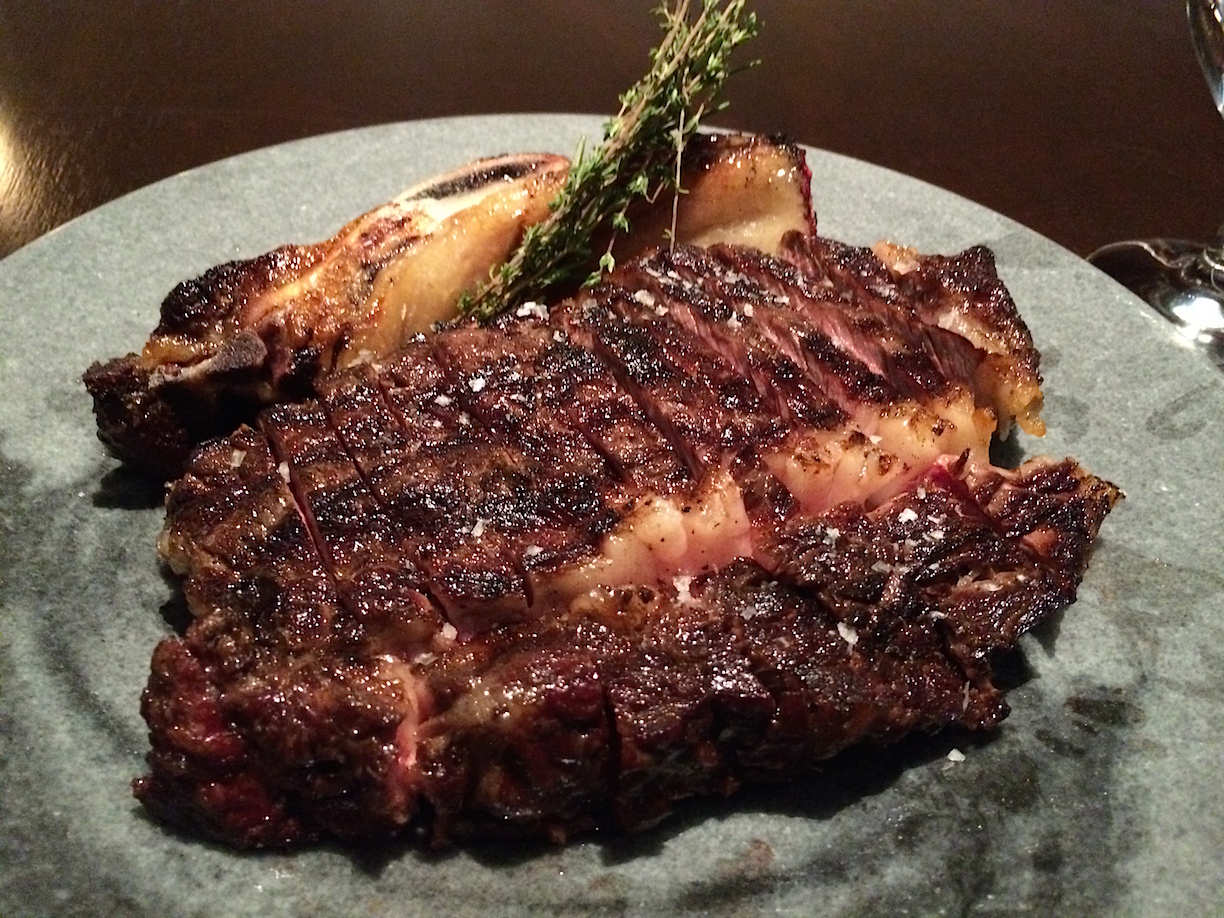
Porterhouse at BAZAAR Meat
How do
you
judge a steakhouse?
Is
it the quality of the beef? How well they age it?
Cook it? The variety of the side dishes? Or is it
all about the wine list to you? Or the décor -- be
it dark, masculine and clubby, or lighter, brighter
and more modern?
Maybe you demand tenderness at
all costs? (For the record: a big mistake, since a
superior, intensely mineral-rich,
roasted-to-exquisite-beefiness strip sirloin should
have a fair amount of chew to it.)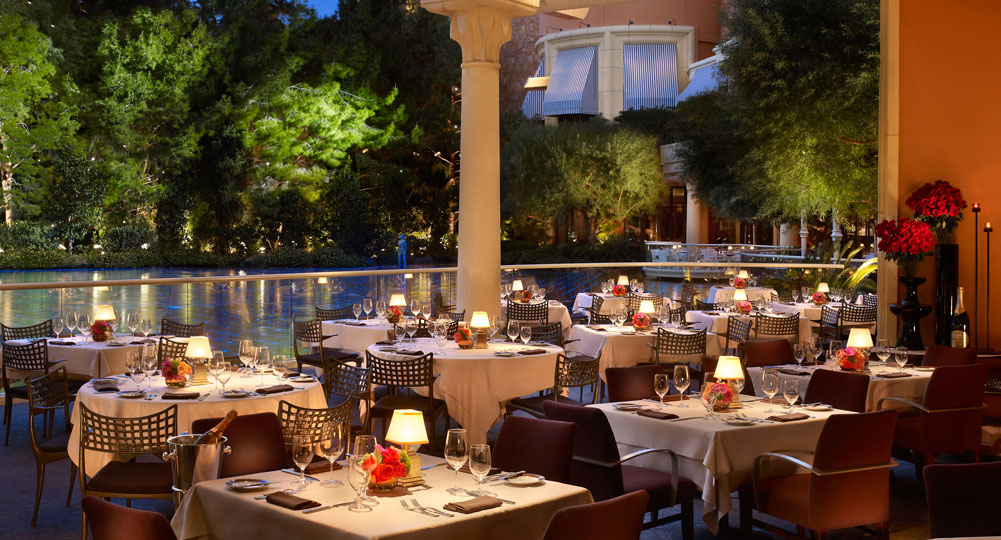
Maybe you're a service obsessive.
Many people are. For them, the warmth of the welcome
and speediness of the staff is what keeps them
coming back.
Perhaps
you're a sucker for big bones. Or the type that
occasionally gets a hankering for a (less expensive)
hanger steak. Or someone who prefers their cuts
served in less traditional ways. Or someone who
likes a lot of folderol with their cholesterol.
Whoever you are, it's a fair bet
that you are a conspicuous carnivore, and nothing
gets your juices flowing like tucking into a haunch
of well-marbled steer muscle. If that sounds up your
alley, you might consider moving to Las Vegas.
Because next to the Big Apple, no city on earth has
better steakhouses than Sin City. And, on any given
night, I'll put our chef-driven joints up
against anything NYC can throw at us.
True, for sheer volume,
historical precedent and breadth of menu options,
nothing beats what you find in the Big Apple, but if
you look at this list of NYC classics, you'll
find a number of places that haven't changed a thing
on their menu in decades. If you close your
eyes when you walk into Peter Luger, Keen's, Sparks,
Wolfgang's, Gallagher's, Palm Too, and others,
and then only gaze at your plate, you won't be able
to tell whether you're in 1978, 1997 or 2015. True,
the steaks are magnificent in all of them, and
there's no replacing the testosterone-charged
atmosphere in any of them, but in many ways, you're
eating in a museum.
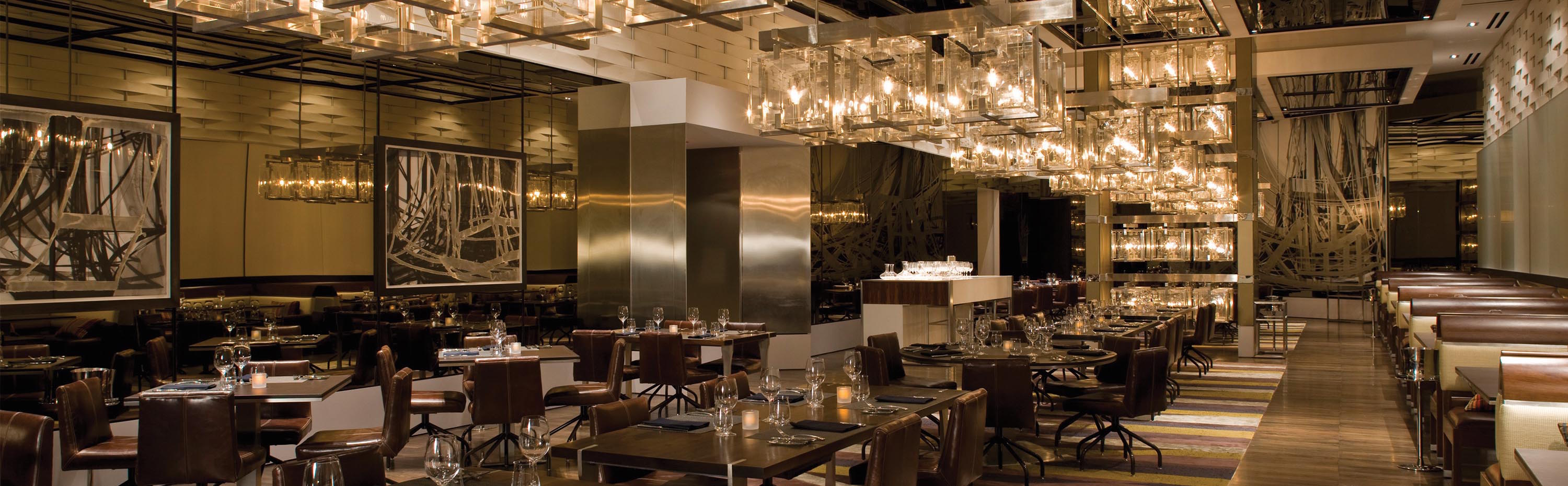 Not
so in 2015 Las Vegas, where the massive meat
emporiums give the chefs a lot of latitude to
play with their food. These days, seasonal sides are
all the rage, and chefs like Matthew
Hurley (CUT), Robert Moore (Prime), Sean Griffin (Jean-Georges),
Ronnie Rainwater
(Delmonico), Nicole Brisson (Carnevino),
David Walzog (SW) and David Thomas (Bazaar
Meat) make things interesting from
season to season, with a plethora of veggies,
seafood, and other succulents that can keep even the
fussiest gastronome un-bored and very happy.
Not
so in 2015 Las Vegas, where the massive meat
emporiums give the chefs a lot of latitude to
play with their food. These days, seasonal sides are
all the rage, and chefs like Matthew
Hurley (CUT), Robert Moore (Prime), Sean Griffin (Jean-Georges),
Ronnie Rainwater
(Delmonico), Nicole Brisson (Carnevino),
David Walzog (SW) and David Thomas (Bazaar
Meat) make things interesting from
season to season, with a plethora of veggies,
seafood, and other succulents that can keep even the
fussiest gastronome un-bored and very happy.
Not only that, but between
Carnevino's aging program and Bazaar Meats'
over-the-top Spanish flair (not to mention that
every top house in Vegas now features mind-blowing
dry-aged steaks and multiple A-4 and A-5 cuts from
Japan), we leave previously pre-eminent beef
bastions like Chicago, Dallas, and Miami running in
a paltry 3rd, 4th and 5th place.
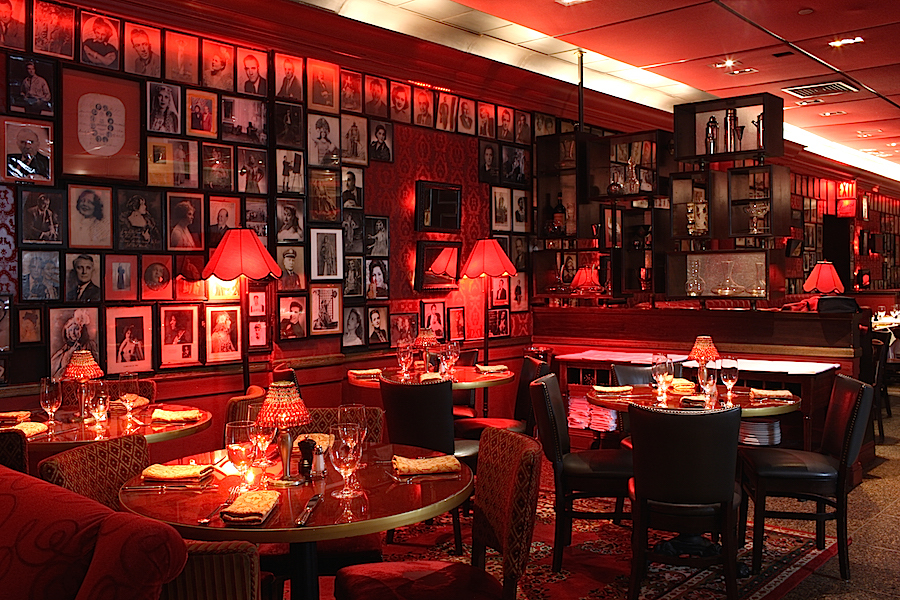 And if you do
that eye-closing/plate gazing thing again, you can’t
tell the difference between the best of our beef and
anything you bite into in mid-town Manhattan.
And if you do
that eye-closing/plate gazing thing again, you can’t
tell the difference between the best of our beef and
anything you bite into in mid-town Manhattan.
None of these great steaks come
cheap. Expect to pay $60+ for a pristine piece of
Prime, but face it folks: we all eat too much cow
now, so splitting one of these well-trimmed beauties
(between 2-4 people) is the way to go.
No matter what your criteria, you
can be assured that your steak might be the best
you've ever had, and that everything from the
'taters to the foie gras to the desserts will have
you dropping your fork in appreciation.
The Top 10
Steakhouses in Las Vegas:
Honorable Mention: N9NE,
The Country Club, Jean-Georges Steakhouse, Hank's
Fine Steaks, Tender.
By John Mariani
BÂTARD
239
West Broadway (between White and Walker
Streets).
212-219-2777
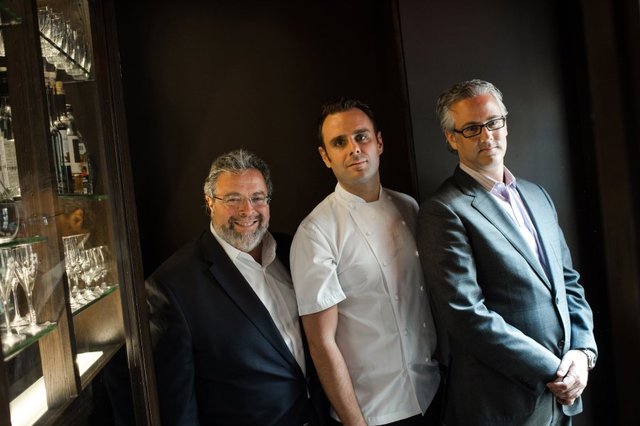 Bâtard
has now had its year in the spotlight, including
three stars from the NY Times
and a Michelin
star, so it seemed time for me to see how things
are going, what’s changed, and how owner Drew
Nieporent is maintaining his own unique form of
ebullient hospitality.
Bâtard
has now had its year in the spotlight, including
three stars from the NY Times
and a Michelin
star, so it seemed time for me to see how things
are going, what’s changed, and how owner Drew
Nieporent is maintaining his own unique form of
ebullient hospitality.
Nieporent and his
Myriad Restaurant Group have been reckoned among
the most respected entrepreneurs in their industry
for the three decades, beginning with the opening
of the French restaurant Montrachet on the same
premises that are now home to Bâtard. The location
had once before been re-cast as Corton, but that
experiment did not win wide favor among guests. Now,
with partner John Winterman (right to left)
and Austrian-born Chef Markus Glocker, the place is
hopping again.
The spacious room, now with fewer tables, has a
golden shimmer in the walls, and good soft
lighting allows you to see everyone in the room.
The lack of tablecloths or any soft surfaces has
unfortunately amped up the noise level here,
making conversation difficult.
Menu prices have inched up a
smidge—two courses are still $55, three are now
$69, and four $79—but for this kind of cuisine and
panache Bâtard is without doubt among the best
bargains in NYC. (Consider that an app, a steak
and dessert at a place like Minetta Tavern will
easily run you $75, and three courses, without
dessert, at
Carbone can cost $85.)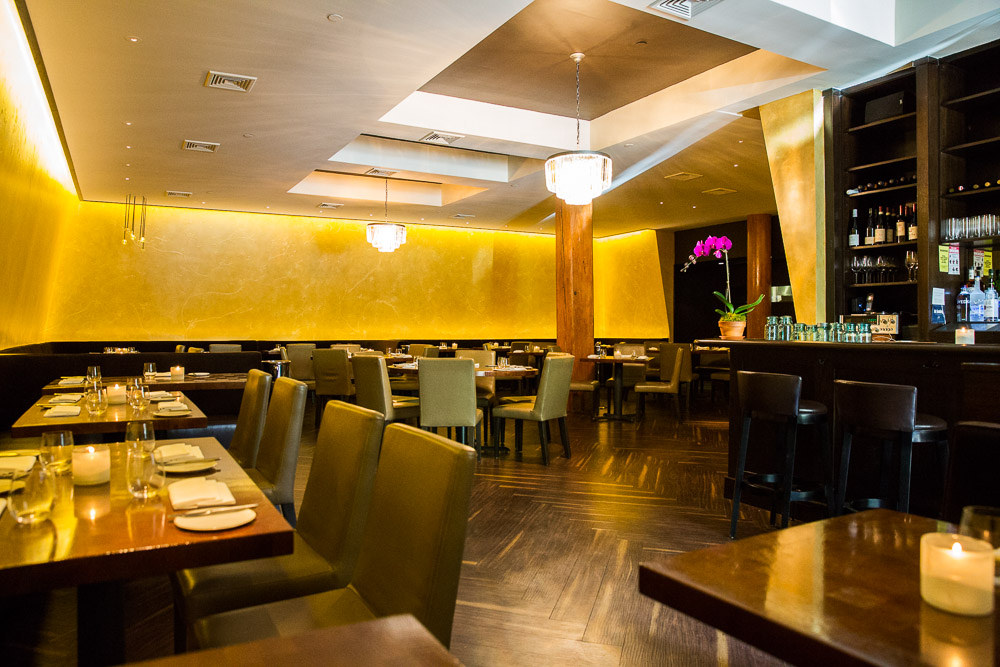
The wine list, under sommelier Jason Jacobeit, is wholly
admirable, high-ended but with good selections in
the less pricey ranges. Its most
impressive holdings are aged Burgundies of fine
provenance.
There are several good selections by the
glass under $15 and an admirable number of bottles
under $60, including
Austrian and German wines that marry well with
Glocker’s cuisine.
There’s also a Château d’Oupia Minervois
2012 for $37, a La Antigua Clasico Crianza 2010
for $45, and a Château de Rauzan-Séglas 2006 for
$167, which are less than 100% markups from
retail.
On my return, with three people, I re-tried dishes
from when Bâtard opened as well as new items
showing off Glocker’s penchant for big flavors
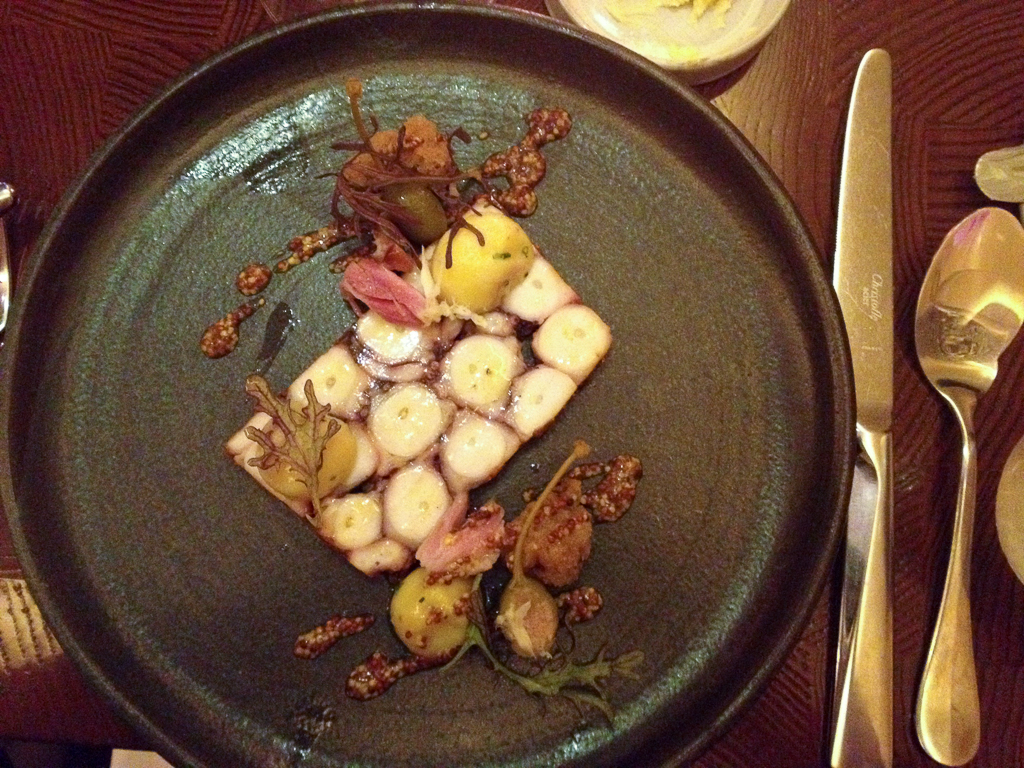
done with finesse. His octopus pastrami (below) with
braised ham hock, Pommery
mustard, and new potatoes hearkens to Glocker’s
Austrian heritage, and it’s has been on the menu
from the beginning, with very good reason. It’s a
signature dish, imaginative, lusty, deeply
flavorful, with great side components. Tender
sweetbreads—and a good portion of them—came with
sweet delicata squash, spicy ras el hanout,
and a perfectly reduced veal jus.
And
since every menu now has to have a pasta, it might
as well be Glocker’s delicious agnolotti stuffed
with celeriac and Castelmagno cheese, spied
cashews for texture and apple for citric spark.
 I
often use cod as a measuring stick for the way a
chef can ennoble a humble species, and the mild
flavor of Glocker’s impeccably roasted cod is
wonderfully enhanced with not-too-hot Hungarian
paprika, briny clams and velvety, sweet eggplant.
Only one dish didn’t quite live up to the lavish
praise I gave it when I first dined here—and I was
not alone in my praise: A classic Austrian pork schnitzel with
salad, cucumber, lingonberry
and sea buckthorn
was every bit as good as many
I’ve had in Vienna, but I just think Glocker could
make it more specially his own with a little
tweaking.
I
often use cod as a measuring stick for the way a
chef can ennoble a humble species, and the mild
flavor of Glocker’s impeccably roasted cod is
wonderfully enhanced with not-too-hot Hungarian
paprika, briny clams and velvety, sweet eggplant.
Only one dish didn’t quite live up to the lavish
praise I gave it when I first dined here—and I was
not alone in my praise: A classic Austrian pork schnitzel with
salad, cucumber, lingonberry
and sea buckthorn
was every bit as good as many
I’ve had in Vienna, but I just think Glocker could
make it more specially his own with a little
tweaking.
For your third
course you must decide between a superb selection
of perfectly ripe cheeses or any of four desserts,
all of them excellent, like duck egg-enriched
crème brûlée with spiced pineapple, verjus,
and a tangy yogurt sorbet to a caramelized milk
chocolate with hazelnuts in flaky puff pastry.
“Coffee & Milk Kardinal” is a delightfully
light mélange of French meringue and unusual milk
jam. Odd that there's no form of
cake or tart on the menu at the moment.
Cheeses are supplemental, three for $15, for for
$18, and five for $21.
As I’ve had reason to mention recently, despite
ignorant media reports that fine dining no longer
thrives in New York, I believe it is more vibrant
and fascinating than ever, and, at places like
Bâtard less expensive than it used to be for a
whole lot more.
Bâtard is
open Tuesday
through Saturday.
❖❖❖
PAUL PRUDHOMME DIES AT 75
By JOHN MARIANI
Few
people in the past half century had such an
influence on the course of American cuisine as
the legendary chef Paul Prudhomme, who died this
week at the age of 75. 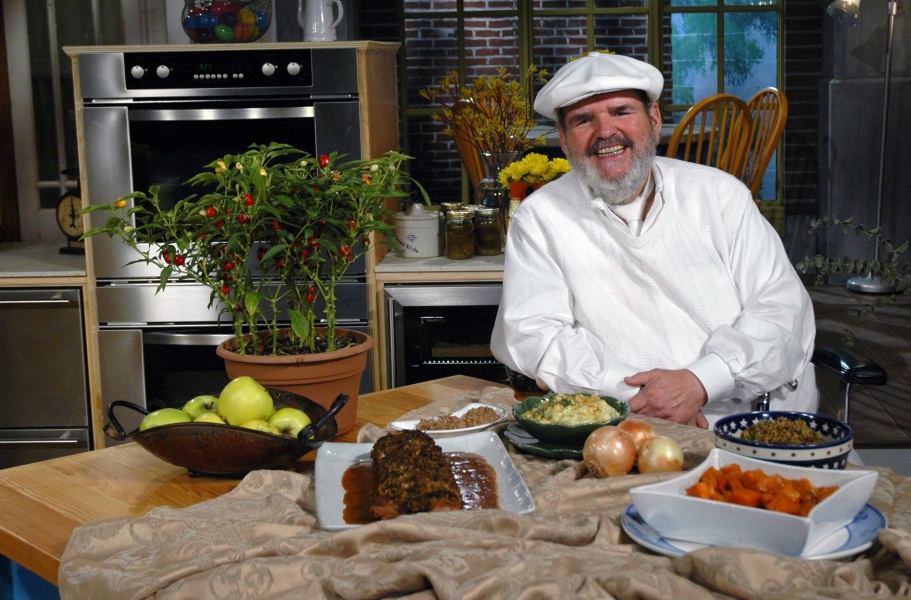
A proud Cajun who grew up poor
on a Louisiana sharecropper's farm, the youngest
of 13 children, in Saint Landry Parish. With no
culinary training he opened Big Daddy O’s Patio
hamburger eatery in Opelousas in 1957 before
moving to New Orleans in 1970, where he cooked in
various Creole restaurants and met his wife Kay
Hinrichs.
Five years later he was appointed executive
chef at Commander’s Palace, then in the forefront
of so-called “New New Orleans Cuisine,” whose
owners, the Brennan family, urged Paul to bring
more intensity to the kitchen without distancing
their loyal clientele. His success at doing so
allowed him to go his own way, opening up K-Paul’s
Louisiana Kitchen on Chartres Street, with Kay as
manager, in 1979.
There he showcased his
own brash style of Cajun cooking—shocking to many
in a Creole town like New Orleans—whose spice and
pepper levels were as high as the amount of butter
and fat used to cook just about everything,
including his signature dish, blackened redfish.
Subtlety was never a word used in connection to
K-Paul’s menu.
Before long his star soared, after NY Times
food writer, himself a southerner, paid K-Paul’s a
visit and declared Prudhomme’s food a revolution
in American taste, which was then considered a
rather bland one. The lines went around the block
after that, and within two years K-Paul’s was
voted by food writers around the country as one of
the “25 Best Restaurants in America” by Playboy
Magazine.
I was fortunate enough to write
that article, and at the time, when the list was
crammed with deluxe French restaurants like
Lutèce, La Grénouille, Maisonette and Le Bec Fin,
 K-Paul’s was a downhome
storefront, no reservations taken, a drop in place
where you had to share a table with other guests. Imagine
the shock and awe when I sat down with two good
old boys from Oklahoma and told them I was going
to order and pay for everything on the menu. That
was their lucky day.
K-Paul’s was a downhome
storefront, no reservations taken, a drop in place
where you had to share a table with other guests. Imagine
the shock and awe when I sat down with two good
old boys from Oklahoma and told them I was going
to order and pay for everything on the menu. That
was their lucky day.
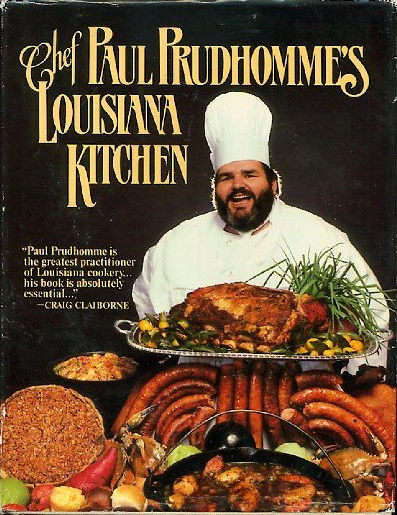
The publication in 1984 of Paul Prudhomme's
Louisiana Kitchen made for a huge
bestseller and its influence on professional and
home cooks around the country was enormous. Suddenly
cooks were dousing their food in hot sauce, ten
spices, and oceans of butter and cream, in stark
contrast to the oncoming storm of so-called
“healthy eating” and the Mediterranean Diet. So
popular was his blackened redfish—a drum species
few cooks had ever heard of, even in New
Orleans—led to a federal ban on commercial fishing
of the species for years. Prudhomme
himself switched to other fish for the recipe.
His product line of Magic Seasonings Blends became
a big seller, first in New Orleans then across the
U.S. Many
more cookbooks followed.
There were good times and bad after that for Paul:
Kay’s death in 1993 was a great blow, and Paul
receded from the spotlight afterwards, though he
kept up his local TV show each week and kept
K-Paul’s running. (It was hard hit during
Hurricane Katrina, and though closed down, Paul
contributed to serving thousands of meals for the
military and residents staying in the French
Quarter. It
took a year to re-open K-Paul’s.)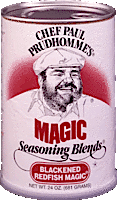
All his life Paul struggled with immense obesity,
and though he lost a great deal of weight after
Kay’s death, he still rode on a cart to get around
and walked, when he could, with two canes. But his
own joie de vivre and well-cultivated Cajun
persona was evident whenever he cooked in front of
people, always encouraging more spice to create
more flavor, never cutting back on good taste
because it was the only taste he knew.
I met Paul on several occasions over the years and
always found him affable but shy. He
would sit with me as I ate his jambalaya and drank
one of his Cajun martinis in a Mason jar, but he
wouldn’t eat anything. Nor was he cooking much by
then. My interview questions received short,
focused answers, and he well knew that his mantra
and background were at the basis of his
popularity.
Once time he recalled how he
couldn’t figure out why the best potatoes he could
possibly buy for his restaurant never tasted as
good as his mama made them. “The it came to me,”
he said, his eyes brightening. “It wasn’t just
nostalgia for my mama’s cooking. I remembered that
when we ate a potato, we went outside and plucked
it right out of the ground, brushed off the dirt
and ate it minutes later. It
didn’t have time to lose any of its natural
flavor. And
it was like that with everything we ate. We were
poor and there were a lot of us on that farm, so
we used everything and had to eat in season
because we didn’t have the money to buy
store-bought food.
So, whatever I do, I’ll never be able to
get that flavor in my own cooking. But I
keep trying.”
VIK Winery Goes
Holistic
By John Mariani
Ten years ago I wrote of
Chilean wines, “I suspect that if most
winedrinkers think at all about Chilean wines,
they think of Concha y Toro, whose fans down
enough of its $5 Chardonnays and Cabernets to
make it the number two wine import to the U.S.” Since
then Chile has emerged as one of the world’s
premier wine regions, with a slew of names like
Veramonte,
Los Vascos, Le Dix, Cousiño Macul, and
Montés Alpha earning high marks from the wine
trade and media.
The appeal of modern Chilean viticulture,
especially among foreign investors, is that the
country’s isolated geography of oceans and
mountains protects its vineyards from pestilents
like phylloxera, and to this day Chile’s strict
agriculture laws prevent importation of any
foreign plants.
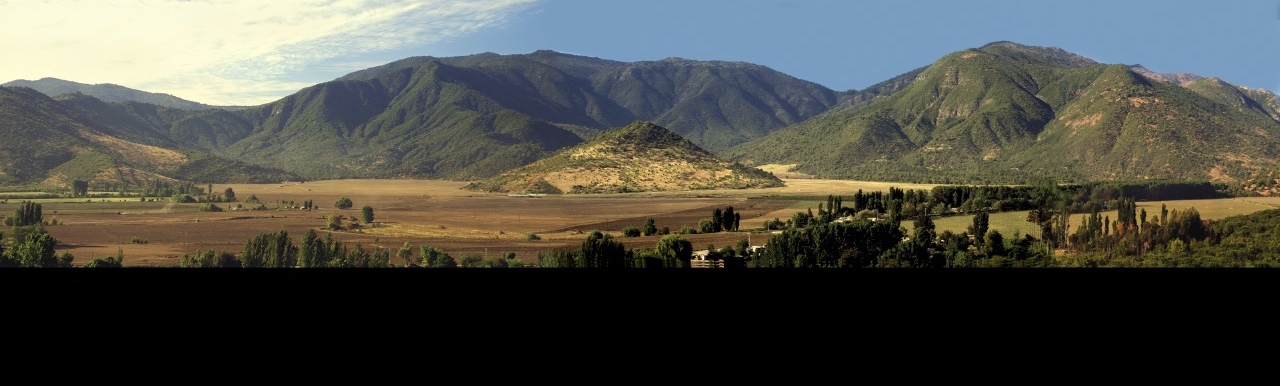
 One
of
the most talked-about new wineries is the oddly
named VIÑA
VIK, which has just opened a holistic retreat in Millahue
Valley (above),
which means “place of gold,” to join
others that
include Estancia
Vik José Ignacio, Playa Vik José Ignacio, Bahia
Vik José Ignacio and La Susana, all in Uruguay,
owned and managed by Alexander and Carrie Vik. The
new resort is part of the growing agro-tourism
business worldwide, and Millahue is part of the
purchase in 2006 of 11,000 acres of land spread
over twelve valleys. Here Alexander Vik, along
with winemaker Patrick Valette, did extensive
research into the finest soil and terroirs and
clonal rootstocks to produce European varietals
like Cabernet Sauvignon, Carménère, Syrah,
Cabernet Franc and Merlot. The winery was designed
by one of Chile’s foremost architects, Smiljan
Radic.
One
of
the most talked-about new wineries is the oddly
named VIÑA
VIK, which has just opened a holistic retreat in Millahue
Valley (above),
which means “place of gold,” to join
others that
include Estancia
Vik José Ignacio, Playa Vik José Ignacio, Bahia
Vik José Ignacio and La Susana, all in Uruguay,
owned and managed by Alexander and Carrie Vik. The
new resort is part of the growing agro-tourism
business worldwide, and Millahue is part of the
purchase in 2006 of 11,000 acres of land spread
over twelve valleys. Here Alexander Vik, along
with winemaker Patrick Valette, did extensive
research into the finest soil and terroirs and
clonal rootstocks to produce European varietals
like Cabernet Sauvignon, Carménère, Syrah,
Cabernet Franc and Merlot. The winery was designed
by one of Chile’s foremost architects, Smiljan
Radic.
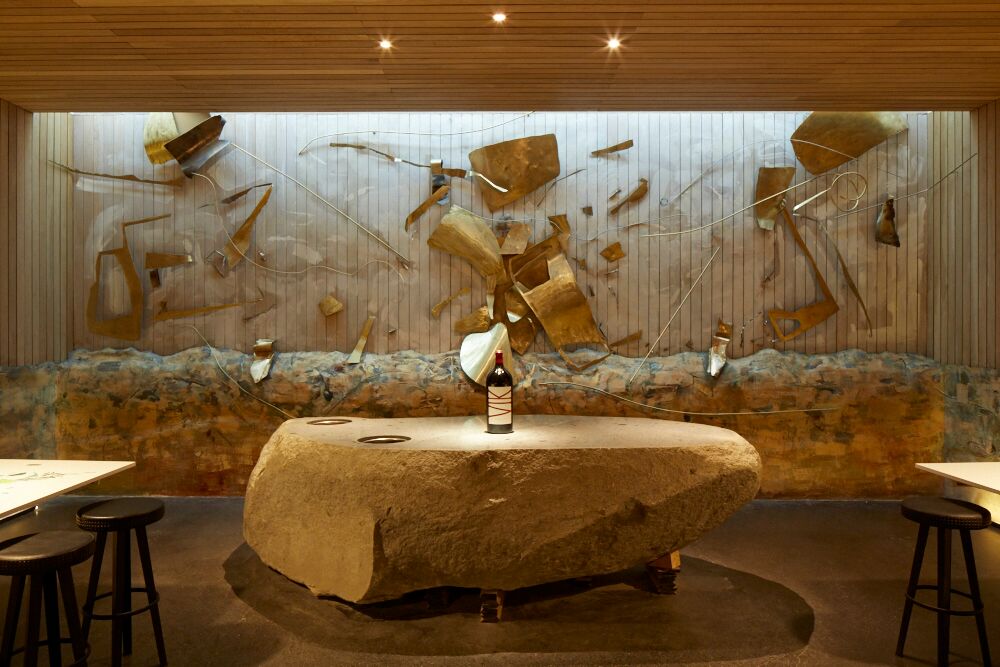
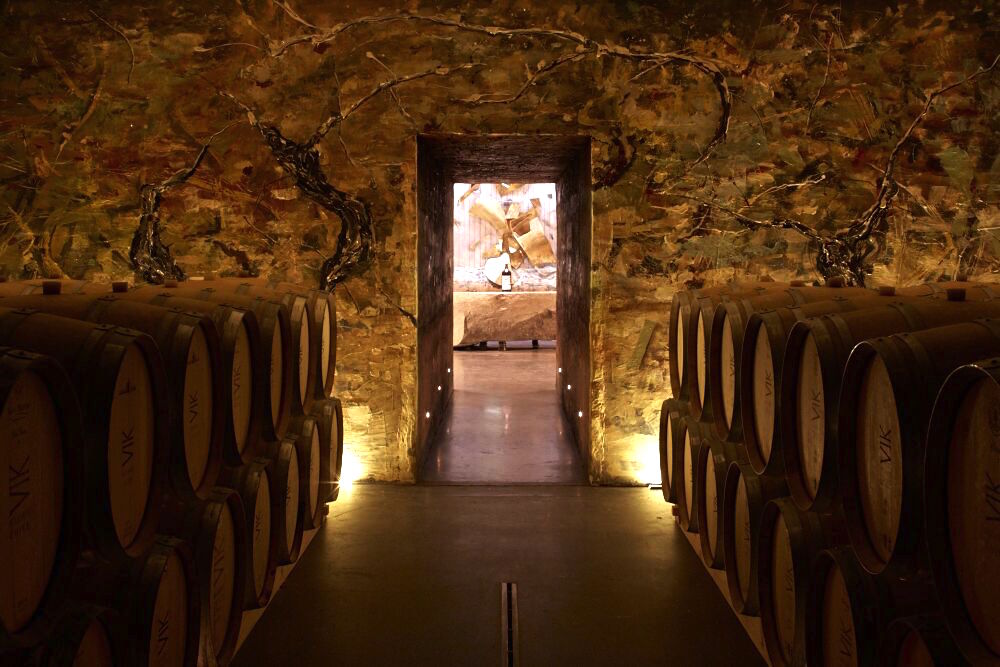
Weather stations monitor climate changes, special
irrigation systems provide plenty of water, and
harvesting of the grapes is done at night when the
air is cool. The majority of the winery building
is located underground to allow for a naturally
cooling process during the winemaking, at a
consistent temperature of 57 degrees. The roof
of the winery features a stretched, transparent
fabric to allow for natural sunlight. The wines
are then fermented in stainless steel
tanks, with aging done in new French barrels, for
20 to 24 months.
“Making wine in a new terroir is a slow
evolution,” Valette told me over dinner in New
York. “You have to feel free to make good wine. It
literally becomes your life 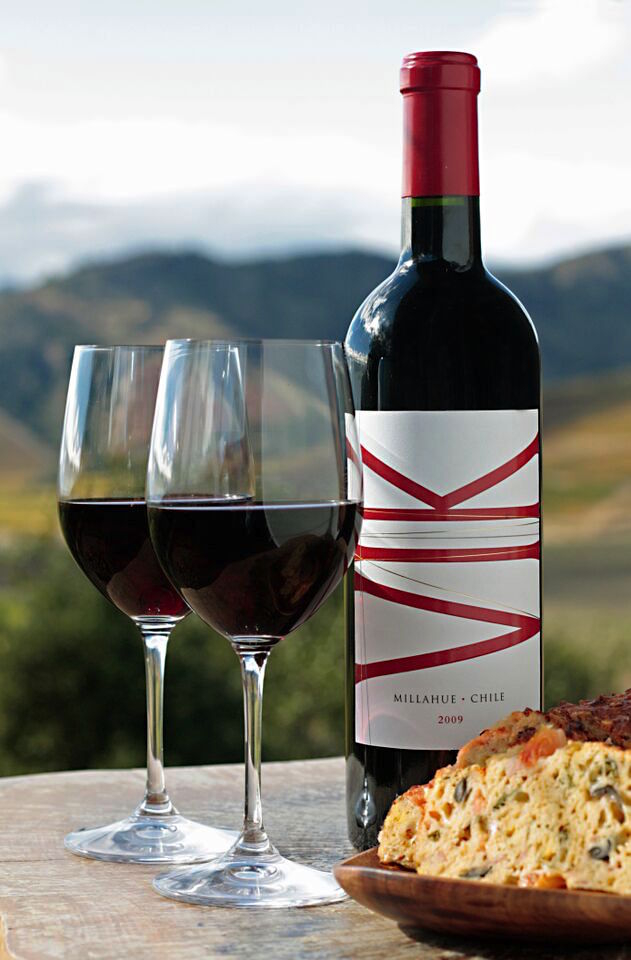 to the exclusion of all
else.” Nevertheless,
Valette and his wife have managed to raise nine
children.
to the exclusion of all
else.” Nevertheless,
Valette and his wife have managed to raise nine
children.
Valette is son
of
the former owners of the illustrious Château Pavie
in Saint-Émilion.
Born in Chile, educated in France (he speaks
French, Spanish and English) and trained at the
Robert Mondavi estate in Napa Valley, he spent
years as manager of various wineries in France,
becoming owner of Château La Prade and CEO of
Château de Musset. Presently he owns Château
de Rougérie in Entre Deux Mers, and still consults
for several other French wineries. He
joined VIK in 2006.
This year VIK has released its 2011 vintage in the
Bordeaux style, and at a Bordeaux price: $140,
making it perhaps the most expensive wine made in
Chile today.
Valette insists it is worth the price
because he believes it ranks with some of the best
crus in
Bordeaux and because he knows how much time and
effort has gone into producing it. The
winery’s mantra is from Aristotle: “The
whole is greater than the sum of its parts,”
applied to every aspect of the interaction between
man and nature, which includes technology and
careful regard for the elements of soil and
climate.
“We make wine to drink, not to taste,” he said,
meaning he is not interested in winning awards
from tasting panels but to allow winedrinkers to
savor the wine slowly, enjoyed with food that is
complimentary. Upon
tasting a terrine of foie gras with fruit
preserves, he declared that “The
sweetness of the preserves does not work with the
wine. They fight each other.”
 Indeed,
VIK 2011 is a wine best enjoyed with simple foods, not
least beef, sweetbreads, and game like squab or
rabbit. I
found it a delicious wine that I would never drink
on its own, without food, which proves that the
whole is indeed more than the sum of its parts.
Indeed,
VIK 2011 is a wine best enjoyed with simple foods, not
least beef, sweetbreads, and game like squab or
rabbit. I
found it a delicious wine that I would never drink
on its own, without food, which proves that the
whole is indeed more than the sum of its parts.
It is a big wine but not high in alcohol, proving
that you can achieve richness along with elegance,
so that the wine is a pleasure when sipped, from
the tip of the palate to the back of the throat. Its
components of 55
percent Cabernet
Sauvignon,
29 percent Carmenère, 4 percent Syrah, 7
percent Cabernet Franc and 5 percent Merlot give
it both breadth and depth, and the unusual
addition of the Syrah brings out a higher fruit
component, while the Merlot softens the wine,
whose tannins are already loosening.
The fact that the vines are so young—just three to
five years old—proves two things: First, the best
Chilean soil and sun, combined with irrigation
(the valleys get little rain) are capable of
producing exceptional, healthy varietals, and,
second, a wine like VIK 2011 shows how total
commitment, an holistic ideal of balance from many
components can be achieved in a modern winery
whose dependence on the state-of-the-art
technology must be backed by centuries of
tradition, and perhaps paying a little homage to
the Chilean sun gods.
❖❖❖
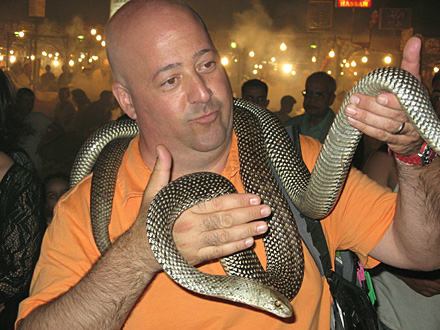
"I get mad when I see that a
restaurant offers `new American cuisine,' because
there’s really no such thing as American cuisine. We
haven’t even figured out what American cuisine is —
99.9999 percent of our food is taken from elsewhere
than our 200-year-old country. But, the opposite is
certainly true. I think it’s more than fascinating
when I get to go to a country like Liberia and eat
the dish that eventually became gumbo.”—Andrew
Zimmern.
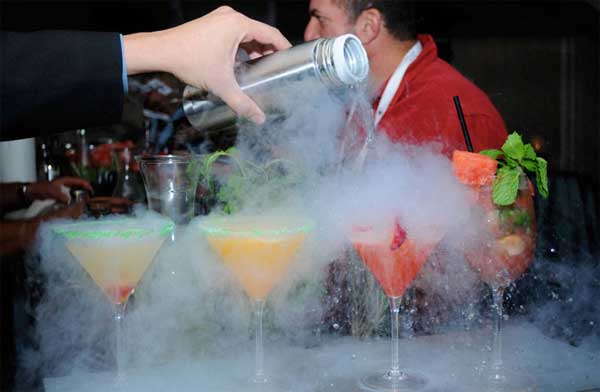 IT THIS STUFF
STOMACH FEEL LIKE IT'S ROTTING AWAY?
A woman named Gaby Scanlon had to have a portion
of her stomach surgically removed after drinking a
liquid nitrogen-infused shot of liquor at Oscar's Wine Bar in Lancaster,
England on her birthday. "I asked if it was okay to
drink," she told a British court. "He said
'Yes'. "Smoke was coming from my nose and mouth.
Straight away I knew something was not right. My stomach
expanded." Scanlon spent three weeks in the hospital
"undergoing surgery to remove her stomach and connect
her esophagus directly to her small bowel." The wine bar
has been fined £100,000 ($156,000 USD) after
admitting "it failed to ensure the shot cocktail was
safe for consumption."
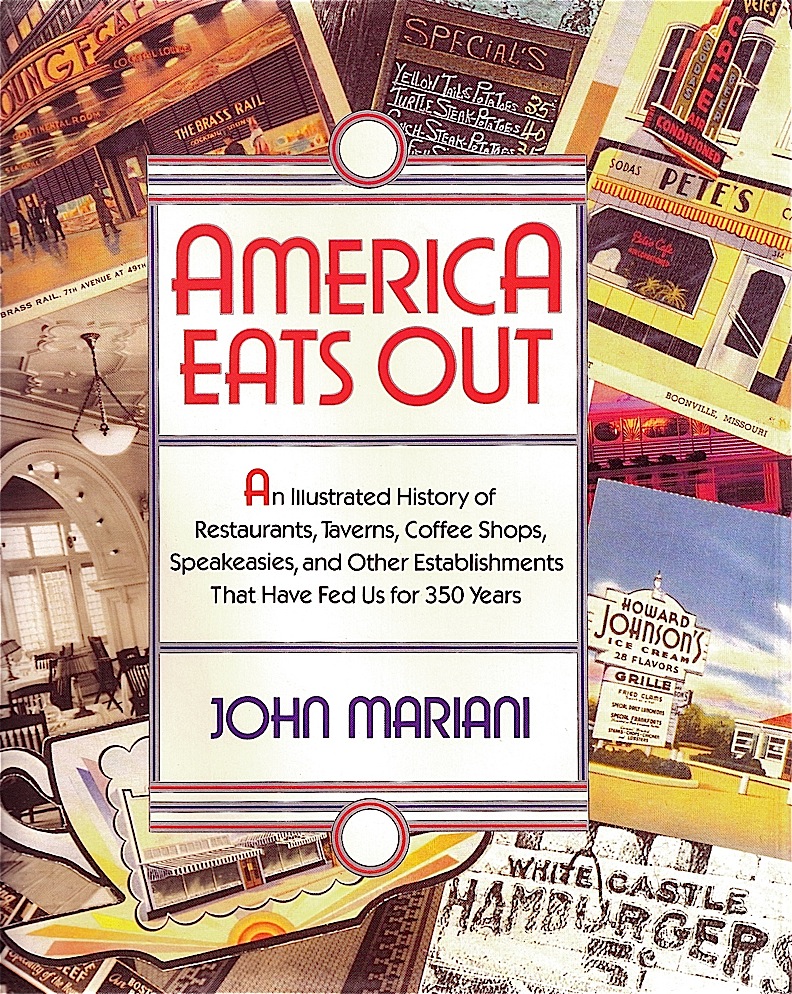
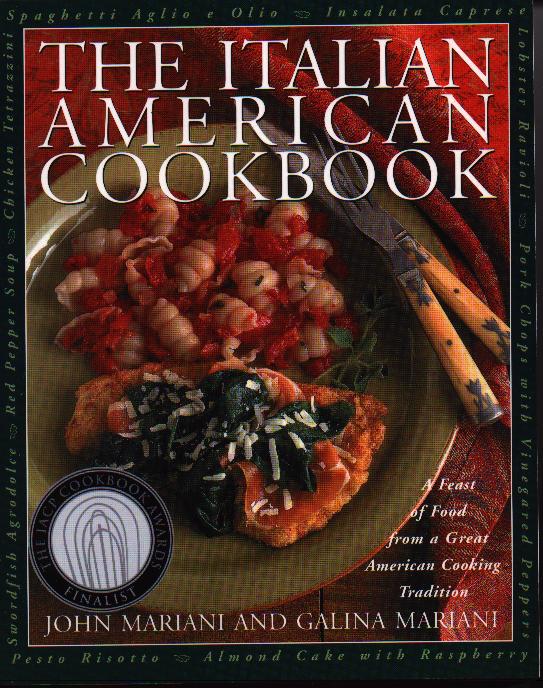
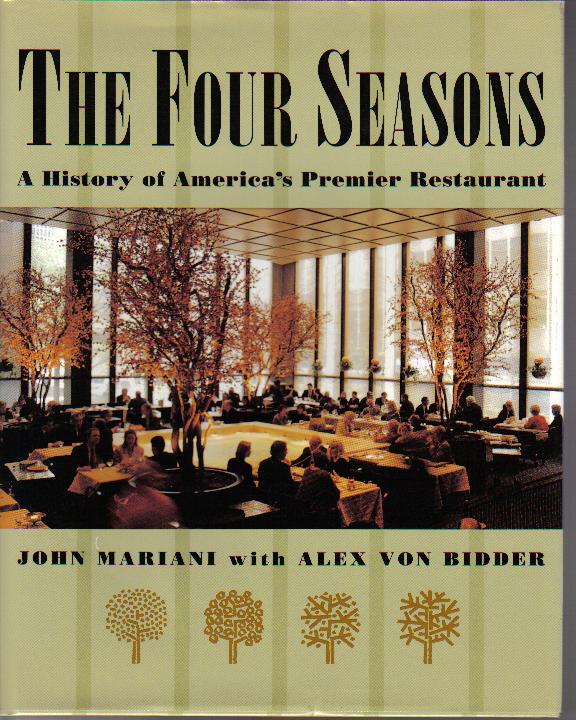
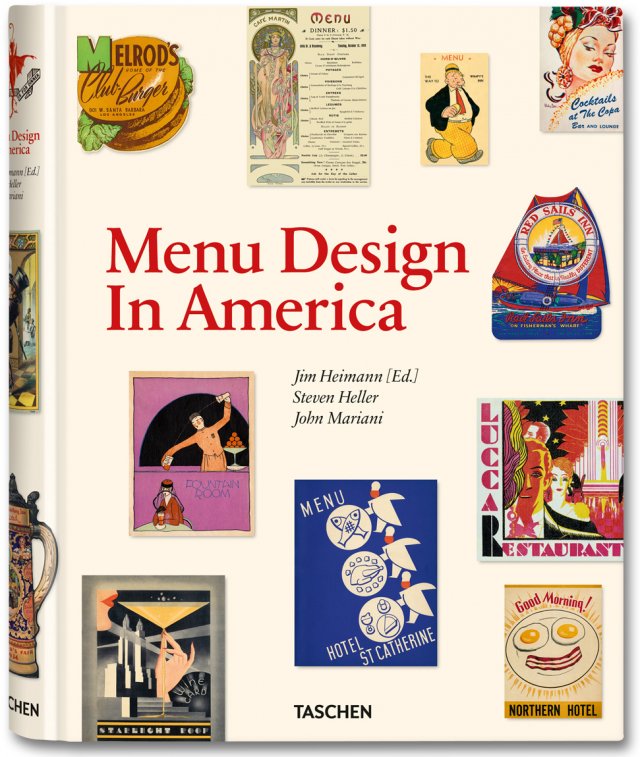
Any of John Mariani's books below may be ordered from amazon.com.
 I'm proud and happy to announce that my
new book, The Hound
in Heaven (21st Century Lion Books), has just
been published through Amazon and Kindle.
I'm proud and happy to announce that my
new book, The Hound
in Heaven (21st Century Lion Books), has just
been published through Amazon and Kindle. It is a novella, and for anyone who loves dogs, Christmas, romance, inspiration, even the supernatural, I hope you'll find this to be a treasured favorite. The story concerns how, after a New England teacher, his wife and their two daughters adopt a stray puppy found in their barn in northern Maine, their lives seem full of promise. But when tragedy strikes, their wonderful dog Lazarus and the spirit of Christmas are the only things that may bring back his master back from the edge of despair.
WATCH THE VIDEO!
“What a huge surprise turn this story took! I was completely stunned! I truly enjoyed this book and its message.” – Actress Ali MacGraw
“He had me at Page One. The amount of heart, human insight, soul searching, and deft literary strength that John Mariani pours into this airtight novella is vertigo-inducing. Perhaps ‘wow’ would be the best comment.” – James Dalessandro, author of Bohemian Heart and 1906.
“John Mariani’s Hound in Heaven starts with a well-painted portrayal of an American family, along with the requisite dog. A surprise event flips the action of the novel and captures us for a voyage leading to a hopeful and heart-warming message. A page turning, one sitting read, it’s the perfect antidote for the winter and promotion of holiday celebration.” – Ann Pearlman, author of The Christmas Cookie Club and A Gift for my Sister.
“John Mariani’s concise, achingly beautiful novella pulls a literary rabbit out of a hat – a mash-up of the cosmic and the intimate, the tragic and the heart-warming – a Christmas tale for all ages, and all faiths. Read it to your children, read it to yourself… but read it. Early and often. Highly recommended.” – Jay Bonansinga, New York Times bestselling author of Pinkerton’s War, The Sinking of The Eastland, and The Walking Dead: The Road To Woodbury.
“Amazing things happen when you open your heart to an animal. The Hound in Heaven delivers a powerful story of healing that is forged in the spiritual relationship between a man and his best friend. The book brings a message of hope that can enrich our images of family, love, and loss.” – Dr. Barbara Royal, author of The Royal Treatment.
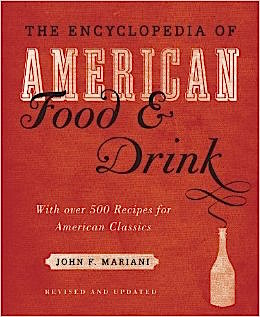 |
The Encyclopedia of American Food and Drink by John F. Mariani (Bloomsbury USA, $35) Modesty forbids me to praise my own new book, but let me proudly say that it is an extensive revision of the 4th edition that appeared more than a decade ago, before locavores, molecular cuisine, modernist cuisine, the Food Network and so much more, now included. Word origins have been completely updated, as have per capita consumption and production stats. Most important, for the first time since publication in the 1980s, the book includes more than 100 biographies of Americans who have changed the way we cook, eat and drink -- from Fannie Farmer and Julia Child to Robert Mondavi and Thomas Keller. "This book is amazing! It has entries for everything from `abalone' to `zwieback,' plus more than 500 recipes for classic American dishes and drinks."--Devra First, The Boston Globe. "Much needed in any kitchen library."--Bon Appetit. |
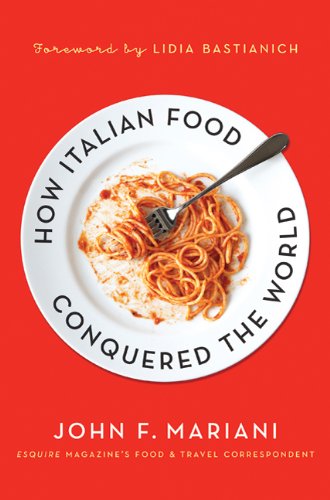
"Eating Italian will never be the same after reading John Mariani's entertaining and savory gastronomical history of the cuisine of Italy and how it won over appetites worldwide. . . . This book is such a tasteful narrative that it will literally make you hungry for Italian food and arouse your appetite for gastronomical history."--Don Oldenburg, USA Today. "Italian
restaurants--some good, some glitzy--far
outnumber their French rivals. Many of
these establishments are zestfully described
in How Italian Food Conquered the World, an
entertaining and fact-filled chronicle by
food-and-wine correspondent John F.
Mariani."--Aram Bakshian Jr., Wall Street
Journal.
"Equal parts
history, sociology, gastronomy, and just
plain fun, How Italian Food Conquered the
World tells the captivating and delicious
story of the (let's face it) everybody's
favorite cuisine with clarity, verve and
more than one surprise."--Colman Andrews,
editorial director of The Daily
Meal.com. "A fantastic and fascinating
read, covering everything from the influence
of Venice's spice trade to the impact of
Italian immigrants in America and the
evolution of alta cucina. This book will
serve as a terrific resource to anyone
interested in the real story of Italian
food."--Mary Ann Esposito, host of PBS-TV's
Ciao
Italia. "John Mariani has written the
definitive history of how Italians won their
way into our hearts, minds, and
stomachs. It's a story of pleasure over
pomp and taste over technique."--Danny Meyer,
owner of NYC restaurants Union Square
Cafe, The Modern, and Maialino.
|

 |
 |
 |
 |
 |
 |
 |
 |
 Everett Potter's Travel Report:
 Eating Las Vegas
is the new on-line site for Virtual Gourmet
contributor John A. Curtas., who since 1995
has been commenting on the Las Vegas food
scene and reviewing restaurants for Nevada
Public Radio. He is also the
restaurant critic for KLAS TV, Channel 8 in
Las Vegas, and his past reviews can be
accessed at KNPR.org.
Click on the logo below to go directly to
his site.
Eating Las Vegas
is the new on-line site for Virtual Gourmet
contributor John A. Curtas., who since 1995
has been commenting on the Las Vegas food
scene and reviewing restaurants for Nevada
Public Radio. He is also the
restaurant critic for KLAS TV, Channel 8 in
Las Vegas, and his past reviews can be
accessed at KNPR.org.
Click on the logo below to go directly to
his site.


Tennis Resorts Online: A Critical Guide to the World's Best Tennis Resorts and Tennis Camps, published by ROGER COX, who has spent more than two decades writing about tennis travel, including a 17-year stretch for Tennis magazine. He has also written for Arthur Frommer's Budget Travel, New York Magazine, Travel & Leisure, Esquire, Money, USTA Magazine, Men's Journal, and The Robb Report. He has authored two books-The World's Best Tennis Vacations (Stephen Greene Press/Viking Penguin, 1990) and The Best Places to Stay in the Rockies (Houghton Mifflin, 1992 & 1994), and the Melbourne (Australia) chapter to the Wall Street Journal Business Guide to Cities of the Pacific Rim (Fodor's Travel Guides, 1991).


MARIANI'S VIRTUAL GOURMET
NEWSLETTER is published weekly. Editor/Publisher: John
Mariani.
Editor: Walter Bagley. Contributing Writers: Christopher Mariani,
Robert Mariani, Misha
Mariani,
John A. Curtas, Edward Brivio, Mort Hochstein,
Andrew Chalk, Dotty Griffith and Brian Freedman. Contributing
Photographers: Galina Dargery, Bobby
Pirillo. Technical Advisor: Gerry McLoughlin.
To un-subscribe from this newsletter,click here.
© copyright John Mariani 2015