MARIANI’S
Virtual
Gourmet
April 7,
2019
NEWSLETTER
❖❖❖
IN THIS ISSUE
DINING OUT IN THE VENETO
By John A. Curtas
NEW YORK CORNER
VAUCLUSE
By John Mariani
NOTES FROM THE WINE CELLAR
THE WINES OF THE VENETO. Part Two
By John A. Curtas
❖❖❖
DINING OUT IN THE VENETO
By John A. Curtas
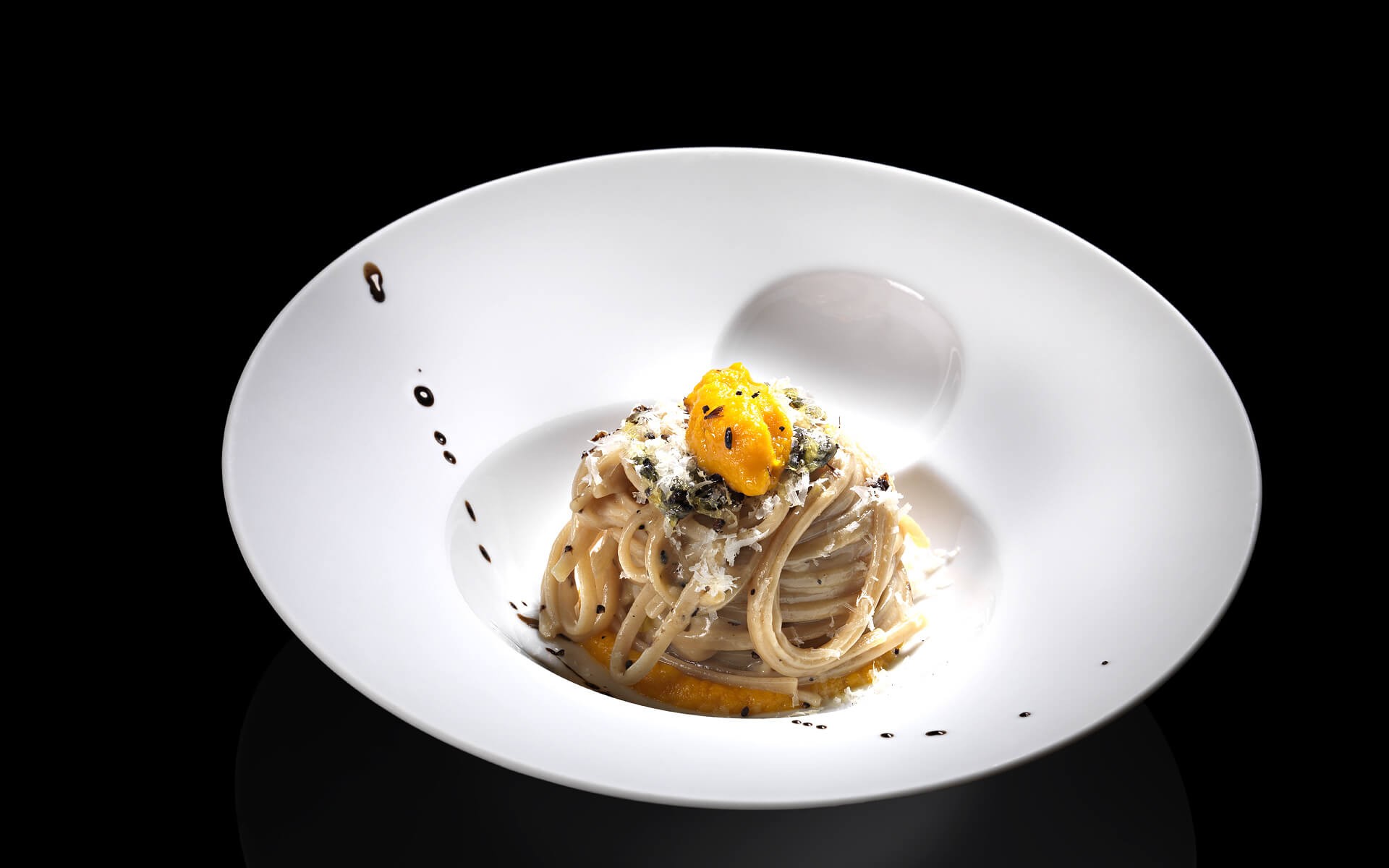
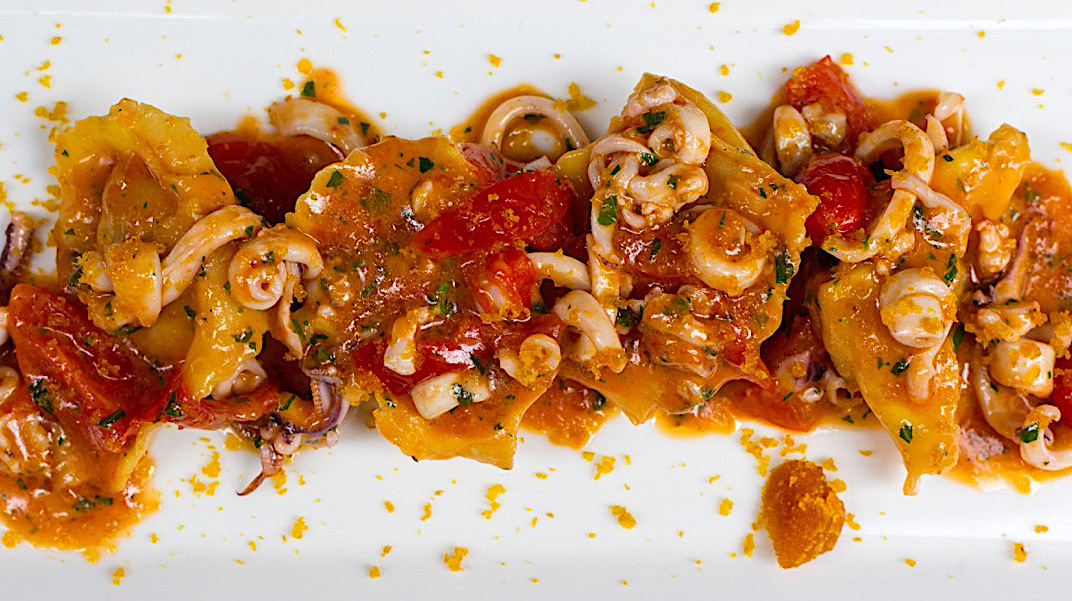
Pasta dish at Le Calandre
Venice may be the best known part of the Veneto, but some of the best food and wine lists in the region are to be found beyond its watery canals.
 Ristorante
Oseleta
Ristorante
Oseleta
Villa Cordevigo Wine Relais
37010 Cavaion,Verona
045 723 52 87
Two
restaurants stood out on my tour through the
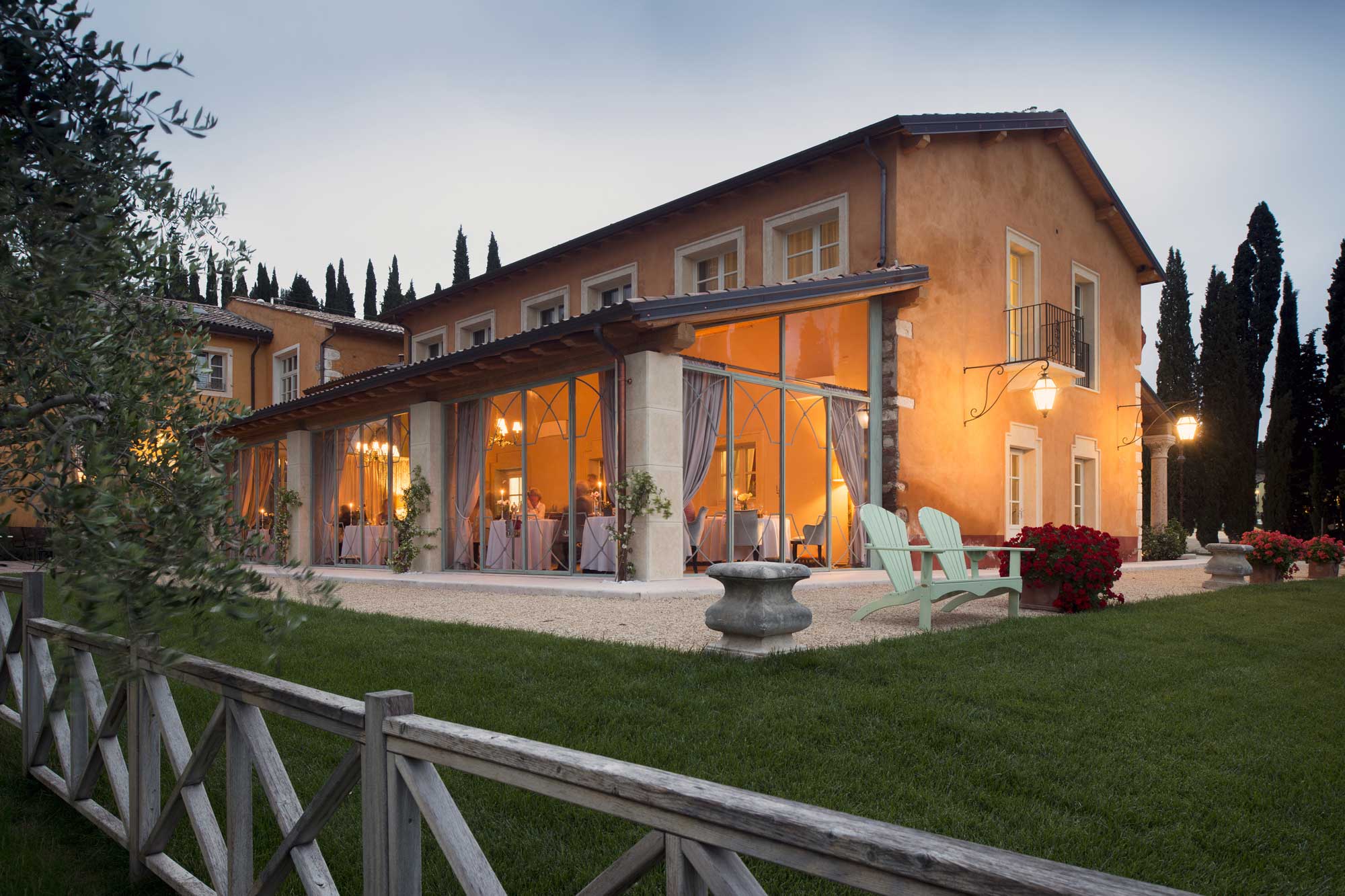
Veneto. Ristorante
Oseleta is located at the Villa Cordevigo
Wine Relais on the Vigneti Villabella wine estate
in Cavaion.
Oseleta
means "little bird" in the Veneto dialect and
both the ristorante
and a local wine are named after the tiny warblers
who find this smallish grape irresistible. From
the gorgeous hillside vineyards above the hotel
you can observe Lake Garda, the town of Bardolino
and the enclosed, classic 18th century villa
that's been converted into the hotel and tasting
rooms.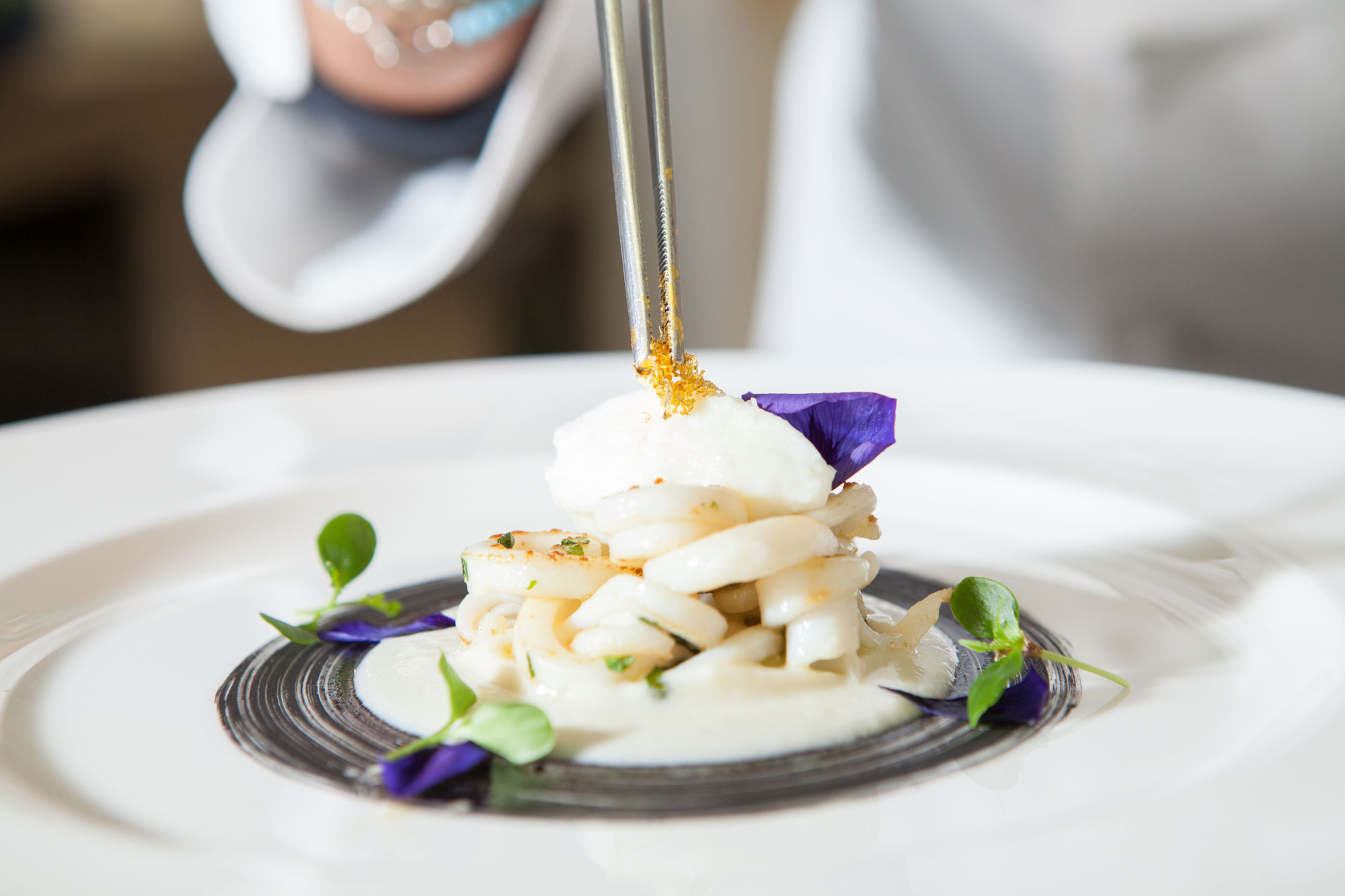
The ristorante offers
a cuisine of Veronese specialties given a lighter,
modern touch by Chef Giuseppe D'Aquino. Our lake
perch with mayonnaise of sea urchin and cream of
smoked Provola cheese, pumpkin raviolo with
Moncenisio cheese, and hay-smoked venison napped
with a cardamom/red-fruit sauce were
palate-perfect marriages of local cuisine paired
with wine that began on the hillsides surrounding
you.
A vibrant Vigneti
Villabella Chiaretto Spumante began the meal,
followed by a pleasant but forgettable bianco
blend and ending with the winery's bold and
tannic 2008 Oseleta—its inky darkness being more
than a match for the deeply-flavored venison.
Those little birds certainly know what they're
doing.
(Tasting menus run 95-145 euros)
Le Calandre
Via Liguria 1, Rubano
049 530303
 Where
Oseleta hits all the right wine country notes
(beautiful vineyard setting, updated traditional
cuisine), Le
Calandre is in a class by itself—a Michelin
three-star experience of the most modern kind. A
meal there is full of the unexpected, beginning
with its location on the outskirts of Padua.
Where
Oseleta hits all the right wine country notes
(beautiful vineyard setting, updated traditional
cuisine), Le
Calandre is in a class by itself—a Michelin
three-star experience of the most modern kind. A
meal there is full of the unexpected, beginning
with its location on the outskirts of Padua.
The modest building housing the
main restaurant and its more casual cafe is
located in the industrial town of Rubano, eight
miles from Padua, surroundings which give you no
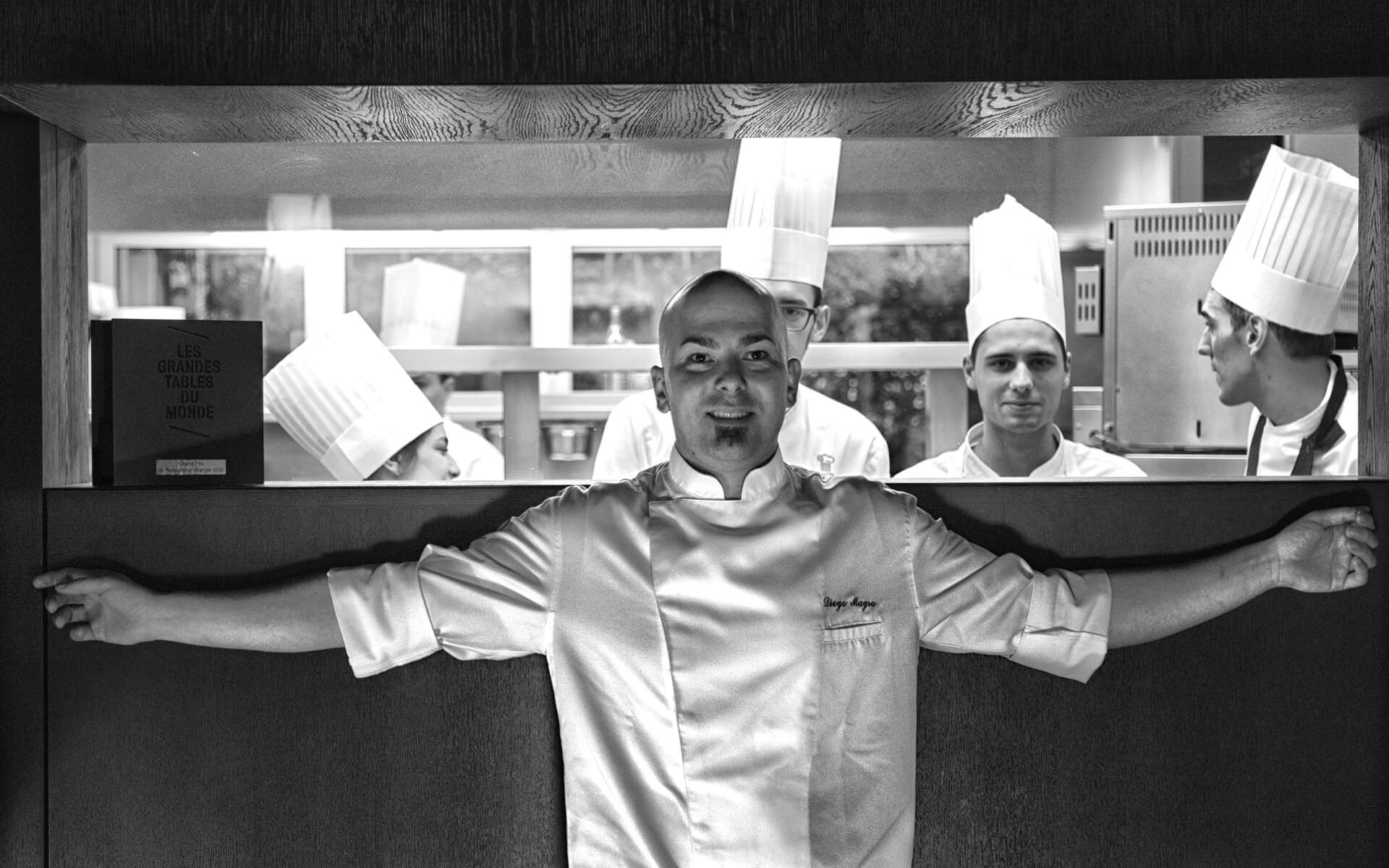
hint of the wonders that lie within. Chef
Massimiliano Alajmo, the youngest chef, at age 28,
ever to earn three Michelin stars, and sous-chef
Diegro Magro (left)
is part expressionist and part classicist as he
leads you through a menu of riffs on Veronese
dishes that never stray into artifice or
modernism. Ingredients are allowed to reveal
themselves in unique ways, but nothing relies on 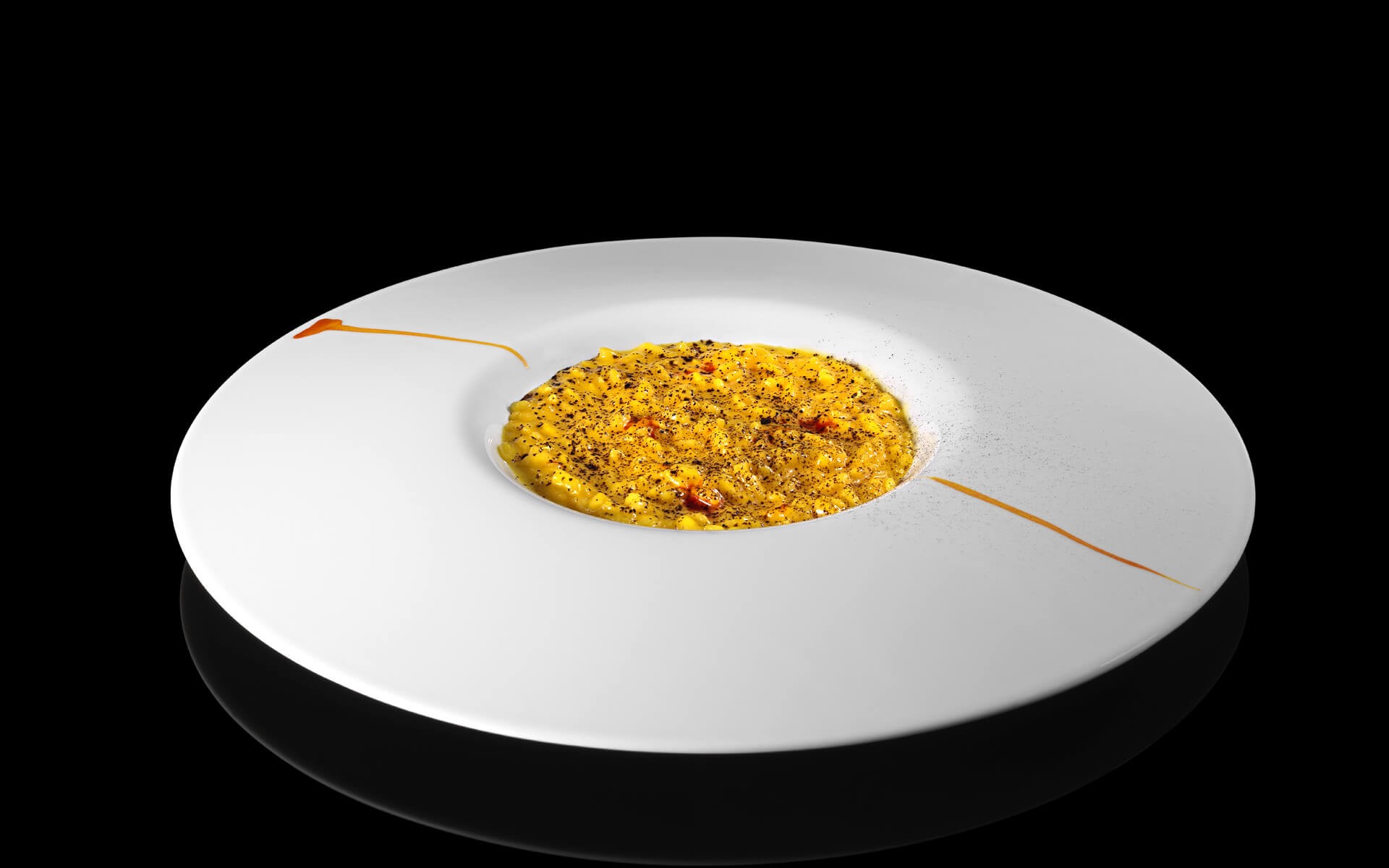 alginate spherification
baths, or tweezer-ed tree bark, to make a point.
alginate spherification
baths, or tweezer-ed tree bark, to make a point.
Alajmo is to saffron risotto
what Paul Bocuse was to the chicken pot pie—taking
an old standard to uncharted gourmet glory—in
Massimiliano's case with the addition of licorice
powder and juniper. Like any great artist’s,
his vision forces you to confront the familiar as
if you’re seeing it for the first time. The
risotto pops in color and flavor like none you've
ever had, and his cuttlefish "cappuccino," a blue
ink-streaked, seafood-potato cream of persistent
seafood intensity, feels both rich and creamy
without actually being either. That dish kicks off
the "classico" menu of seven savory courses, which
includes an inside-out homage to fried Neapolitan
pizza (called Napul è),
smoked, thick tagliolini,
and roast suckling pig with mostarda.
Two other menus are offered—one called "Max" and
the other "Raf" (after brother Raffaele)—and in
them you'll find such wonders as soft egg with
tuna belly gelato,
spaghetti with sea snails and pistachio sauce, and
crispy red mullet with white truffle. Knowing I
was a solo diner eager to try everything, the
kitchen happily mixed and matched courses from
each menu to give me a taste of all three.
The wine
service was as superb and creative as the food,
with the sommelier steering me to the rare,
ancient Veronese oseleta
grape for my red wine, and a Vignale di Cecilia
"Cocai" for my white. After a solid week of
Chiaretto and Corvina consumption, both were a
refreshing change of pace.
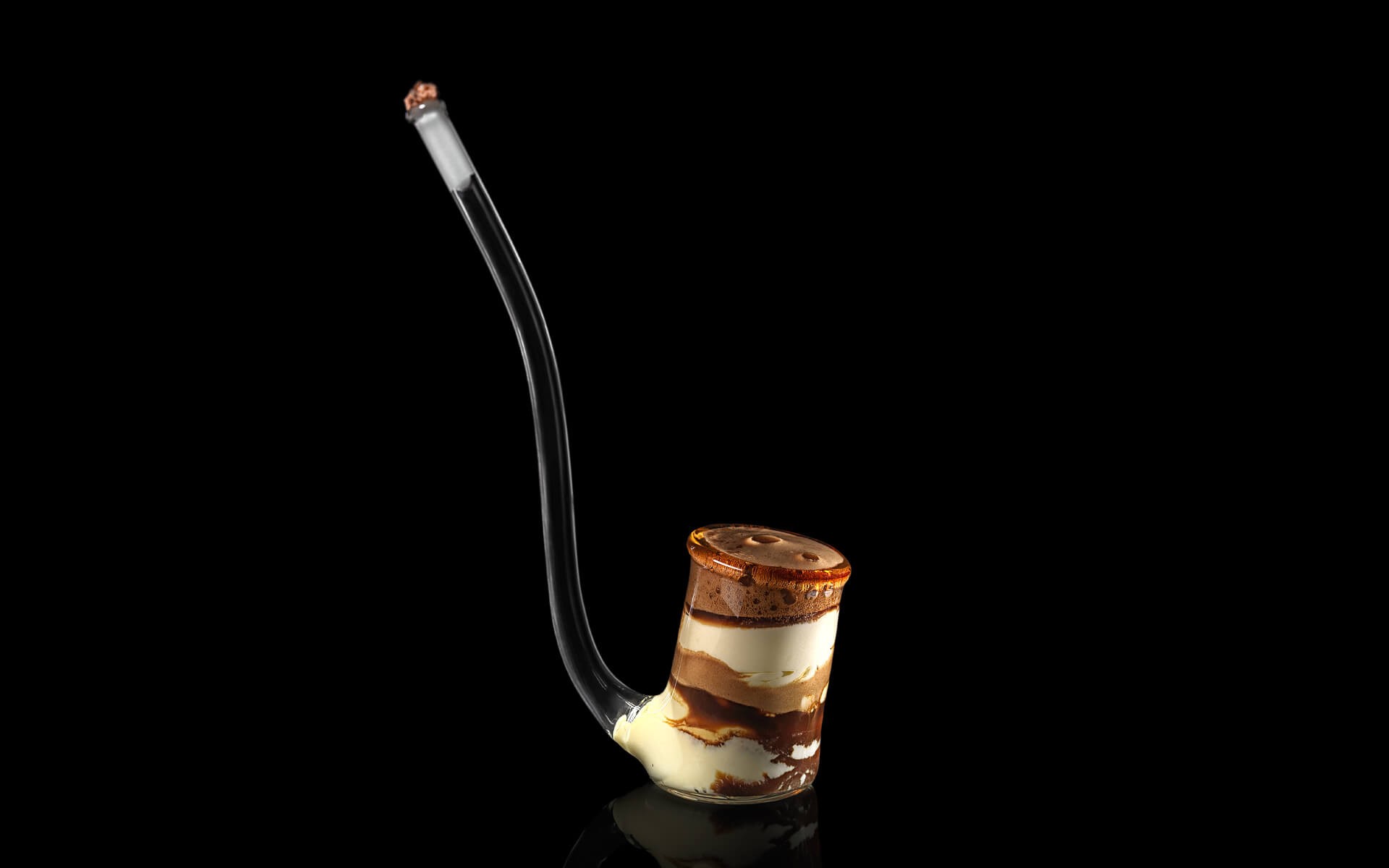 Desserts
are listened to, through headphones, while being
consumed. It may sound wacky (pun intended), but
bear with me. Called Vibraziono-gioco
al cioccolato
(Vibrations-chocolate game), a thick black box is
placed before you, on top of which are a variety
of chocolate morsels. You then place those
headphones on and realize they are attached to
super-sensitive microphones within the box, and
are picking up all sorts of crackle, pops, sighs
and squeaks coming from the food, as well as from
the scrapes and sounds you make while using your
utensils. Who knew resting food, or a spoon, could
be so noisy?
Desserts
are listened to, through headphones, while being
consumed. It may sound wacky (pun intended), but
bear with me. Called Vibraziono-gioco
al cioccolato
(Vibrations-chocolate game), a thick black box is
placed before you, on top of which are a variety
of chocolate morsels. You then place those
headphones on and realize they are attached to
super-sensitive microphones within the box, and
are picking up all sorts of crackle, pops, sighs
and squeaks coming from the food, as well as from
the scrapes and sounds you make while using your
utensils. Who knew resting food, or a spoon, could
be so noisy?
The whole point, according to
Max, is to make you slow down and use all your
senses to appreciate what you're eating. If this
sort of thing happened after a lengthy meal of
bizarre culinary sleights-of-hand, it might feel
like another palate-exhausting parlor trick. As it
is, coming after the vividly rendered proteins and
produce of the Veneto, it is an amusing and
memorable way to end your meal.
Like many of the greatest
meals I've ever had, Le Calandre’s cuisine is off
the beaten path, but one bite of Alajmo's grilled
kidneys with radicchio salad, or that risotto (or
that chocolate box) and you will forget how long
it took you to get there. If Antico Bottega del
Vino is a must-stop for any wine lover, no
culinary tour of modern Italy is complete without
a journey to this unassuming little town halfway
between Verona and Venice. There, wonders await
you from the mind of Massimiliano.
(Tasting menus start at three courses for 135 euros up to 250 euros for seven courses.)
 Antica Bottega del
Vino
Antica Bottega del
Vino
Via Scudo di Francia, 3,
Verona
045 800 4535
Once
you've spent a day or more on the Veneto wine
route, there's no
better place to continue your education than at in
the heart of the city of Verona than at Antica
Bottega del Vino. There you will bask in 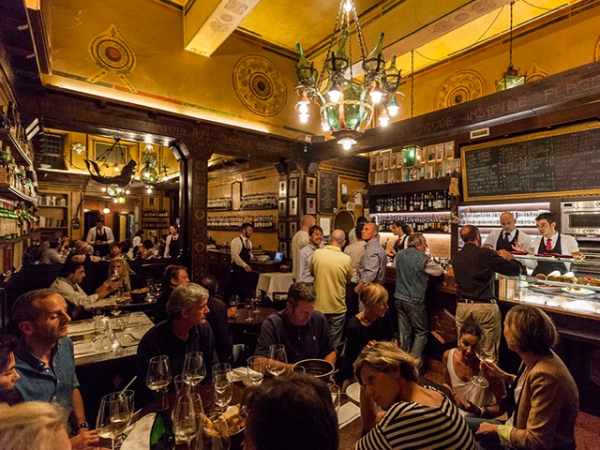 the pale
yellow glow of one of the oldest (1890) wine bars
in the world. As you're basking, you'll also be
wrestling with two wine lists—one for red, one for
white—each the dimensions of a small tabletop and
as thick as a dictionary. Within them is an almost
encyclopedic listing of the wines of the Veneto
(and Italy), with vintages going back decades.
the pale
yellow glow of one of the oldest (1890) wine bars
in the world. As you're basking, you'll also be
wrestling with two wine lists—one for red, one for
white—each the dimensions of a small tabletop and
as thick as a dictionary. Within them is an almost
encyclopedic listing of the wines of the Veneto
(and Italy), with vintages going back decades.
The bottega also functions as a
full-service osteria,
with a menu of Veronese classics, ranging from
hunks of the local Monte Veronese cheese to tortellini
burro e tartufo to stracotto
d'asino con polenta morbida (braised donkey
with tender polenta). The by-the-glass offerings
are ever-changing and outstanding, making a
pilgrimage here a must on any oenophile's bucket
list, even if you're not in the mood for donkey.
By John Mariani
Interior photos by Liz Clayman
100 East 63rd Street (off Park Avenue)
646-869-2300
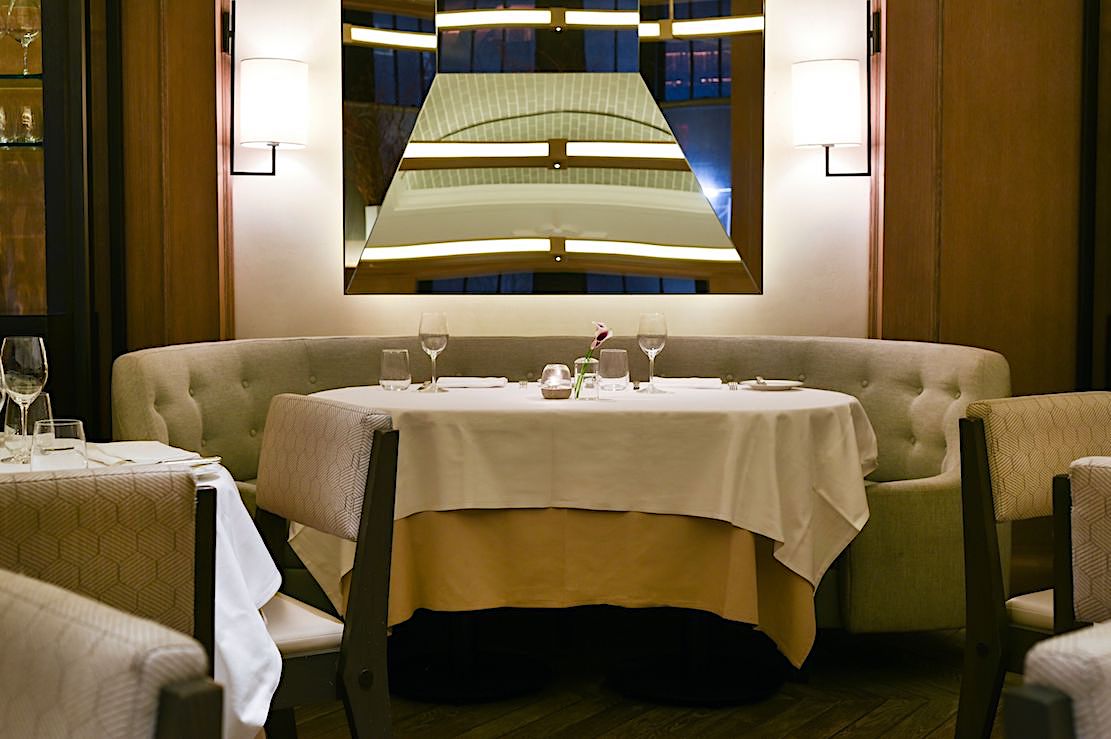
Now
four years old, Vaucluse began as a “French
brasserie” on the Upper East Side, but it has
now been bisected into a lower room that is
still resolutely French and an upper room
called Omar (now darker than it used to be)
that has a far more eclectic menu. The two
rooms are separated by a swanky bar playing
music at top volume.
 Vaucluse is one of many
restaurants run by Chef Michael White and his
Altamarea group, including, in New York, Ai
Fiori, Ristorante Morini, Nicoletta Pizzeria and
Marea, all Italian, with two others in Hong Kong
and Istanbul. I’ve remarked many times about the
problems of maintaining the same quality at so
many venues when the principal chef, White,
cannot possibly be at most of them very often.
And it was a disappointing meal at his New York
Ristorante Morini recently that made me want to
see how Vaucluse was faring.
Vaucluse is one of many
restaurants run by Chef Michael White and his
Altamarea group, including, in New York, Ai
Fiori, Ristorante Morini, Nicoletta Pizzeria and
Marea, all Italian, with two others in Hong Kong
and Istanbul. I’ve remarked many times about the
problems of maintaining the same quality at so
many venues when the principal chef, White,
cannot possibly be at most of them very often.
And it was a disappointing meal at his New York
Ristorante Morini recently that made me want to
see how Vaucluse was faring.
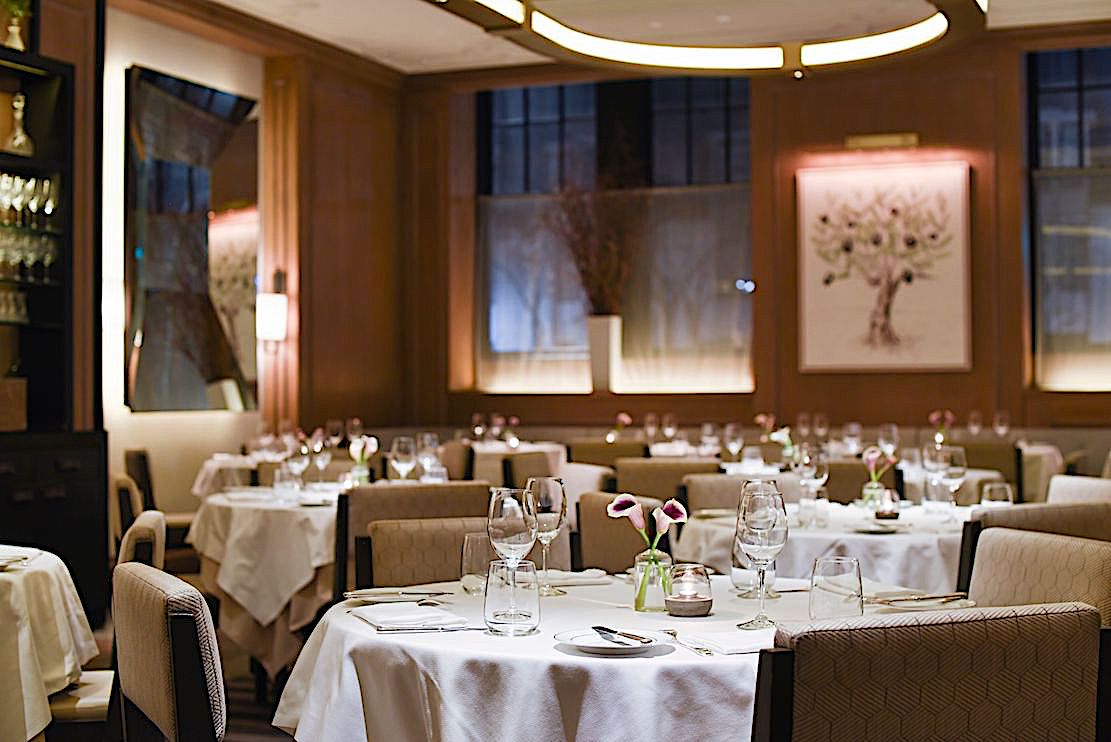
For one thing, aside from the
transformation into Omar upstairs, the lower
room where I dined is still named Vaucluse and
not as loud as it used to be. With its well-set,
well-spaced tables, plush banquettes and elegant
furnishings, this has become one of the most
alluring dining rooms in town—the kind the New
York food media contend no one wants to go to
anymore, despite a full house on a Tuesday, and
a restaurant of distinction that the same media
rarely bother to cover on the tony streets of
the Upper East Side.
For
its
elegance and address, you will pay a high tab,
although, going à la carte, you could enjoy a
fine three-course meal for around $65; for
example, a crab salad or pasta, pan-sautéed
trout with toasted almonds and haricots
verts, and dessert. Otherwise there are
prix fixe menus at $95 for four courses, $135
for six—both lower than comparable menus at
Daniel, La Grenouille or Le Bernardin. 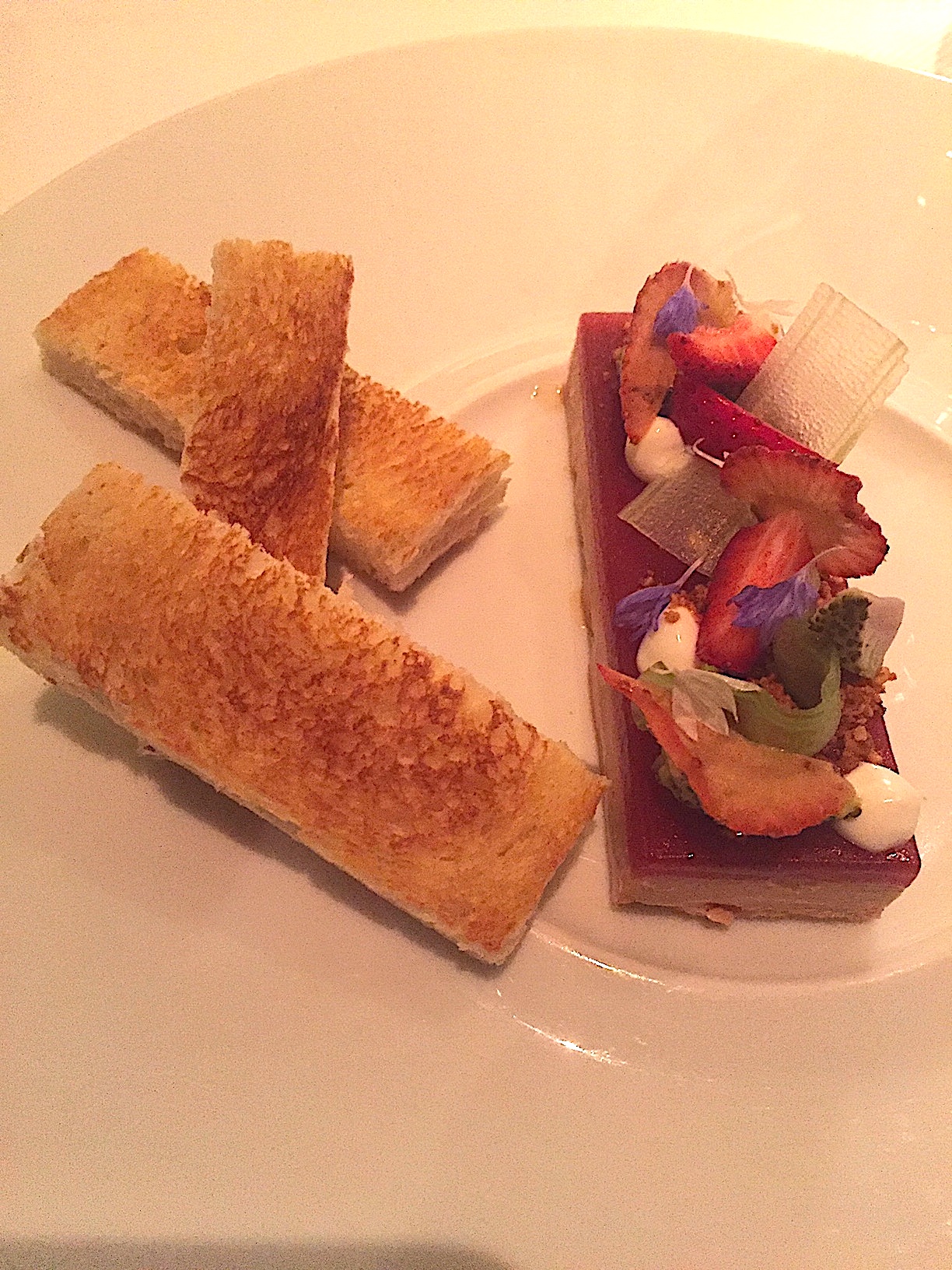
Chef de cuisine Arthur Lee
presents a menu that is of ideal size, and in
its fairly straightforward way dishes keep the
emphasis on the main ingredients, with just
enough complexity to provide nuance and
complementary flavors and textures. One exception was a dish
of Peconic bay scallops, now in season, that
are so sweet and delicate in flavor that
little or nothing needs to be done to them for
maximum effect, and certainly not the shower
of shaved fennel, purple carrots and
snow peas tossed in a spring onion vinaigrette,
orange carrot puree, garlic puree cooked in
cream and pea tendrils ($31 and $54), all of
which overpowered
them.
I was
happy to see that consommé with mushrooms is
still on the menu (though the price has risen
four dollars in four years to $23). A salad of
crab was a generous mélange of crab (described
as “jumbo,” the morsels were closer to “lump”)
with delicious honey crisp apples, elderflower
gelée and trout roe ($27). Silky
and rich was a very classic terrine of duck foie
gras (right)
with pistachio and fig compote ($28).
 As
does every chef these days, Lee has a few pastas
on the menu (as appetizers or entrees),
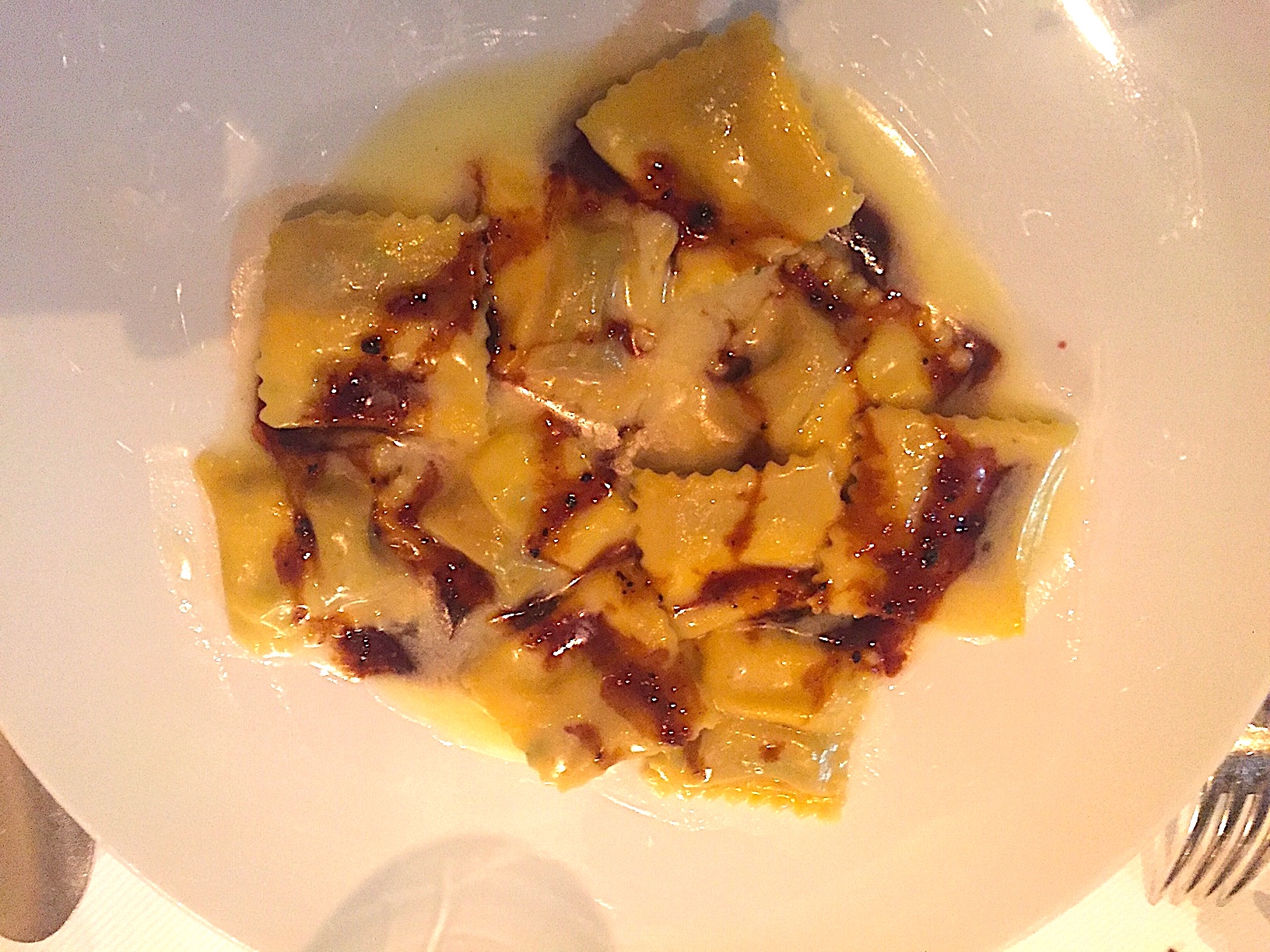
including a marvelous ravioli called
epaulettes
here, stuffed with braised rabbit (left), reblochon,
stracchino, parmigiano and black
truffles was further enriched, much in the
Michael White style, with plenty of melted
butter, more truffles, Madeira and chicken jus ($27 or
$39). A nicely al dente,
housemade squid ink spaghetti was tossed with a
seppia
ragôut, calamari and basil ($27 or $39)—what
Italians call “brutta ma
buoni” (ugly but good), for it was indeed
not very pretty but had several levels of gutsy,
hearty flavor.
As
does every chef these days, Lee has a few pastas
on the menu (as appetizers or entrees),
including a marvelous ravioli called
epaulettes
here, stuffed with braised rabbit (left), reblochon,
stracchino, parmigiano and black
truffles was further enriched, much in the
Michael White style, with plenty of melted
butter, more truffles, Madeira and chicken jus ($27 or
$39). A nicely al dente,
housemade squid ink spaghetti was tossed with a
seppia
ragôut, calamari and basil ($27 or $39)—what
Italians call “brutta ma
buoni” (ugly but good), for it was indeed
not very pretty but had several levels of gutsy,
hearty flavor.
Among the main courses,
seafood holds the most interest, beginning with
a grilled loup
de mer (sea bass) that gained a cascade of
flavors from a parsnip purée, roasted
romanesco, salsify and ivory-colored beurre
blanc ($44).
Fresh, unsalted cod is not on its own
always a tasty fish (below), but at Vaucluse it had
more than usual, pan-roasted and given a fine
boost from braised fennel and tomato fondue,
with tender cannelloni beans for textural
contrast ($44). 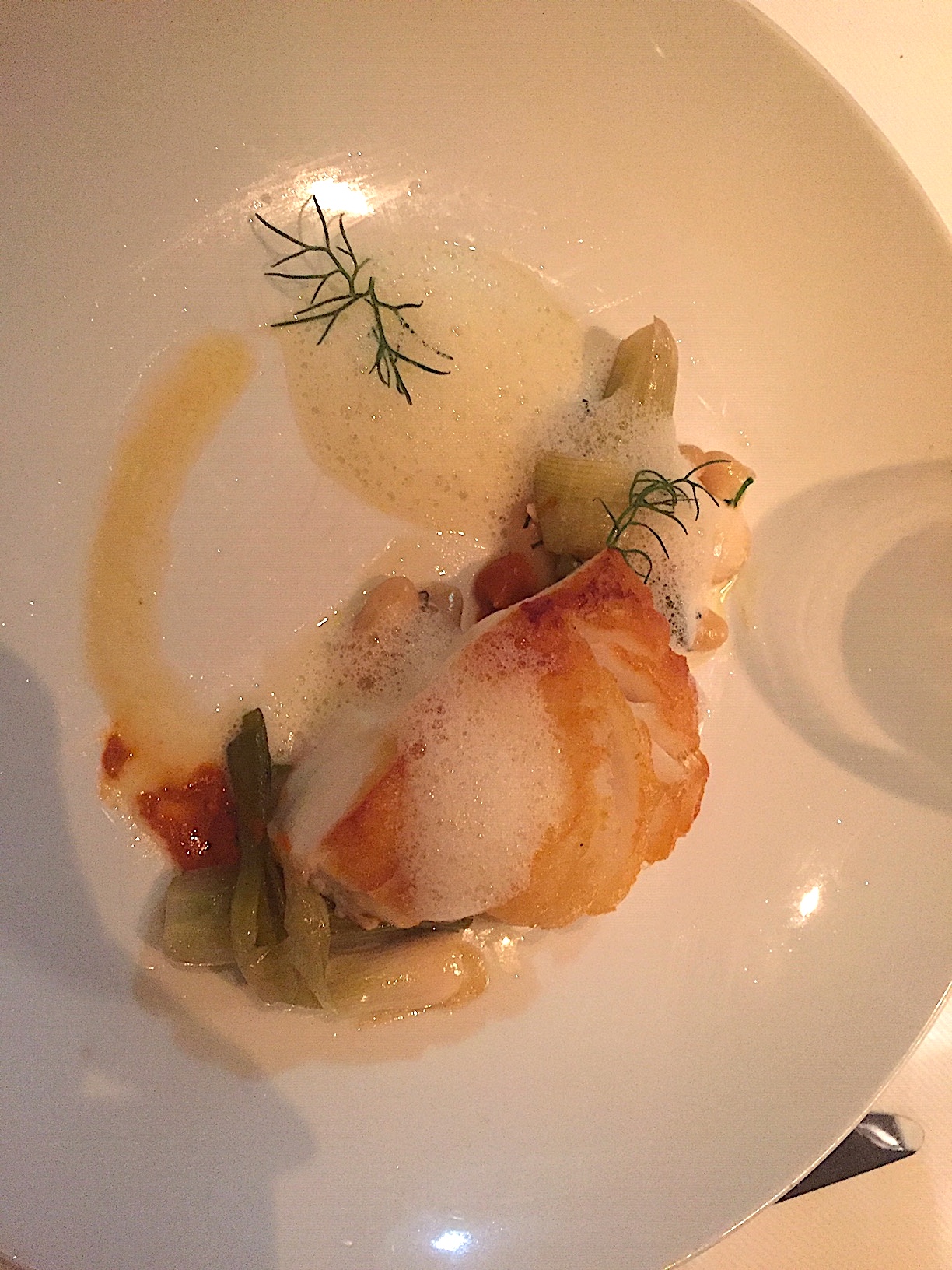
Roast chicken is a dish
French chefs judge their mettle by, possibly in
nostalgic comparison with their mother’s Sunday
dinner. Vaucluse’s
version is to take a hefty portion of the breast
meat, roast it very juicy and serve it with a
creamy polenta, matsutake
mushrooms and a delightful chestnut crȇpinette
($36). I’ll give it a demerit, however, for its
flaccid skin. (My
Italian-American mother achieved a blistering
crisp skin by sticking the chicken parts under
the broiler.)
 Aisha Momaney’s
desserts are very good, very sophisticated and
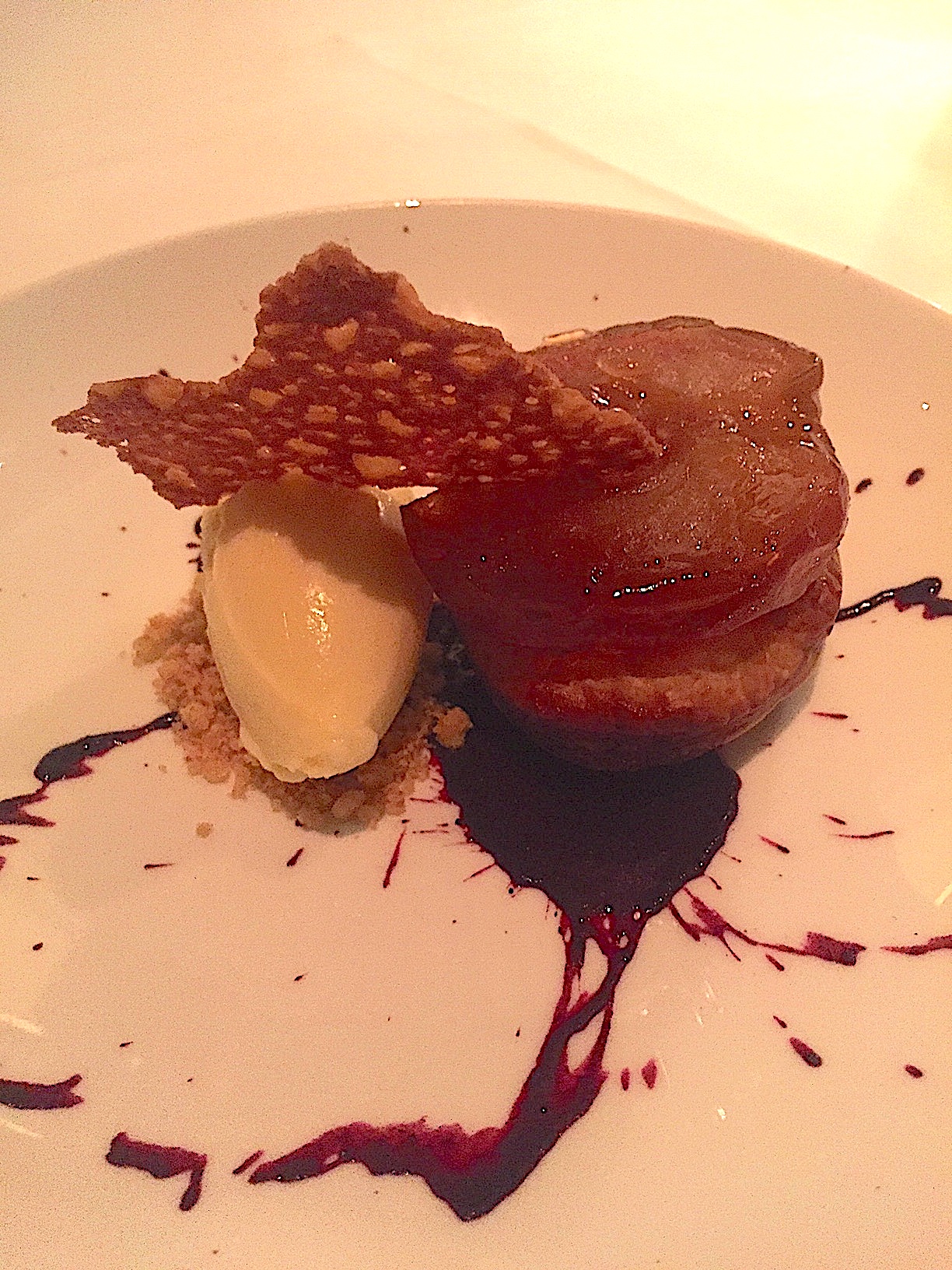
very French, including a Tarte Tatin
aux Pommes
(left)
made with Northern Spy apples, huckleberry and
ginger ice cream;
a chocolate semifreddo with chocolate
crème, brownie and Madeira mascarpone ice
cream; and crispy crêpes
millefeuille with Earl
Gray-scented crème diplomat, grapefruit
confiture and caramelized honey (all $15).
Aisha Momaney’s
desserts are very good, very sophisticated and
very French, including a Tarte Tatin
aux Pommes
(left)
made with Northern Spy apples, huckleberry and
ginger ice cream;
a chocolate semifreddo with chocolate
crème, brownie and Madeira mascarpone ice
cream; and crispy crêpes
millefeuille with Earl
Gray-scented crème diplomat, grapefruit
confiture and caramelized honey (all $15).
The well-priced wine list is
first class, and wine director Richard Anderson
suggested the ideal wine, at just $80, to go
with the wide range of dishes our table of four
had ordered.
The tiresome
adjective “grown-up” should cease to be used
next to the word “restaurant,” as it is these
days to describe a restaurant that people with
expectations of elegance, fine service and a
commitment to manners frequent. It used to be
that many restaurants of many stripes in New
York were always that way. And while it is far
from alone in a wide-ranging pack, Vaucluse most
certainly manifests all those virtues and draws
a clientele that basks in them.
Open for lunch
Mon.-Fri.; dinner nightly; brunch Sun.
Part Two
By John A. Curtas
Verona
After
swimming in rosés for a day, we were ready
to graduate to the next level of Veronese
wines: the bright, sour cherry charms of
Bardolino. And there's no better place to
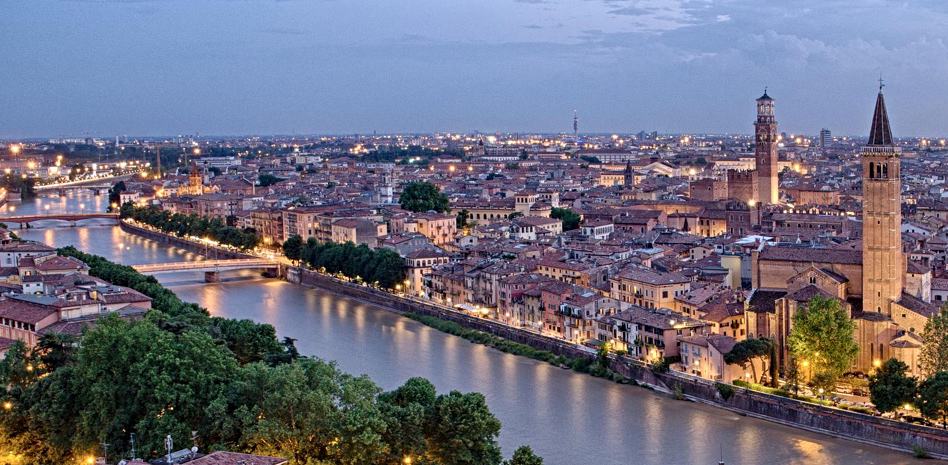
immerse yourself in the wines of the Veneto
than in the city of Verona.
 Bardolino wants to
be taken seriously, or at least more seriously
than it used to be. It is produced on the
shores of Lake Garda and gets its name from
the lovely village of the same name
overlooking the lake (below). It has always been
thought of as a light, easy-pleasing red wine,
generally made with less Corvina and more
Rondinella and Molinara than its Valpolicella
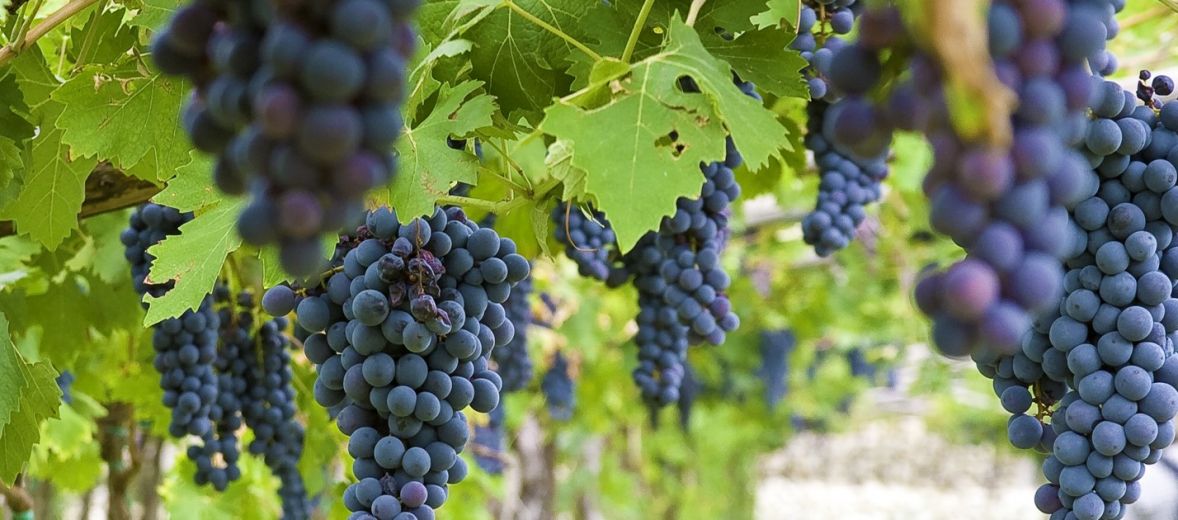
neighbors to the east. The Corvina grape (left)
gives the wine its structure and the typical
sour-cherry aroma, while Rondinella imparts a
fresh, herbaceous character. The
higher-yielding Molinara grape has fallen out
of favor recently, being replaced in some
blends with Barbera, Sangiovese, Mazemino,
Merlot and even Cabernet Sauvignon.
Bardolino wants to
be taken seriously, or at least more seriously
than it used to be. It is produced on the
shores of Lake Garda and gets its name from
the lovely village of the same name
overlooking the lake (below). It has always been
thought of as a light, easy-pleasing red wine,
generally made with less Corvina and more
Rondinella and Molinara than its Valpolicella
neighbors to the east. The Corvina grape (left)
gives the wine its structure and the typical
sour-cherry aroma, while Rondinella imparts a
fresh, herbaceous character. The
higher-yielding Molinara grape has fallen out
of favor recently, being replaced in some
blends with Barbera, Sangiovese, Mazemino,
Merlot and even Cabernet Sauvignon.
Under Italian law,
Bardolino Superiore DOCG (the highest
quality Bardolino) can contain up to 20% of
these other grapes. 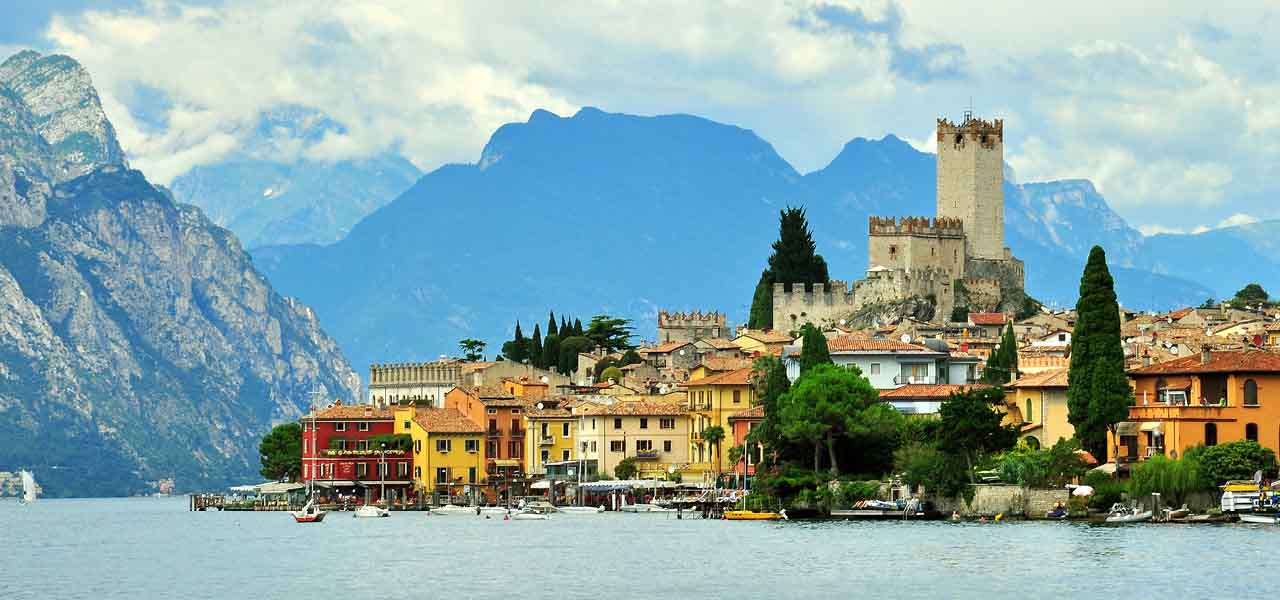 But
the trend appears to be to use more Corvina in
the blend (up to 95%, formerly 80%) to make
the wine richer, fuller, and more competitive
with Valpolicella—its country cousin that is
gaining in reputation among serious imbibers.
In keeping with this trend, Bardolino
producers have concentrated on promoting three
historical sub-zones: La Rocca, Montebaldo and
Sommacampagna—areas carved out by ancient
glaciers, leaving morainic soils that give
this foothills wine a distinct expression.
But
the trend appears to be to use more Corvina in
the blend (up to 95%, formerly 80%) to make
the wine richer, fuller, and more competitive
with Valpolicella—its country cousin that is
gaining in reputation among serious imbibers.
In keeping with this trend, Bardolino
producers have concentrated on promoting three
historical sub-zones: La Rocca, Montebaldo and
Sommacampagna—areas carved out by ancient
glaciers, leaving morainic soils that give
this foothills wine a distinct expression.
In highlighting these
zones, Bardolino seeks to compare itself with
the great crus Beaujolais (Morgon, Brouilly,
Fleurie, et
al), but it's doubtful you'll ever
confuse the Gamay grape with Corvina, since
Beaujolais wines are noted for their
exuberant, silky fruitiness, and there is no
escaping the more rustic, tart and spicy
character of Bardolino. Like its pale pink
sibling Chiaretto, it makes a perfect outdoor
wine, and often benefits from a slight
chilling.
When you're ready to move
up in intensity in the Veneto, Valpolicella is
where you head. If Soave is the most
discredited wine in Italy, Valpolicella may be
the most underrated. Grown on a series of
hillsides and valleys to the east of Lake
Garda, the Corvina grape there reaches a
fuller expression. Mass-market prejudices
against the wine die hard—again, the product
of swamping America with oceans of bulk
"Valpolicella"—but today producers are
destroying these preconceptions with
"Superiore" and "Ripasso" bottlings that
sometimes resemble baby Amarones in their inky
intensity.
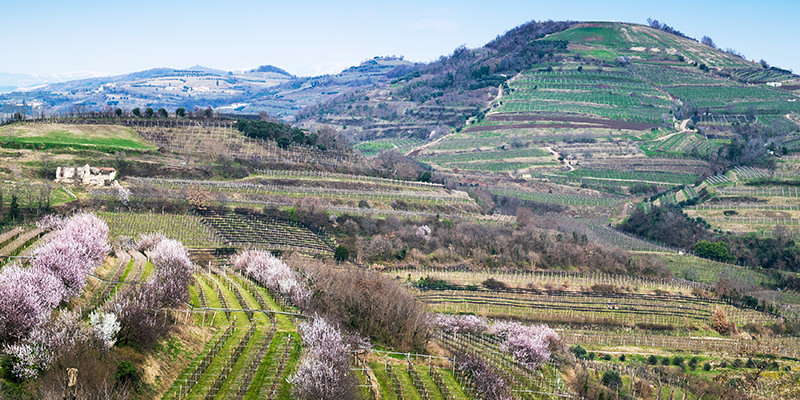 Valpolicella
(the name means "valley of the cellars") is
something of a work-in-progress these days, as
the styles range from deep, dark and resiny to
fresh and fruity. The
former characteristics come from the ripasso
process—wherein a secondary fermentation
occurs after the wine is pumped onto Amarone
lees (skins and pulp) leftover from that
wine's fermentation. The late Giuseppe
Quintarelli is credited with popularizing this
process in the 1980s, thereby elevating the
former trattoria staple to previously unknown
heights of complexity.
Valpolicella
(the name means "valley of the cellars") is
something of a work-in-progress these days, as
the styles range from deep, dark and resiny to
fresh and fruity. The
former characteristics come from the ripasso
process—wherein a secondary fermentation
occurs after the wine is pumped onto Amarone
lees (skins and pulp) leftover from that
wine's fermentation. The late Giuseppe
Quintarelli is credited with popularizing this
process in the 1980s, thereby elevating the
former trattoria staple to previously unknown
heights of complexity.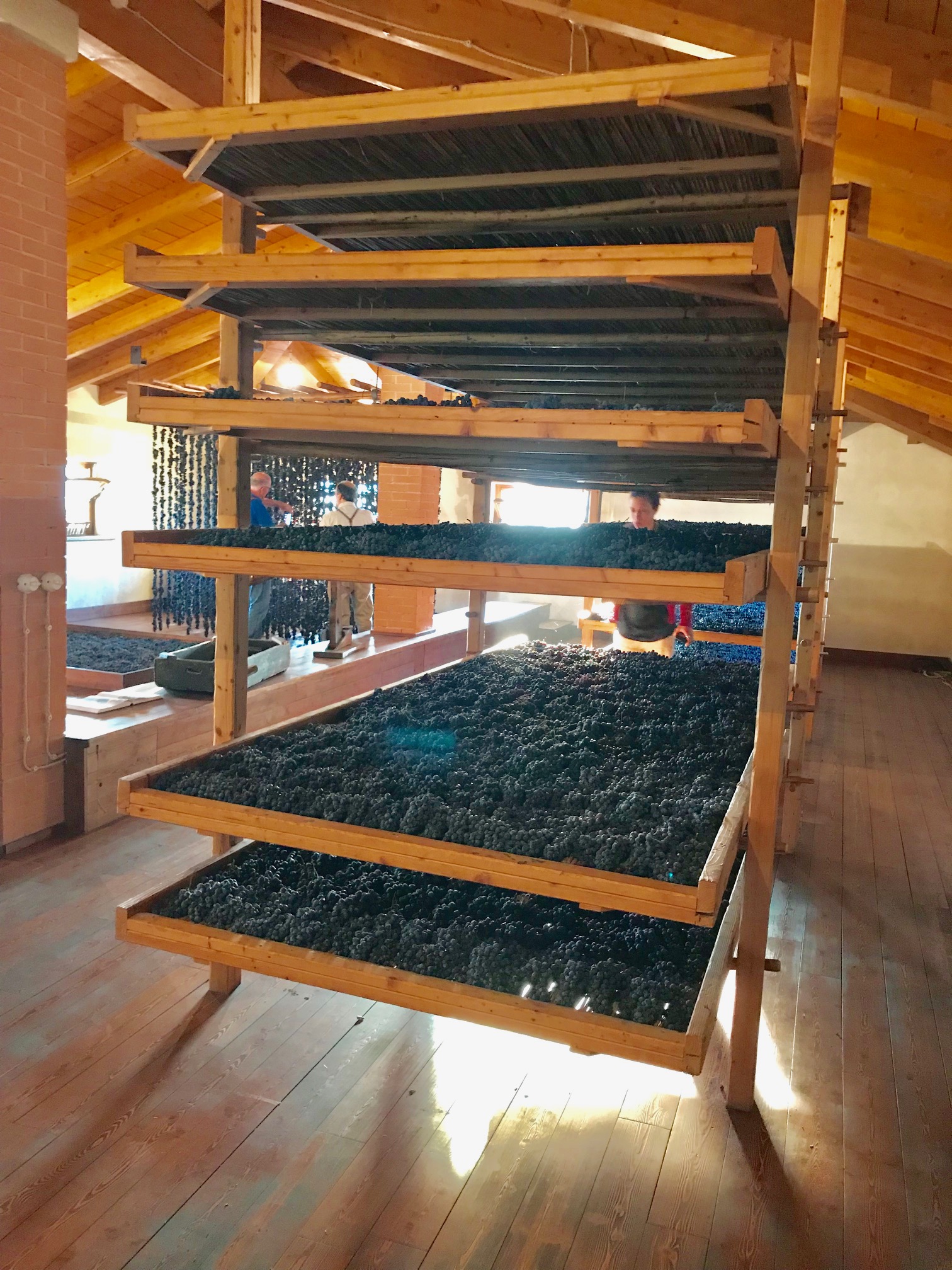
Now, a number of new
winemakers are following his lead, although
often you won't know from the label whether
your Valpolicella Ripasso is Amarone-like
(thick, alcoholic and strong) or sapid, bright
and juicy. Some producers state whether the ripasso
process was used, others do not. This
confusion can be either fascinating or
infuriating, depending on your level of
interest, but I like to think of it as simply
Italians being Italian. Your last two stops up
the Veneto wine ladder will be at Amarone and
Recioto—until recently, the only two wines for
which the region was respected. They are
really just two sides of the same, raisinated
coin—the Veneto being well known for making
wine from dried-out grapes (called appassimento)
for centuries. These two are simply the dry (amaro means
"bitter" in Italian) and sweet evocation of
the process.
Recioto
della Valpolicella has fallen out of favor
these days, but its history dates back to
Roman times, when high alcohol and sweetness
were valued. Amarone, unique among these
wines, is the most modern and said to have
been discovered when someone allowed a barrel
of Recioto to complete its fermentation,
turning sweet, condensed sugars into alcohol,
resulting in a remarkably rich, aromatic, dry
red wine. Amarone as a style
of wine has only been around since the 1950s,
and its luscious, potent, dried-fruit
qualities can seem almost sweet on the palate.
This doesn't keep it from being a perfect
match for game or rich, meaty stews, as well
as just about any strong cheese. Recioto on
its own might be the best cheese-friendly
sweet wine in the world, certainly the equal
of many Ports and Sauternes.
Some notable Bardolino, Valpolicella and Amarone wines:
Le Fraghe Bardolino 2017 ($20)—Corvina (80%) and Rondinella (20%) are vinified separately, then blended. No oak is used, and it gives off a ruby red tinge of medium intensity. Lots of herbs, and spicy nuances in a fruity wrap of sweet-sour berries. Very soft tannins (a characteristic of Bardolino generally) make this an ideal picnic sipper. Quite a drink for the price.
Le Fraghe Bardolino Classico DOC Brol Grande 2015 ($30)—Firmer and more tannic than Le Fraghe's everyday Bardolino, this is one to put down for a while to allow those sweet/sour cherry/berry flavors to integrate with the acid. More than double the cost of most Bardolino, but worth it if you can find it.
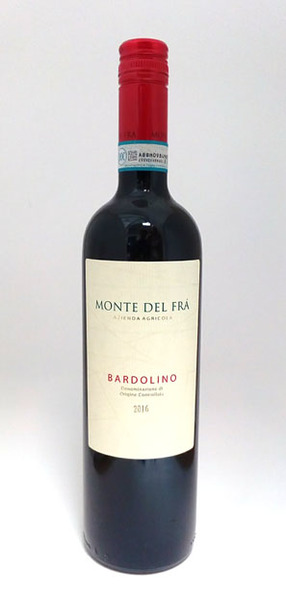 Monte
del Frà 2017 Bardolino DOC ($15)—An old-fashioned, light and
fresh evocation of the style—65% Corvina, 30%
Rondinella, 5% Molinara—meant for easy
drinking with fish, pasta or
pizza.
Monte
del Frà 2017 Bardolino DOC ($15)—An old-fashioned, light and
fresh evocation of the style—65% Corvina, 30%
Rondinella, 5% Molinara—meant for easy
drinking with fish, pasta or
pizza.
Tenuta La Presa Baldovino Bardolino 2017 ($20)—An almost balmy nose of strawberries and cherries gives way to juicy fruit and agreeable tannins. It appears very light in the glass, but has a pleasant grape-y quality that many Bardolino fans search for, but never quite find. Best served slightly chilled with grilled meats or meaty fish.
Vigneti Villabella Valpolicella Ripasso DOC Classico Superiore 2016 ($20)—The ripasso process brings out deeper black fruits, black pepper and dried plum notes that you won't find in Bardolino. This wine shows all of those, plus it is backed by firm acidity and structure, with a mild but persistent grip. Not a quaffer, but a serious compliment to beef stew.
Domìni Veneti Valpolicella DOC Classico Superiore 2016 ($12)—A more traditional Valpolicella, using less Corvina (60%, blended with Corvinone and other varietals), which gives the wine a paler, ruby red hue, lower alcohol (13%), red fruits and floral notes with a touch of pepper. A good example of how producers have upgraded this pizza parlor drink into something more substantial. A steal at $12.
Guerrieri Rizzardi "Pojega"
Valpolicella Ripsasso Classico Superiore
2016 ($20)—The winery's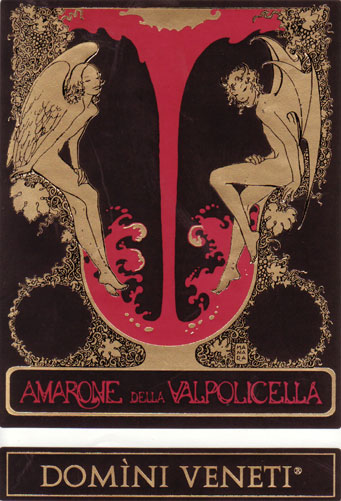 most successful red
(50% Corvinone, 30% Corvina, 20%
Sangiovese/Merlot), definitely not a baby
Amarone, spends twelve months in oak; fruity
but not sweet, light on its feet, but the
smoky cherry and spice come through.
most successful red
(50% Corvinone, 30% Corvina, 20%
Sangiovese/Merlot), definitely not a baby
Amarone, spends twelve months in oak; fruity
but not sweet, light on its feet, but the
smoky cherry and spice come through.
Santico Amarone della Valpolicella Classico DOCG 2013 ($40)—Hand-picked grapes (80% Corvina, 20% Rondinella) are dried for over three months, then aged in oak for another two years. Dark and concentrated, but also smooth and spicy, with plenty of the smoky, macerated black fruit/raisin flavor you expect from Amarone. A great entry-level Amarone.
Domini Veneti Amarone della Valpolicella DOCG Classico 2013 ($35)—Like all Amarone, deep red/purple color lets you know you're in for a palate wallop of 16% alcohol (some breach the 17% line), but the perfume, density, and structure, combined with lots of dried cherries and spice, make the payoff worth it. Even lower priced Amarone like this one will benefit from 10 years in the cellar, although this baby would go just fine with grilled or braised meats, or some strong cheese like Robiola or Taleggio.
Guerrieri Rizzardi "Calcarole" Amarone della Valpolicella DOCG Classico 2011 ($80)—The current release from this large wine estate, made entirely from dried grapes in an older style, aged three years in oak barrels, though not hugely extracted. Lively and fresh on the nose, even at 16% alcohol, with less of the "cooked fruit" quality than you would expect. An absolute stunner that will teach you why people are so passionate about Amarone.
❖❖❖
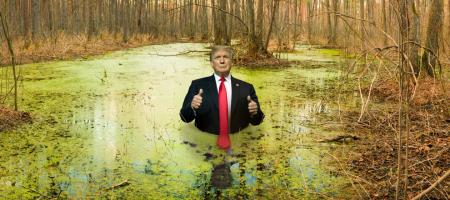
At his restaurant in Yountville,
CA, Chef Thomas Keller served San Francisco
Chronicle's food critic Soleil Ho a soup
course in a bong, saying it was a joke on New York
Times
critic Pete Wells, who wrote in his slashing
review of Keller's NYC restaurant Per Se that “a
lukewarm matsutake mushroom bouillon as murky and
appealing as bong water.” At The French
Laundry the “bong water” is made with porcini
mushrooms and covered with billowing smoke.

MOST EXCITING RESTAURANT
REVIEW OF THE MONTH
❖❖❖
Wine
Column Sponsored by Banfi Vintners
SANGIOVESE
 Wine is a joy year-round but
in cooler weather one
grape varietal has really taken center stage in
my daily activities – that most Italian of
grapes, Sangiovese, and its ultimate expression
– Brunello di Montalcino.
Wine is a joy year-round but
in cooler weather one
grape varietal has really taken center stage in
my daily activities – that most Italian of
grapes, Sangiovese, and its ultimate expression
– Brunello di Montalcino.
From mid-September through mid-October,
the Sangiovese grown for our various styles of red
wines are be harvested, culminating with the top
selection for Brunello di Montalcino.
Second, cooler weather here means
it is time to start enjoying more red wines and
especially Sangiovese based wines. That
includes Banfi’s cru of Brunello, Poggio alle Mura,
literally the cream of the crop of our Sangiovese
vineyards. Alongside our Poggio alle Mura Brunello di
Montalcino, this year we introduced two more wines
from the cru Poggio alle Mura – a Rosso di Montalcino
and a Riserva of Brunello. Rosso is sort of like the
younger brother of Brunello, also made from 100%
Sangiovese grapes but usually a selection from younger
vines and the wine is aged only two years compared to
the four required for Brunello. The
Riserva, on the other hand, is an even more selective
harvest of Sangiovese, and ages for an additional year
before release.
What is so special about this cru
Poggio alle Mura?
Well, it is the result our over 30 years of
ongoing research at my family’s vineyard estate,
Castello Banfi.
When we first began planting our vines there in
the late 1970s studies from the University of Bordeaux
indicated which strains of many varietals we should
plant, based on the soil type and microclimate of each
vineyard. But
when it came to the region’s native Sangiovese, there
was only local lore, no scientific research. So we took
it upon ourselves to figure out this vine, and set off
on three decades of incredibly detailed research.
We started
with 600 apparent variations on Sangiovese, because it
is so susceptible to variations in weather and soil,
and narrowed that down to 160 truly genetically
different clones.
We planted a vineyard with two rows of each
type, made wine from each of them, and charted the
differences – remember, you only get one chance a year
to make wine, so this took time.
It took about ten years to get some
concrete results, though we continue to experiment
today and always will – you never stop learning in
science and nature!
Once we determined which were the best,
complementary clones that could be planted together to
make the best Brunello, we chose to plant them in what
we determined to be the optimal vineyard sites. Coincidentally,
the best soils and climate conditions are in the
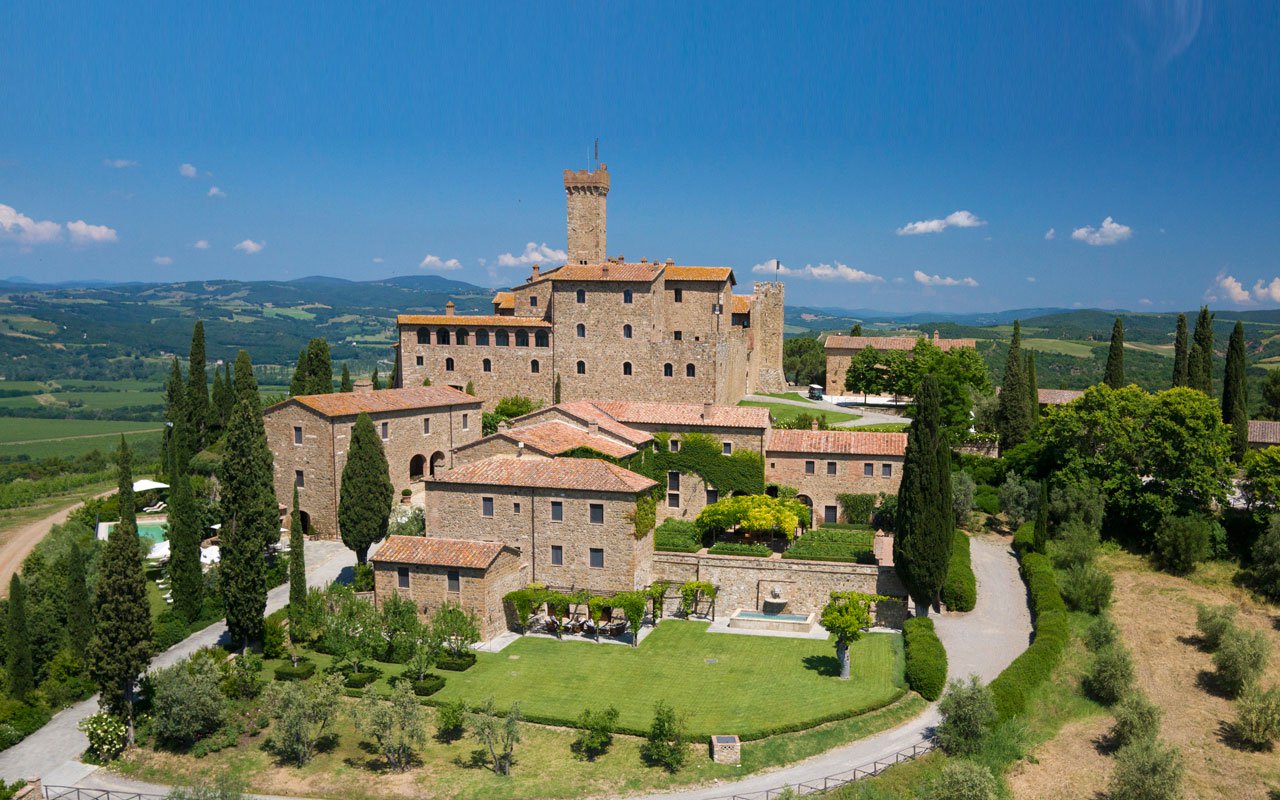
slopes surrounding the medieval fortress today known
as Castello Banfi, known since Etruscan times as
Poggio alle Mura – the walled hilltop. Hence the
name of our most special “cru” of Brunello,
representing a synthesis between tradition and
innovation.
Though the focus of this study was
our Brunello, all of our Sangiovese-based wines,
including the super Tuscans SummuS, Cum Laude, and
Centine, benefitted from this work. And that’s
the third reason for celebrating Sangiovese this
month, for the range of wonderful reds that usher us
into autumn! One
wine in particular was inspired by our research – the
BelnerO, a Sangiovese dominant blend with what I like
to call a kiss of Cabernet and a whisper of Merlot. We grow the
grapes a little differently for BelnerO than for
Brunello, make the wine with less oak aging and
released it earlier from the winery, providing a
counterpoint to Brunello and a lovely terroir-driven
wine in its own right.
If you
know Italians, you know that by nature we are
multi-faceted, varying in mood, and always passionate. As a
nation, we span from the hot sunny beaches of Sicily
near the African coast to the rugged mountains and
Alpine ski slopes of Trentino-Alto Adige in the north. Sangiovese
is grown in almost all of Italy’s regions and reflects
the unique nature of each; it is most famous
(rightfully so) in Tuscany, yet even there it reflects
the nuances of each hilltop, valley and subzone. It has
something a little different to say in Brunello than
Chianti, Morellino than Vino Nobile di Montepulciano,
Rosso di Montalcino than Super Tuscan blends.
Here is a smattering of
Sangiovese-based wines that you may wish to get to
know better, reflecting a spectrum that appeals to
every occasion, every taste, and every budget. We can
assure you that the conversation will never become
boring. 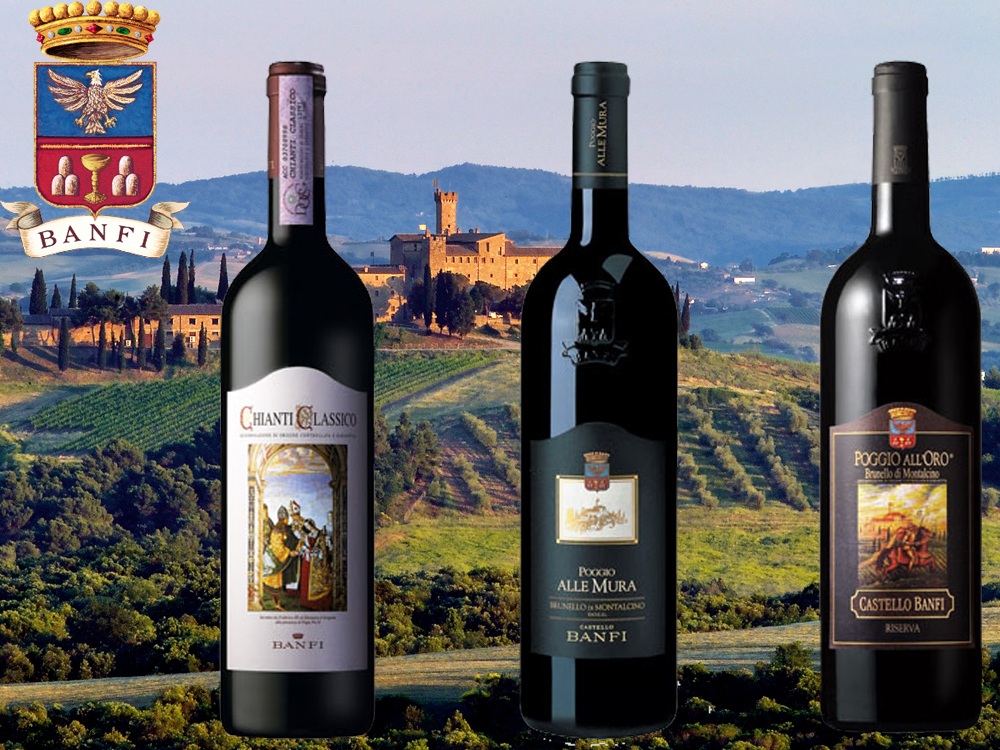
Recommendations for Celebrating
Sangiovese
BelnerO Proprietor’s Reserve Sangiovese
– A refined
cuvée of noble red grapes perfected by our pioneering
clonal research. This dark beauty, BelnerO, is
produced at our innovative winery, chosen 11
consecutive years as Italy’s Premier Vineyard Estate.
Fermented in our patented temperature controlled
French oak and aged approximately 2 additional years.
Unfiltered, and Nitrogen bottled to minimize sulfites.
Castello Banfi Brunello di Montalcino –
Rich, round, velvety and intensely
aromatic, with flavor hints of licorice, cherry, and
spices. Brunello di Montalcino possesses an intense
ruby-red color, and a depth, complexity and opulence
that is softened by an elegant, lingering aftertaste.
Unfiltered after 1998 vintage.
Castello Banfi Rosso di Montalcino – Brunello's "younger brother," produced
from select Sangiovese grapes and aged in barrique for
10 to 12 months. Deep ruby-red, elegant, vibrant,
well-balanced and stylish with a dry velvety
finish.
Poggio all’Oro Brunello di Montalcino
Riserva – A single vineyard selection of our most
historically outstanding Sangiovese, aged five years
before release, the additional year more than that
required of Brunello including 6 months in barrel and
6 months more in bottle to grant its “Riserva”
designation. Incredible
elegance and harmony. Intense with lots of fruit and
subtle wood influence. Round, complete, well balanced
with hints of chocolate and berries. Unfiltered after
1998.
Poggio alle Mura – The first tangible result of years of
intensive clonal research on Montalcino’s native
Sangiovese grape.
Estate bottled from the splendidly sun drenched
vineyards surrounding the medieval Castello from which
it takes its name.
The Brunello
di Montalcino is seductive, silky and smoky. Deep ruby
in color with an expressive bouquet of violets, fruits
and berries as well as cigar box, cedar and exotic
spices. The Rosso
di Montalcino is also intense ruby red. The bouquet
is fresh and fruity with typical varietal notes of
cherry and blackberry, enriched by more complex hints
of licorice, tobacco and hazelnut. It is full
bodied, yet with a soft structure, and a surprisingly
long finish. The Poggio alle Mura Brunello di Montalcino
Riserva is deep ruby red with garnet
reflections and a rich, ample bouquet that hints of
prune jam, coffee, cacao and a light balsamic note. It is full
and powerful, with ripe and gentle tannins that make
it velvety and harmonious; this wine is supported by a
pleasing minerality that to me speaks soundly of that
special hillside in southern Montalcino.
SummuS – A wine of towering elegance, SummuS is an
extraordinary blend of Sangiovese which contributes
body; Cabernet Sauvignon for fruit and structure; and
Syrah for elegance, character and a fruity bouquet. An elegant,
complex and harmonious red wine.
Cum Laude – A complex and elegant red which graduated
“With Honors,” characterized by aromas of juicy
berries and fresh spices.
Centine – A Cuvee that is more than half
Sangiovese, the balanced consisting of equal parts of
Cabernet Sauvignon and Merlot. Vinified in
a firm, round style that easily accompanies a wide
range of dishes, this is a smooth and fragrantly
satisfying wine with international character, and a
perennial favorite at my own dinner table.
Banfi Chianti Superiore – The “Superiore” designation signifies
stricter government regulations regarding production
and aging requirements, as compared to regular
Chianti. An
intense ruby red wine with fruit forward aromas and
floral notes. This
is a round wine with well-balanced acidity and fruit.
Banfi Chianti Classico – An enduring classic: alluring
bouquet of black fruit and violets; rich flavors of
cherry and leather; supple tannins and good acidity
for dining.
Banfi Chianti Classico Riserva – Produced from select grapes grown in the
"Classico" region of Chianti, this dry, fruity and
well-balanced red has a full bouquet reminiscent of
violets.
Fonte alla Selva Chianti Classico – This is our newest entry into the Chianti
arena, coming from a 99 acre estate in Castellina, the
heart of the Chianti Classico region. The wine is
a captivating mauve red that smells of cherry, plum
and blackberry with hints of spice. It is
round, full and balanced with very good
acidity.
Col di Sasso – Sangiovese and Cabernet Sauvignon. Luscious,
complex and soft with persistent notes of fruit and
great Italian style structure.
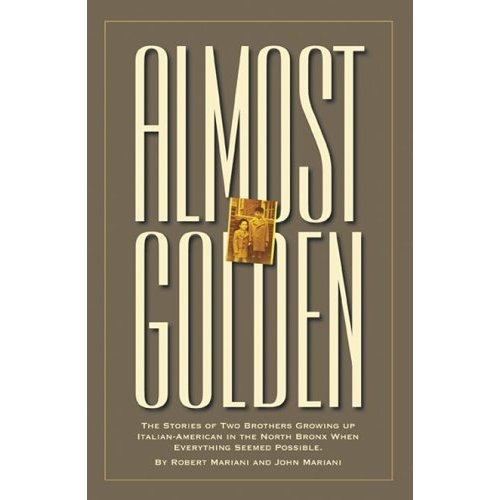
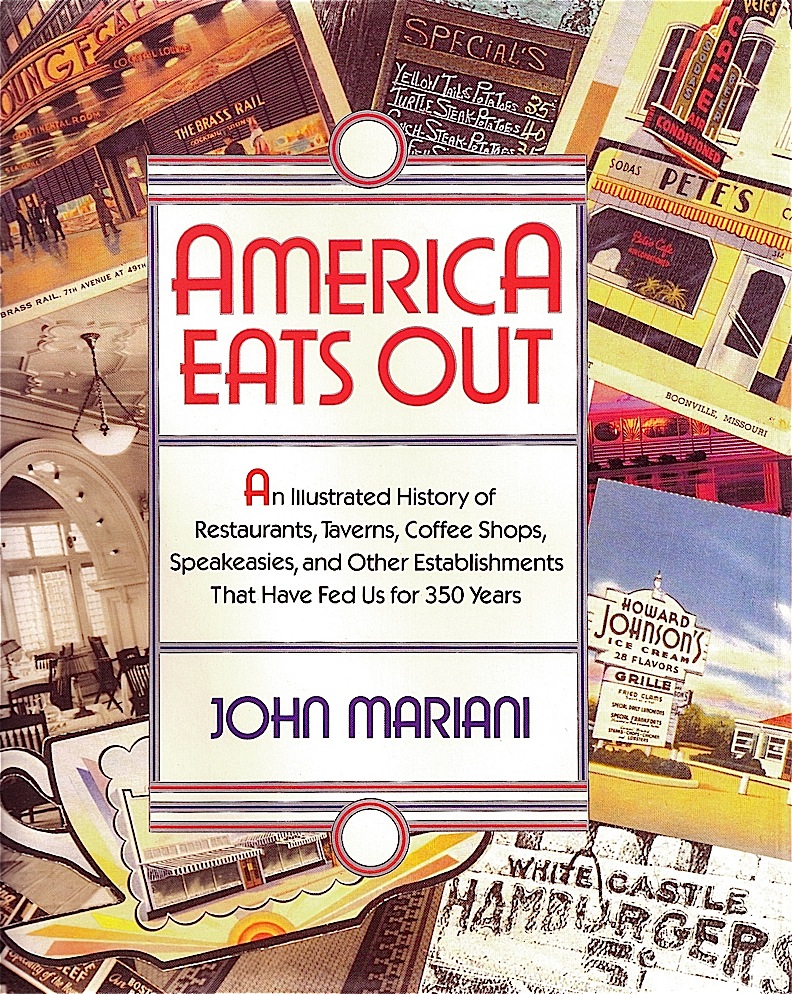
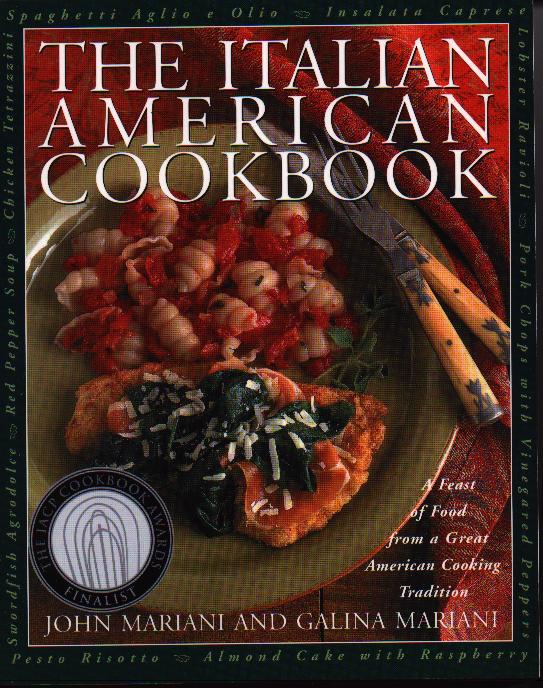
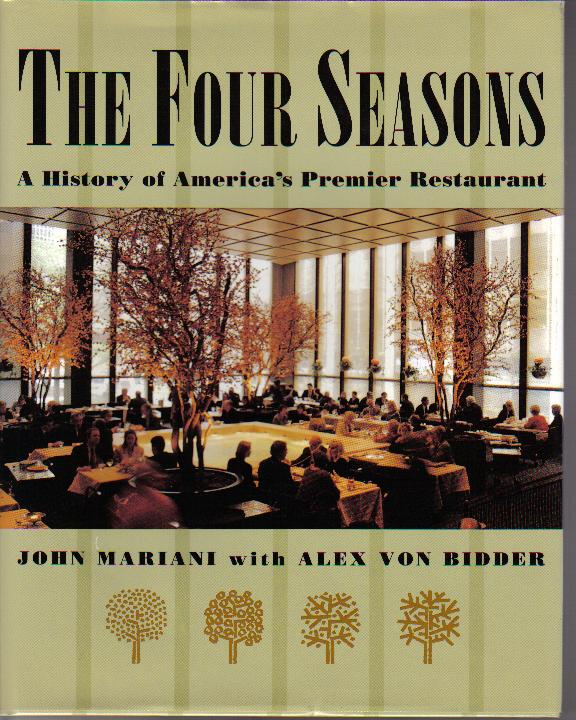
Any of John Mariani's books below may be ordered from amazon.com.
 The Hound in Heaven
(21st Century Lion Books) is a novella, and
for anyone who loves dogs, Christmas, romance,
inspiration, even the supernatural, I hope you'll find
this to be a treasured favorite. The story
concerns how, after a New England teacher, his wife and
their two daughters adopt a stray puppy found in their
barn in northern Maine, their lives seem full of promise.
But when tragedy strikes, their wonderful dog Lazarus and
the spirit of Christmas are the only things that may bring
his master back from the edge of despair.
The Hound in Heaven
(21st Century Lion Books) is a novella, and
for anyone who loves dogs, Christmas, romance,
inspiration, even the supernatural, I hope you'll find
this to be a treasured favorite. The story
concerns how, after a New England teacher, his wife and
their two daughters adopt a stray puppy found in their
barn in northern Maine, their lives seem full of promise.
But when tragedy strikes, their wonderful dog Lazarus and
the spirit of Christmas are the only things that may bring
his master back from the edge of despair. WATCH THE VIDEO!
“What a huge surprise turn this story took! I was completely stunned! I truly enjoyed this book and its message.” – Actress Ali MacGraw
“He had me at Page One. The amount of heart, human insight, soul searching, and deft literary strength that John Mariani pours into this airtight novella is vertigo-inducing. Perhaps ‘wow’ would be the best comment.” – James Dalessandro, author of Bohemian Heart and 1906.
“John Mariani’s Hound in Heaven starts with a well-painted portrayal of an American family, along with the requisite dog. A surprise event flips the action of the novel and captures us for a voyage leading to a hopeful and heart-warming message. A page turning, one sitting read, it’s the perfect antidote for the winter and promotion of holiday celebration.” – Ann Pearlman, author of The Christmas Cookie Club and A Gift for my Sister.
“John Mariani’s concise, achingly beautiful novella pulls a literary rabbit out of a hat – a mash-up of the cosmic and the intimate, the tragic and the heart-warming – a Christmas tale for all ages, and all faiths. Read it to your children, read it to yourself… but read it. Early and often. Highly recommended.” – Jay Bonansinga, New York Times bestselling author of Pinkerton’s War, The Sinking of The Eastland, and The Walking Dead: The Road To Woodbury.
“Amazing things happen when you open your heart to an animal. The Hound in Heaven delivers a powerful story of healing that is forged in the spiritual relationship between a man and his best friend. The book brings a message of hope that can enrich our images of family, love, and loss.” – Dr. Barbara Royal, author of The Royal Treatment.
 |
The Encyclopedia of American Food and Drink by John F. Mariani (Bloomsbury USA, $35) Modesty forbids me to praise my own new book, but let me proudly say that it is an extensive revision of the 4th edition that appeared more than a decade ago, before locavores, molecular cuisine, modernist cuisine, the Food Network and so much more, now included. Word origins have been completely updated, as have per capita consumption and production stats. Most important, for the first time since publication in the 1980s, the book includes more than 100 biographies of Americans who have changed the way we cook, eat and drink -- from Fannie Farmer and Julia Child to Robert Mondavi and Thomas Keller. "This book is amazing! It has entries for everything from `abalone' to `zwieback,' plus more than 500 recipes for classic American dishes and drinks."--Devra First, The Boston Globe. "Much needed in any kitchen library."--Bon Appetit. |
"Eating Italian will never be the same after reading John Mariani's entertaining and savory gastronomical history of the cuisine of Italy and how it won over appetites worldwide. . . . This book is such a tasteful narrative that it will literally make you hungry for Italian food and arouse your appetite for gastronomical history."--Don Oldenburg, USA Today. "Italian
restaurants--some good, some glitzy--far
outnumber their French rivals. Many of
these establishments are zestfully described
in How Italian Food Conquered the World, an
entertaining and fact-filled chronicle by
food-and-wine correspondent John F.
Mariani."--Aram Bakshian Jr., Wall Street
Journal.
"Equal parts
history, sociology, gastronomy, and just
plain fun, How Italian Food Conquered the
World tells the captivating and delicious
story of the (let's face it) everybody's
favorite cuisine with clarity, verve and
more than one surprise."--Colman Andrews,
editorial director of The Daily
Meal.com. "A fantastic and fascinating
read, covering everything from the influence
of Venice's spice trade to the impact of
Italian immigrants in America and the
evolution of alta cucina. This book will
serve as a terrific resource to anyone
interested in the real story of Italian
food."--Mary Ann Esposito, host of PBS-TV's
Ciao
Italia. "John Mariani has written the
definitive history of how Italians won their
way into our hearts, minds, and
stomachs. It's a story of pleasure over
pomp and taste over technique."--Danny Meyer,
owner of NYC restaurants Union Square
Cafe, The Modern, and Maialino.
|
 |
 |
 |
 |
 |
 |
 |
 |
 Everett Potter's Travel Report:
 Eating Las Vegas
JOHN CURTAS has been covering the Las Vegas
food and restaurant scene since 1995. He is
the co-author of EATING LAS VEGAS – The 50
Essential Restaurants (as well as
the author of the Eating Las Vegas web site: www.eatinglasvegas.
He can also be seen every Friday morning as
the “resident foodie” for Wake Up With the
Wagners on KSNV TV (NBC) Channel 3 in
Las Vegas.
Eating Las Vegas
JOHN CURTAS has been covering the Las Vegas
food and restaurant scene since 1995. He is
the co-author of EATING LAS VEGAS – The 50
Essential Restaurants (as well as
the author of the Eating Las Vegas web site: www.eatinglasvegas.
He can also be seen every Friday morning as
the “resident foodie” for Wake Up With the
Wagners on KSNV TV (NBC) Channel 3 in
Las Vegas.

MARIANI'S VIRTUAL GOURMET
NEWSLETTER is published weekly. Publisher: John Mariani. Editor: Walter Bagley. Contributing Writers: Christopher Mariani,
Robert Mariani, Misha Mariani, John A. Curtas, Gerry Dawes, Geoff Kalish,
and Brian Freedman. Contributing
Photographer: Galina Dargery. Technical
Advisor: Gerry
McLoughlin.
If you wish to subscribe to this
newsletter, please click here: http://www.johnmariani.com/subscribe/index.html
© copyright John Mariani 2019