MARIANI’S
Virtual
Gourmet
SEPTEMBER 20, 2026
NEWSLETTER
30th ANNIVERSARY
Founded in 1996
ARCHIVE
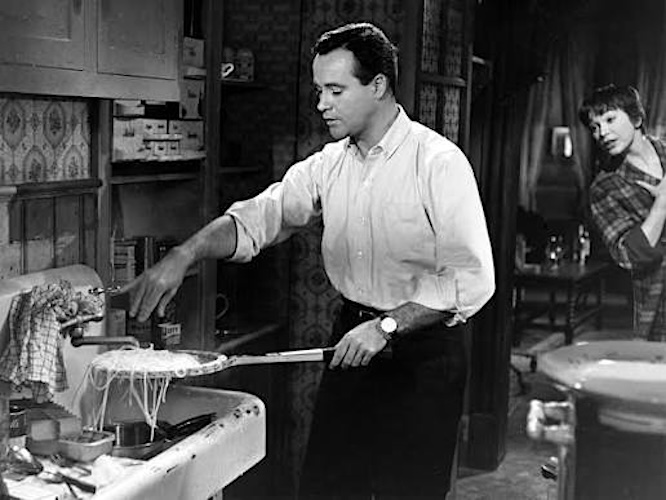
Jack Lemmon and Shirley MacLaine in "The Apartment" (1960)
❖❖❖
ONE I GT
A NEW RESORT ON GRAND CAYMAN
By John Mariani
NEW YORK CORNER
JAZBA
By John Mariani
PEARL
The Mysterious Death of Janis Joplin
Chapter One
By John Mariani
GLUTTONY
WHY WE EAT OURSELVES SICK
By John Mariani
NOTES FROM THE WINE CELLAR
CHAMPAGNE HARVEST OF 2026
LOOKS LIKE A WINNER
By John Mariani
ONE
I
GT HOTEL
63
Goring Avenue
George Town, Grand
Cayman
345-858-2302
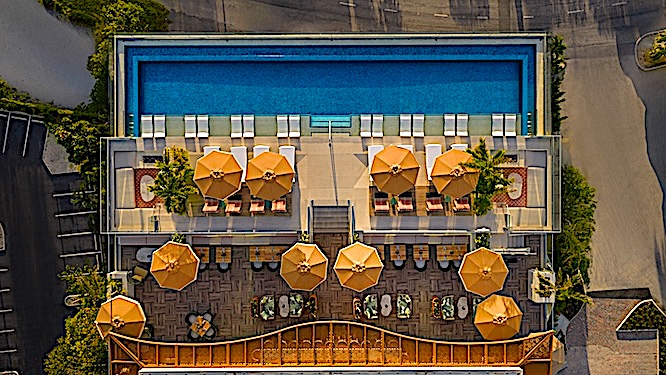
The Infinity Pool at One I GT
As noted in my recent
article on Grand Cayman Island, it is an
island on which to zone out, and up until
ten years ago there were precious few places
to do it in style. But little by little the
American hotel chains recognized the
island’s reclusive virtues––for one thing,
there hasn’t been a hurricane since 2006––
as an attraction for an upper- and upper-middle class
clientele who do not want to stay at hotels
with 1,000 rooms and mediocre resort food.
Kimpton, Ritz-Carlton, Hilton and Westin all
have their branches here. The newest onboard
is the ONE I
GT, which, despite its uninspired name, is
as modern a hotel as you can now find on the
island.
Opened
last May, it’s located in the center of George
Town itself, its rooms and rooftops
overlooking the streets and harbor. Its
management company Remington Hospitality has
been involved in the Caribbean and Latin
America in recent years, with hotels in Costa
Rica, Puerto Rico, Mexico and now Grand
Cayman.
ONE
I GT has the
now requisite infinity pool, fitness center
and on-site parking, and at 144 feet in
height, with only 97 suites (serving up to ten
guests) wrapped in floor-to-ceiling windows,
with King size beds, well-equipped full kitchens and dining area, terraces, big
well-lighted bathrooms and 65-inch TV screens.
Modern amenities mean that they've put the USB
ports at waist level rather than behind
furniture.
The
decor is minimalist, a cool shade of white
with taupe-colored furniture, bleached wood
and folding curtains.
The
lobby (right) and the mezzanine have a
remarkably fine collection of artwork and
bookshelves, and sunny Café Bellini is
open throughout the day for breakfast and
light fare. Of particularly interest are the
very well-made breakfast pastries, like the
almond croissants.
That rooftop pool setting is a
refreshing panorama on the sea, and you can
eat an impressive array of small plates 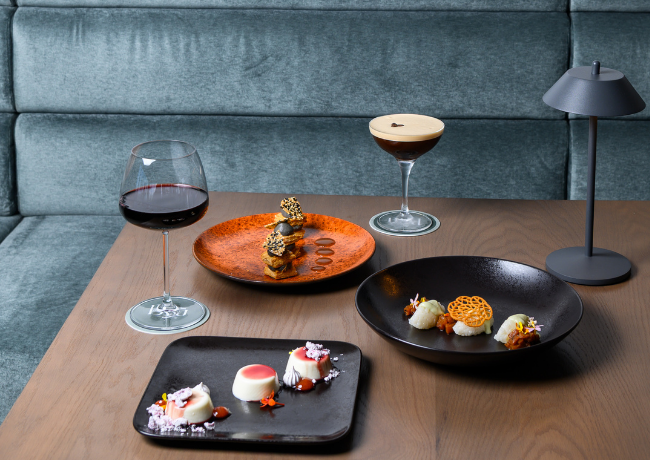 dishes
that are both Caribbean and Asian inspired at
Byū (Japanese for “view”)
eatery and bar. Some are snack oriented and
meant to be shared while seated on very
comfortable sofas and banquettes.
The offerings are
surprisingly extensive, from maki rolls with
lemongrass and coconut to a crudo of
snapper with a passion fruit reduction, and
spiny lobster tempura. The well-spiced duck bao
and glazed pork belly tostones are
terrific, as are the significantly hot and
spicy jerk chicken wontons.
As you might imagine,
there are a slew of specialty cocktails, and
when the place fills up––often with revelers
rather than sit-down-diners––it can get
intensely loud, music speakers appended. Go
early, watch the twilight, enjoy a mojito and
relax.
The
more formal dining room, Perle––as
formal as it ever gets in the islands––is a
tall-ceiling room with 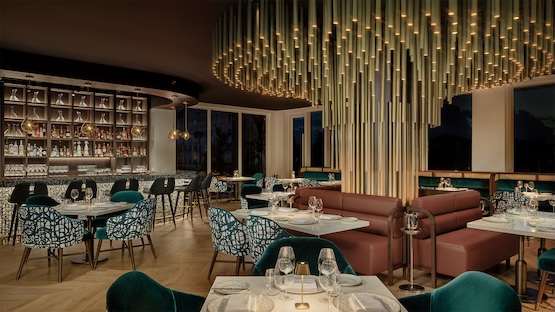 a
stunning chandelier of light tubes, an open
kitchen, well-set tables and beautiful
back-lighted bar area. Here the food is
seriously Italian and European, which
contrasts with so many Caribbean restaurants
that feel they must cater to a crowd that
comes for grilled fish, lobsters (flown in
from the North Atlantic, as so much food is in
the Caribbean), steaks and burgers with French
fries on every plate.
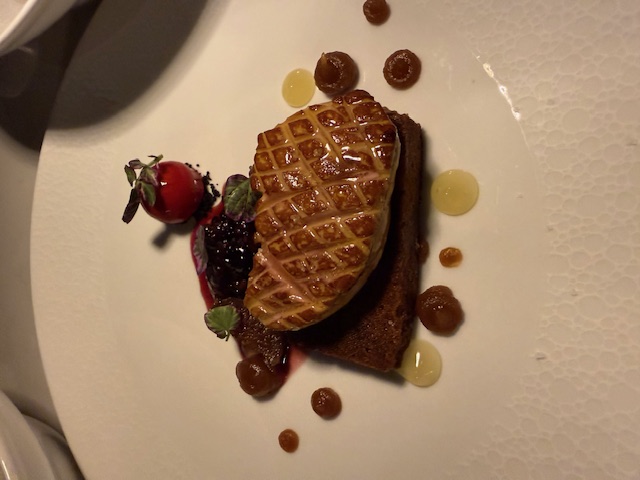 I
asked the food and beverage manager why One I GT differed
from that standard plan, and he said that the
island’s visitors were now looking for more
and finer cuisine, and Perle is certainly an
impressive commitment to that idea. For the
rest, there is Byū.
Hiring kitchen staff is
one of the tougher problems chefs must solve
in the Caribbean, where there is no history of
fine dining and hospitality. But chef René
Cahane seems to have weathered that storm, for
the staff . of various nationalities,
both in and out of the kitchen are as
professional as you’ll find in the States and
the food well-rendered Mediterranean
cuisine. They do a lobster bisque, flamed with
Pernod, and a bouillabaisse as true to form as
you’d find in Marseille, 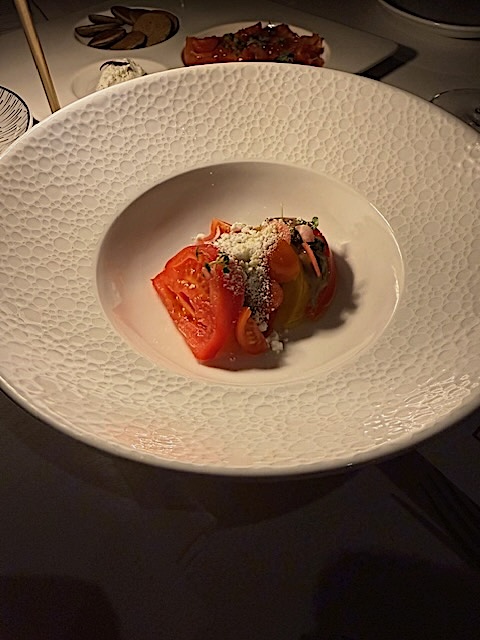 and the
grade A foie gras (above) is expertly
seared and served with Cayman mango gel and
gastrique with pain d’epices.
The kitchen manages to make a pretty good, if
fussy, risotto, cooked
with razor clams, chorizo and tomato confit in
a tarragon-saffron foam. Also a dish of
tender gnocchi formed from purple and sweet
potatoes, with a touch of mustard, a little
sage, gremolata and sage was very
tasty.
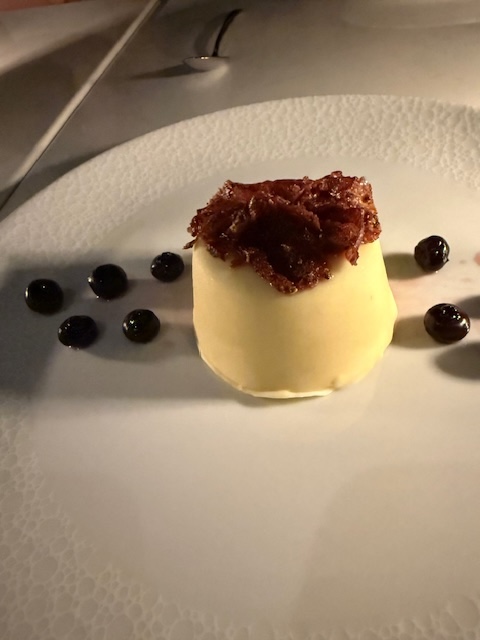 Moulard
duck breast and leg are braised as a confit,
rich in its own fat, served with lentils du Puy,
squash, asparagus and a splash of sweet Grand
Marnier jus. Tournedos à la Perle,
composed six ounces of Wagyu beef with
pink peppercorn-crusted foie gras, butter and
cheese-rich pommes Aligot,
collard greens and an aged rum, was a tour de
force of flavors and contrasts.
For those who do want just plain grilled
meat, they offer a New York strip or a ribeye.
Desserts go beyond the usual Key lime pie and cheesecake, with options like soft-centered chocolate torte with whipped cream, crème brûlée and bites of candies and pastries to finish the meal.
Open
Tues.-Sat.
for dinner
When I visited
this summer the wine list was small but had
good selections, said to be in the process of
being added to. Open
Tues.-Sat.
for dinner
It wasn't very long ago
that I never would have assumed a hotel and
its dining options would reach the heights one
now finds on Grand Cayman, and One I GT has set a
new high standard of what is sure to
follow.
NEW YORK CORNER

646-861-3343
By John Mariani
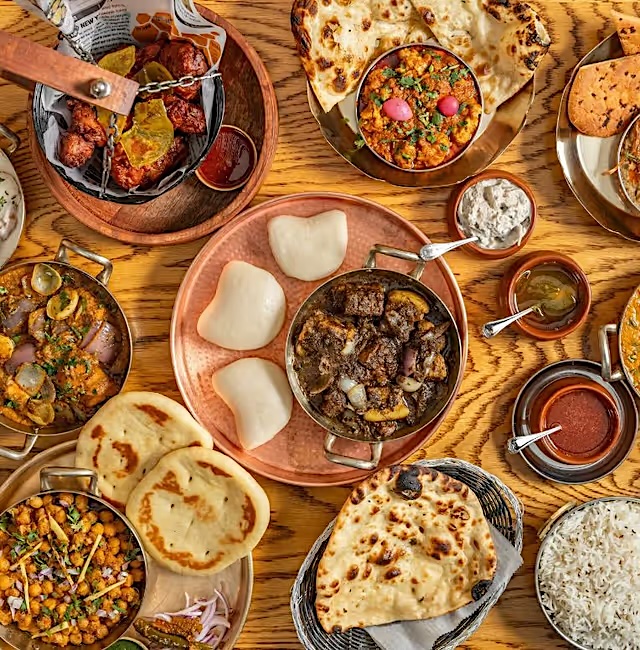
I am not in the
business of every week pronouncing a new
gastro-trend, but allow me to suggest that many of
the most exciting and diverse new restaurants to
open in New York, after a wave of Mexican and
Korean peaked, are Indian. Classics like Junoon
and Utsav in midtown and Tamarind in TriBeCa upped
the ante on those traditional, mostly Mughal
restaurants in the Little Delhi neighborhoods in
Manhattan and Queens.
 Now,
Jazba
turns the key on a door that features the street
food of many regions of India, as interpreted by
Executive Chef Akshay Bhardwaj, including Goa,
Uttar Pradesh, Punjab, Delhi, Andra Pradesh and
Rajastan. It is sister restaurant to Junoon, and
Akshay is son of its owners, Rajesh and Neena
Bhardwaj. “Our dishes are very much a lens into how
Indians actually eat,” says Alshay, “and we are
excited that they will resonate with New Yorkers
and visitors to the city alike” at dhabas,
roadside eateries, which often serve just a
single dish; at Jazba, it’s like having a myriad
number of dhabas offering their
specialties.
The colorful, well-lighted and not-too-loud
interior, too, evokes the Indian street vendors in
murals by sculptor and designer Tarik Currimbhoy.
The descriptions on the menu all sound very
tempting, and our party of four chose from all
over the categories, beginning with Aslam Butter
Chicken from Aslam Chicken Corner near the famed
Jama  Masjid,
Old Delhi, recipe dating back to the 1950s.
Kebabs are
ubiquitous roadside snacks, and Jazba’s Qureshi
Ke Seekh Kebab is made with smoky mutton based
on a 200-year-old Delhi recipe. Murg
angari is a quickly cooked, seared and tender
tandoori chicken dish perfumed with fennel,
coriander, ginger and pickled daikon for a little
tang.
Indian chaat are prized for their variety and balance of flavors, often with potato, and Jazba’s Basket Chaat is just that, a basket filled with crispy potatoes, chutneys and yogurt, inspired by the illustrious and luxurious Royal Café in Lucknow, which opened in the 1960s.
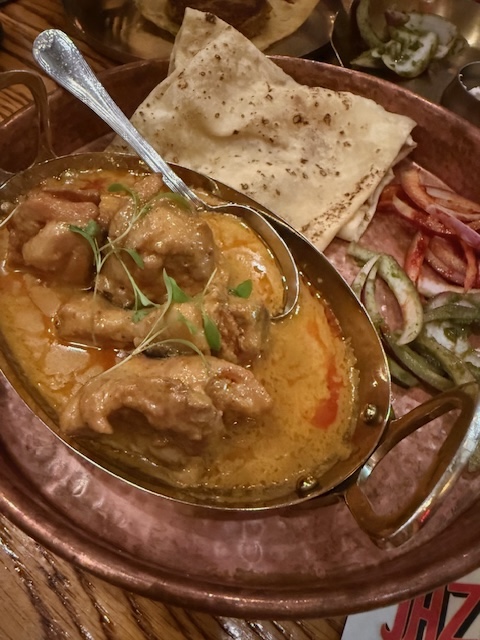 Despite those who associate curries with
the Raj, India has innumerable examples. The
complex, savory Railway Mutton Curry, dating back
to the early 20th century Raj-era train dining car
classic for first-class passengers is a
savory piece of history on a plate..
Spiciness and heat made be modulated to taste, but for something fiery have the Andhra-style Green Chili Chicken cooked in the roadside
 eateries in Telangana’s
Rayalaseema region. It goes well with the cooling Atari Paneer
of housemade cottage cheese in a tomato-yogurt
gravy, said to honor “the last-standing eatery in
the border village of Atari in Punjab.”
I think my favorite dish was vegetarian––Baingan Bharta, made with smoked eggplant and tomato mash marvelously blended with spices and herbs, another Punjabi item.
Of course, the Indian breads are all you hope for––steamy, crisp but pliant, with different flavors.
Materfamilias Neena makes the signature rice pudding, which takes six pounds of fragrant basmati rice cooked for six hours and infused with saffron to achieve the perfect texture. The spongy gulag jamun are also good, and the ras malai (right) creamy and flavorful with pistachio and gold leaf.
Jazba is also
proud of its extensive cocktail program,
overseen by
General Manager and Chief Mixologist Hemant
Pathak.
There are two
fixed price menus, one, for two courses, at $57,
and another for three, at $63.
As Junoon continues in New York
as a high-end experience for Indian cuisine,
Jazba brings a more casual and more educational
regional cuisine to the East Village where long
ago Indian restaurants first burgeoned in
Manhattan. It's been a savory journey to arrive
here now.
Open
nightly for dinner; Lunch Sat. & Sun.
PEARL
The Mysterious Death of Janis
Joplin
By John Mariani
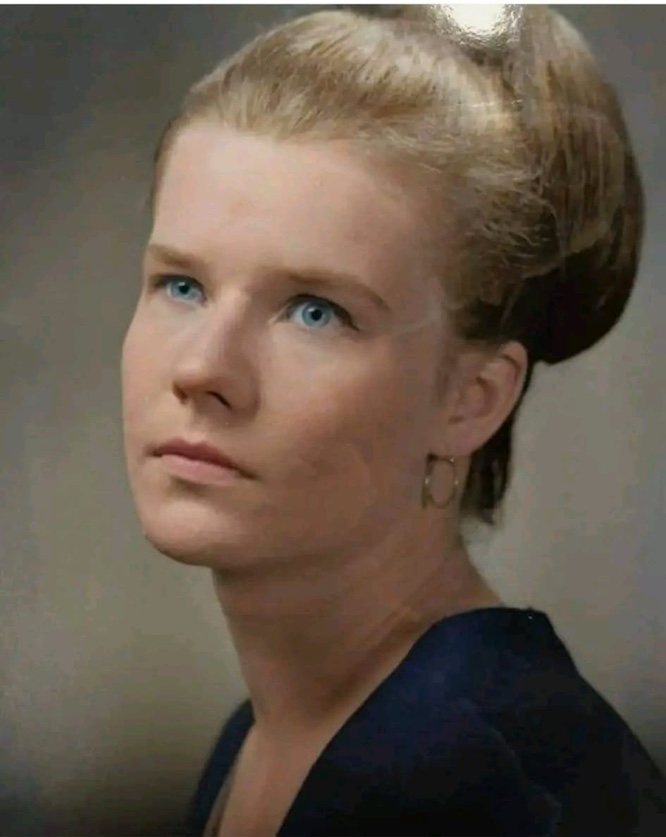
CHAPTER ONE
“Sittin' down by my window
Honey,
lookin' out at the rain
Lord,
Lord, Lord, sittin' down by my window
Baby,
lookin' out at the rain
Somethin'
came along, grabbed a hold of me
And it
felt just like a ball and chain
Honey,
that's exactly what it felt like
Honey,
just dragging me down.”
—Janis Joplin “Ball and Chain”
Katie
Cavuto and David Greco had just arrived outside
the Beacon Theater on Broadway where the three
remaining members of Big Brother and the Holding
Company were playing on a bitter cold January
night.
“Can you believe it’s
been almost forty years since Janis Joplin died?”
asked Katie.
“Yeah, October 4, 1970,” said
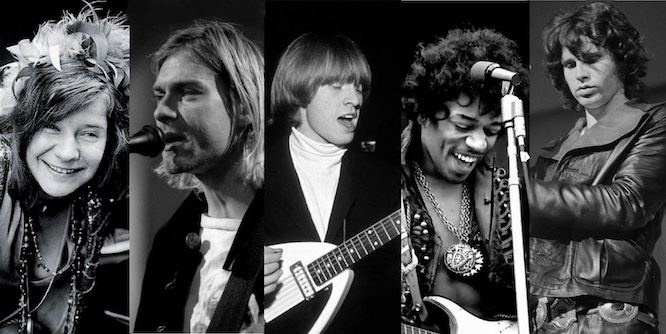
David. “Heroin overdose. Landmark Hotel in L.A.
Twenty-seven years old, just like Kurt Cobain,
Jimi Hendrix—”
“Brian
Jones, Jim Morrison. Gram Parsons. All from drugs,
all the same age. The ‛27 Club.’”
“Weird,
isn’t it?”
“The people
who believe in rock-and-roll myths say so.”
“Senseless
any way you look at it,” said David. 
The great
blues and soul singer Janis Joplin had, in
December of 1968, left Big Brother to form her own
group, the Kozmic Blues Band, but two years later
she was dead. Big
Brother, in fits and starts, continued to perform
without her, trying but failing to replace her
with another female lead singer. As of 2007 the
band was still playing with three of the original
four male members, Sam Andrew, Peter Albin and
Dave Getz.
Katie Cavuto (below) had
been born the year Janis Joplin died but had been
a fan of her music since she was a teenager and
got to enjoy Big Brother around the time they
started touring again in 1987. David, in his
late-fifties was bound more to the music of the
late ‘50s and ‘60s, especially the doo-wop sound
that had come out of the Bronx, where both Katie
and he were born.
 Her
neighborhood, in Pelham Bay, was considerably more
upscale than his, coming from Castle Hill, which
had been in decline after the Cross Bronx
Expressway eviscerated the South Bronx. She went
to Catholic Schools, graduated from Fordham
University and became a widely respected
investigative journalist for McClure’s
Magazine. David
(below) went through parochial school but
joined the NYPD after high school, as his father
had, and distinguished himself as a smart, tough
 cop exposing mob
operations and putting guys like John Gotti behind
bars for life. He retired when he turned fifty.
“By the way, did you see this?” asked
Katie, handing David the New York Post,
whose cover page read,

“Actor Heath Ledger
was found dead today in a Broome Street
apartment, apparently from a drug overdose.
Ledger was well known for his role in
‘Brokeback Mountain,’ and he stars in the
upcoming ‘The Dark Knight’ Batman movie as the
Joker. He split last year from wife,
Michelle Williams, with whom he has a
daughter.”
David said, “Is he that guy who played the
gay cowboy? How old was he?”
“Says he was 28, barely a year older than
the rest of them.”
“And so it goes. Must be a very rough
business to make you want to leave behind a
career, Michelle Williams and a daughter.”
“I wonder if there’s a story in this,” said
Katie, as the doors of the theater opened and the
crowd began to move in.
“About what?” asked David. “The pressures
of being a millionaire movie star? Sounds a little
familiar.”
“Well, I mean, Ledger wasn’t exactly
Marilyn Monroe or even Janis Joplin. Maybe I could
do a collective story on celebs who kill
themselves.”
“It really doesn’t sound like your kind of
story. Where’s the mystery?”
Katie handed the usher her tickets and
said, “I don’t know. Maybe none at all.”
David could tell Katie was already turning
the idea over in her head.
Katie and David had
first met in the mid-‘90s, after he’d retired,
when she asked if he’d assist her in a story about
a search for gold bullion that gangster Al Capone
had supposedly stolen from a Federal Reserve bank.
David had also been along for Katie’s
investigations into criminal activity in the
global art world, a search for a British spy,
child abuse among Irish clergy, a pandemic in
Paris, and the sex and finance scandals mounted by
millionaire sex trafficker Jeffrey Epstein. Some
of those stories won Katie significant journalism
awards, including the Pulitzer Prize. And on each
of their investigations, she and David came close
to losing their lives.
Both
had shared the experiences and culture of being
second generation Italian-Americans—Katie’s father
was a retired judge, her mother a
schoolteacher—and though they were more than
twenty years apart in age, David had always
harbored a deep infatuation with Katie, who had
never married. David had, but his wife had died
while, as a flight attendant, she tried to help
passengers from a burning place at LaGuardia
Airport. That was now twenty years in the past.
David had retired from NYPD in
the early ‘90s, sick of how politicized the
department had become under Mayor Rudy Giuliani,
and moved to a modest house up the Hudson River
not far from West Point. Katie had stayed in the
Bronx, in a pleasant garden apartment near Pelham
Bay. 
Owing to her reputation as an
investigative journalist—her masthead position at
McClure’s, which specialized in such
stories—her
suggestions about what stories to pursue were
always taken seriously by her editor Alan Dobell (below),
who nevertheless made her explain in
depth what made it McClure’s kind of
story. On more than one occasion he was not
convinced, and Katie and David set out on their
own and at their own expense to follow the story.
If it turned out well, Katie and David would be
reimbursed and Katie handsomely paid.
“I’ve been thinking about doing
a story on why so many musicians and celebrities
end up killing themselves with drugs,” she said to
Alan. “Do the drugs let them down? Were they naïve
about what they were using? Was there a common
thread in each of them that drove them to drugs,
something in their family, their DNA?”
“A lot of them came through,”
said Dobell, “like Miles Davis, Michael Jackson,
Brian Wilson—a long list of survivors.”
 Dobell
sat in his usual position with his legs up on his
antiquated desk, one he refused to give up when McClure’s
offices were re-furnished and modernized. His own
reputation was high among colleagues, and he let
his reporters have a long lead—he called it a
leash—but was adamant that McClure’s did
not stray from its mission to do serious long-form
journalism and not be tempted to boost circulation
by putting movie stars and celebrities on the
cover, despite that all magazines were losing
circulation and ads to on-line news sites, even
though most of
them, like the Huffington Post
and Slate were losing money.
“First of all, Katie, “ he
said, “you know we don’t do celebrity stories, and
this sounds more like a think piece than
investigative journalism. You interview some of
those survivors, friends of the ones who died, a
couple of shrinks from NYU, then you spin a story
that proves nothing conclusively.”
“I think a lot of people would
like to read it.” said Katie.
“You know that’s not the main
reason we publish anything. And you know this is a
very, very tough time for magazines with a lot
more resources than we have. The L.A. Times
and Wall Street Journal were both sold off
by the families that had owned them for decades,
and I see that Deutsche Bank is now recommending
clients to sell off their New York Times
stock. For chrissakes, one in five Americans don’t
even believe what they read in the papers. Doing
celebrity stories is only going to add to the
belief that we’re all frivolous and slant the news
to sell papers and magazines, like the National
Enquirer and People. You know
that we’ve been pretty damn aggressive bolstering
our on-line content, but no one’s making money
from that yet. Maybe never.”
Katie had to nod her head and
agree. “I guess you’re right, Alan. Not for us.”
“Why don’t you try pitching it
to Rolling Stone. A story like that’s
right up their alley. I’d let you do it as long as
it doesn't interfere with your work here. Of
course, Rolling Stone pays freelancers
piss compared to your salary here.”
Indeed, because Katie had built
such a high reputation, including a Pulitzer Prize
and others, McClure’s paid her more than
$70,000 annual salary plus
expenses, when magazines like Rolling Stone
and Vanity Fair  were paying less.
“I don’t know,” said Katie,
“I’m not sure I’m even capable of hob-nobbing
within that world. I can only imagine Jann Wenner
(right) testing me and trying to impress me
with how well he knows all the people in
Hollywood. He’d probably bore me to death about
how he and Jimi Hendrix dropped acid together back
in the ‘60s.”
Indeed, Wenner, Rolling
Stone’s founder and publisher, had made a
career out of hanging out and doing massive
amounts of drugs with the likes of Mick Jagger and
Jerry Garcia. In the ‘80s he even had an ad exec
named Laurel Gonzalez who had a side hustle as the
magazine’s in-house drug dealer.
 “Yeah, I missed that part of the ‘60s,”
said Alan. “I was working on a local newspaper in
Biloxi, where we were too busy covering civil
rights stories and the minor league Biloxi
Shuckers. I don’t think the Stones or the Grateful
Dead toured in Mississippi.”
“Well, okay. I see your point, Alan. Back
to the drawing board.”
As
Katie was leaving his office, Dobell said, “Find
something to blow the lid off. But don’t get
killed.”
Katie
sighed and, sounding like Katherine Hepburn, said,
“I will, Mr. Dobell. Really I will.”
❖❖❖
GLUTTONY
Eating
Ourselves Sick
By
John Mariani
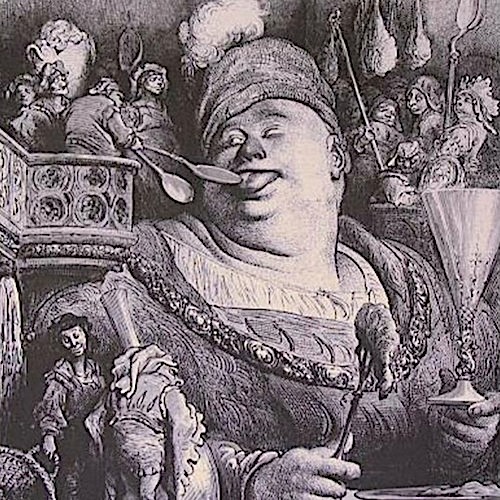
Is gluttony a human aberration? One of
the Seven Deadly Sins? Is it a human trait built
into our DNA from a prehistoric period when lean
times required us to fatten up like birds and
bears in winter?
Or is it a rightful symbol of power among
our leaders, to whom only the best and most of
everything is due?
Or is it a disease like bulimia or an
addiction like alcoholism?
 Gluttony
has long been such an indelible aspect of human
history, but today, with more people having more
access to more food in industrialized societies,
the idea of gluttony has metastasized to the point
of glorification while at the same time it is
considered antithetical to current manias about
health and body image.
Where once gluttony was
regarded as a crime against God, it is now
manifested as a reward for achievement,
exemplified in contemporary media by the
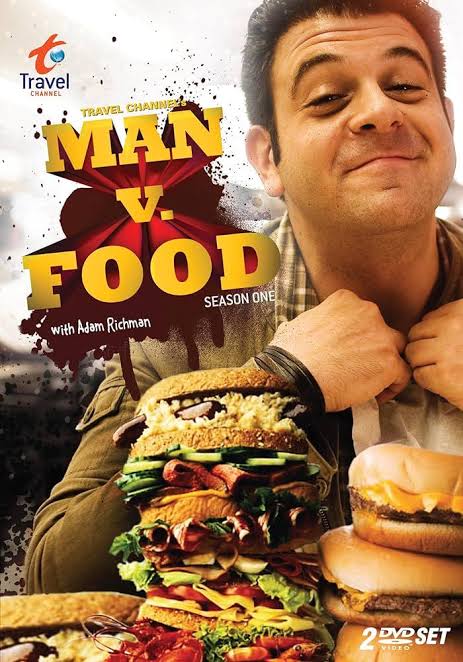
exaltation of astonishing excess in TV food shows
like “Man Vs Food” and “Diners, Drive-ins and
Dives,” wherein the amount of food on a plate is
considered a common man’s triumph over good taste
or any notion of rational, healthful eating. Consider
the humble hamburger, which has grown from a patty
with a slice of American cheese to a Big Mac to a
gargantuan mega-burger via some of America’s
finest chefs, 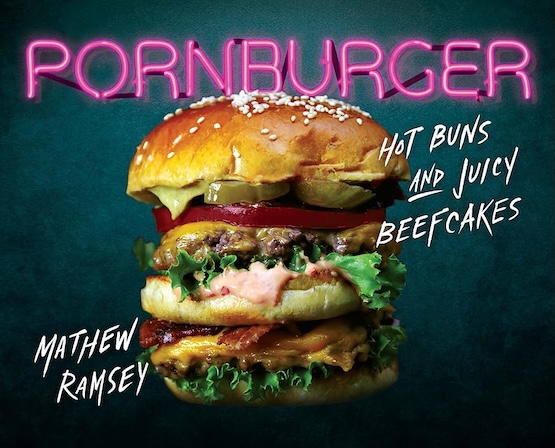 like
Daniel Boulud, who created a $55 “gourmet burger”
with foie gras, truffles and short ribs as a joke
then went on to goad competitors into creating
even more outlandish renditions of what was once a
proletarian food item. It’s no wonder, then, that
in a book entitled PornBurger: Hot Buns and Juicy Beefcakes
(2016) author Matthew Ramsay writes, ““Done well,
a good burger can leave you wanting both a
cigarette and a confessional.”
Which is not really a novel response, for
the association of gluttony and sex has for
millennia been part of their allure, as readily
seen in the Bible as in Petronius’s Satyricon
and the erotic fantasies of the Marquis de Sade or
Fielding’s Tom
Jones. When students on spring break funnel
liquor it has nothing to do with a need for it; it
is solely the intent to get drunk as fast as
possible in order to engage in further
bacchanalian activities.*
*
Even if not connected to gluttony, food
and sex have always been biologically
stimulating. As Peter Farb and George
Armelagos note in Consuming
Passions: The Anthropology of Eating
(1980), a highly sensitive nerve structure
called “Krause’s end bulbs” are found both on
the clitoris and the lips and tongue, which,
according to some neurophysiologists “may
explain why sexual desire and a delicious
aroma both cause the mouth to water.”
 All sins have their prurient
interest but gluttony is now part of a revelry
that includes everything from an outlandishly set
Viennese
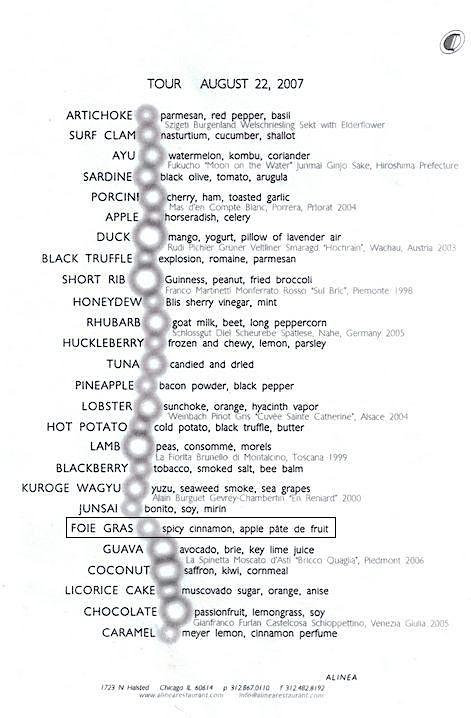
Dessert Table at weddings to the 20-, 30-, even
50-course dinners at modernist restaurants like
Per Se, Alinea and El Bulli. In the increasingly
affluent regions of China, Japan, India, and South
America, extravagant business meals are a way of
gauging executives’ importance and breaking down
one’s client’s reserve.
Not very long ago, when President Herbert
Hoover (referencing a declaration by the16th
century King Henry IV of France, below)  promised
Americans a “chicken in every pot” during the
Great Depression, he was promising a great deal
indeed. But
in postwar America gluttony became a reward for
prior sacrifice and was as much about availability
as it was about flaunting affluence. Then in the
1960s the youth of the counterculture excoriated
their parents’ gluttonous excesses like the
“three-martini lunch,” steak with caviar-loaded
baked potatoes and Mile High chocolate cakes while
exalting Third
World food cultures based on beans and rice both
for their nutritional and communal values.
Nevertheless Americans grew fatter and more
diabetic, not so much from eating steak and
potatoes and drinking red wine as by gorging on
what came to be called “fast food” and “junk
food.” It was the overall abundance and cheapness
of American food that allowed people from all
strata of society to indulge in foods that went
far beyond the idea of having a chicken in every
pot. Excess
on a regular, even daily, basis had changed the
idea of gluttony into the new normal in American
life.
A hundred years ago the Oxford
English Dictionary defined “gluttony” as
“morbid hunger, especially in a maniac or canine,”
a definition that modern science may make wholly
obsolete. Overeating
as a pejorative term will lose all meaning if one
can eat whatever one wishes with no deleterious
effects. For now, when science is on the verge of
turning off or snipping out the gene—called
FTO—that drives appetite or builds fat in the
body, the question arises, will the whole idea of
gluttony become moot if everyone will be able to
eat anything at any time as long as one has the
money to pay for it?
 The
shame in gluttony may persist in entrenched
feelings of guilt, self-abnegation and
exhibitionism, but give a human being a pill that
will let him eat and eat and eat what he wants
when he wants and gluttony becomes little more
than a minor indulgence. Consider
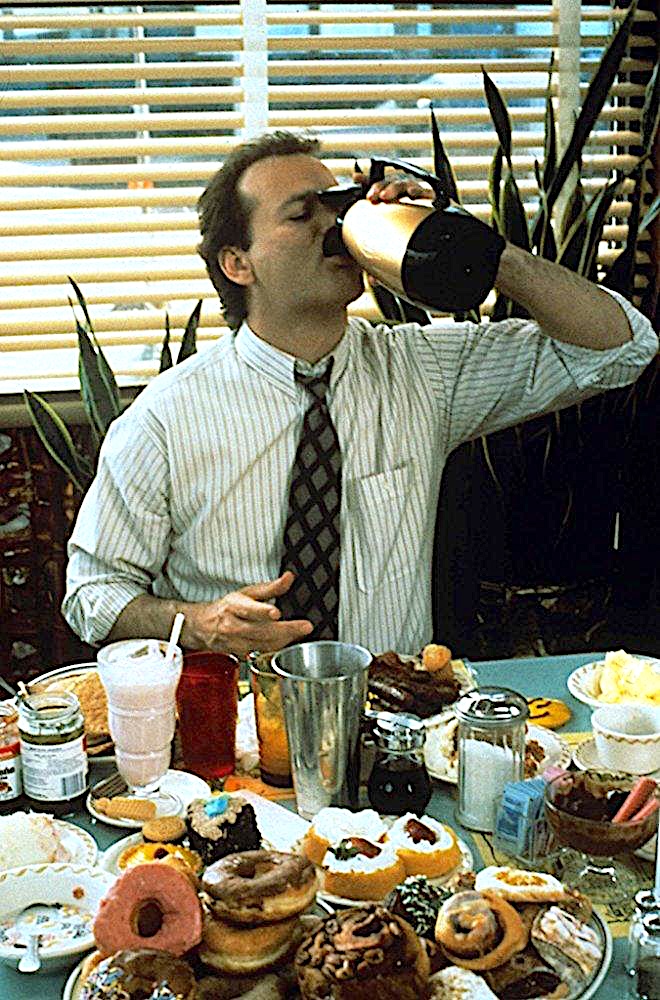
the hero of the film “Ground Hog Day” (left),
who, upon wakening in the morning, repeats and
repeats the day before, realizing he will never
die and so orders everything on a diner menu with
abandon, day after day after day.
In bringing gluttony into the present, my
book examines how what was once a Capital Sin
reserved for a very few eccentrics and elites has
become a common exercise of gourmandism available
to most Americans, rich or poor—something
unthinkable even 50 years ago.
It
would be easy for me to consider at length the way
the word gluttony has been expandable—“a glutton
for punishment,” a “glutton for war”—but such
iterations diverge from my subject and story: The
focus of my book is not about
obesity, which—though not inevitably —is the
result of gluttony, but on the deliberate
ingestion of enormous amounts of food for social
reasons that go beyond mere piggishness.
Gluttony is not a
biological trait: gluttons are not ravenous from a
lack of
food but from an out-of-control desire to take
full advantage of what is
available to them.
How we came to that
point begins in prehistoric times, when the idea
of gluttony was very far from anyone’s mind.
To Be Continued.
❖❖❖
NOTES FROM THE WINE CELLAR
CHAMPAGNE HARVEST OF 2026
LOOKS LIKE A WINNER
By John Mariani
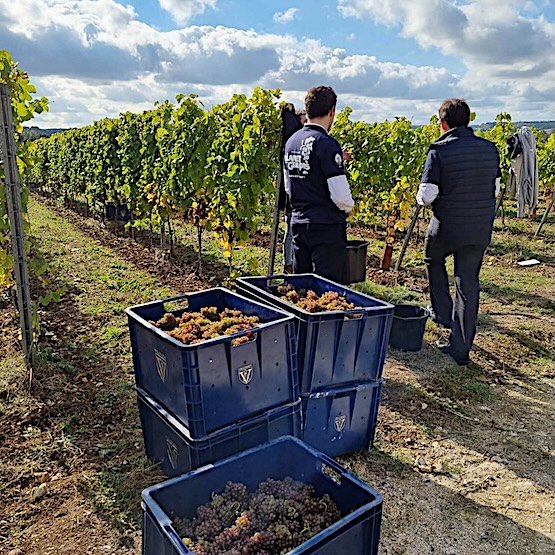
The joint industry trade association
Comité Champagne has announced that the first
assessment of the 2026 crop is extremely
positive, despite exceptional climatic
conditions and moderate yields, and that the
grapes “show outstanding sanitary quality and
very promising balance.”
The Comité was founded in 1941 and promotes
cooperation between the two professional groups,
representing more
than 20,000 winegrowers and 350 Champagne houses.
The growing season was
“atypical,” with severe spring frosts of historic
intensity, an exceptionally early flowering
period, and five heatwave episodes during the
summer. As a result ripening progressed at an
exceptional pace, so that the traditional harvest
ban was announced on August 12, while the first
vineyards had already 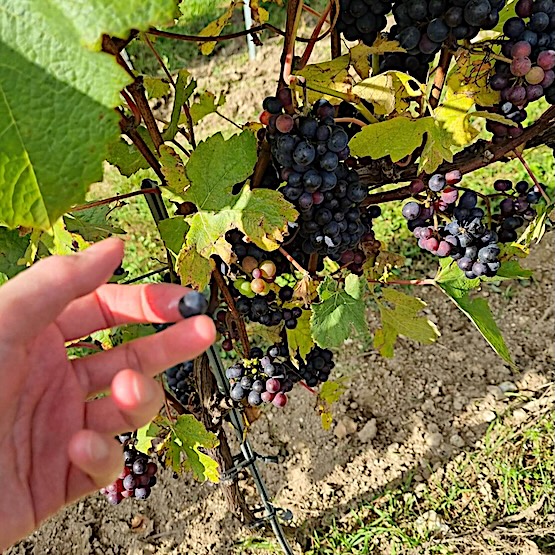 begun
picking as early as August 6. As of August 17
onward, harvesting was well underway everywhere in
the region––two weeks earlier than in 2025, making
2026
harvest the earliest ever recorded in Champagne.
The average agronomic
yields are expected to reach a moderate level,
owing to drought that produced smaller bunch
sizes. Grapes are hardy, adaptable fruit, however,
which naturally protects themselves against
extreme climatic conditions like the sunburn and
scorching effects that had  been feared.
Each year producers
coordinate the “Ensemble pour les vendanges en
Champagne” program in an effort to
anticipate and organize the
reception of nearly 100,000 seasonal workers,” who
were themselves were subjected to the harsh summer
climate, but “specific measures were implemented
to secure harvesting operations during periods of extreme
heat,” so that at the start of the harvest, when
temperatures were at their highest, operators
adapted working hours and strengthened prevention
measures. According to David Chatillon (left),
president of the Union des Maisons de Champagne
and co-president of the Comité Champagne, “Thanks
to the mobilization of the entire Champagne
industry, we successfully brought in this
exceptionally early harvest under very good
conditions, with remarkable quality. This
achievement belongs to the Champagne collective,
whose ability to adapt and respond quickly once
again
proved decisive. The fruit
is beautiful, healthy and ripe. We have all the
ingredients needed to produce Champagne, and
indeed great Champagnes.”
Early tastings of the grapes indicate high
levels of ripeness, but a retention of balance,
freshness, concentration, fruit intensity and
finesse. Manual harvesting of whole bunches and
gentle pressing and meticulous fractioning
preserve the integrity of the grapes and the acid
potential of this particularly ripe vintage.
The news about the 2026 vintage shows how
global warming is increasingly affecting the
area’s viticulture: 2024 was a cool and
wet year; 2025, a warm year; and 2026, very hot.
Although
“It is still too early to make a definitive
assessment of the wines from the 2026 harvest, the
crop already possesses all the attributes needed
to produce great, and potentially very great,
wines,” being compared to historic vintages like
1921, 1947 and 1959.
❖❖❖
 DEPT.
OF TMI:
And the napkins are made of California hemp
whose cultivation requires requires minimal
water and no pesticides, making it an
environmentally friendly choice for weaving,
and can be woven to minimize waste and energy
consumption, further contributing to
sustainable practices.
"The waitress hands us a small, folded
piece of paper with the 12-course tasting menu.
Alongside this we are given a glossary, which is to
help us understand some of the words the staff will
be using. One of those words is: salt. 'More than
seasoning. Salt preserves, extracts moisture,
controls fermentation and shapes texture.'Another
is: koji. 'Koji is a mould traditionally grown on
rice, but here we most often grow it on barley.”'As
the Northumbrian in my life puts it: 'I don’t
remember much koji when I was growing up.' This is
the first sign it’s going to be a rather long
evening."––Camilla Long,
“Waterhouse,” Times (9/6/26).
❖❖❖
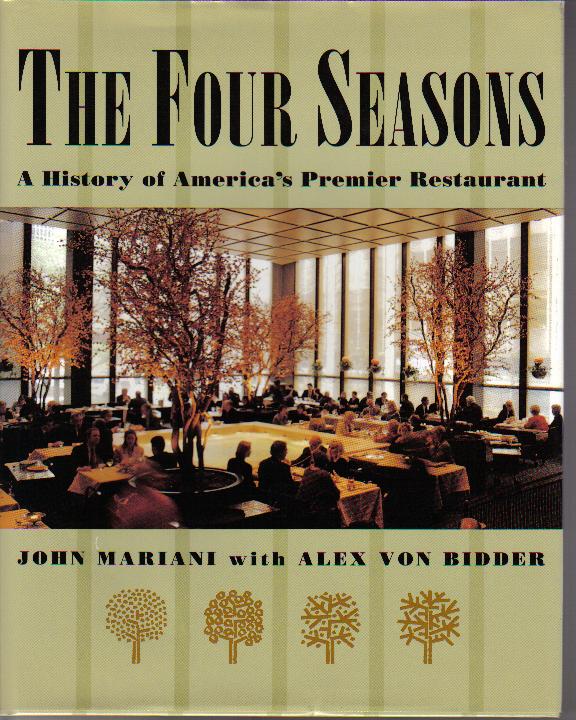
Any of John Mariani's books below may be ordered from amazon.com.
 The Hound in Heaven
(21st Century Lion Books) is a novella, and
for anyone who loves dogs, Christmas, romance,
inspiration, even the supernatural, I hope you'll find
this to be a treasured favorite. The story
concerns how, after a New England teacher, his wife and
their two daughters adopt a stray puppy found in their
barn in northern Maine, their lives seem full of promise.
But when tragedy strikes, their wonderful dog Lazarus and
the spirit of Christmas are the only things that may bring
his master back from the edge of despair.
WATCH THE VIDEO!
“What a huge surprise turn this story took! I was completely stunned! I truly enjoyed this book and its message.” – Actress Ali MacGraw
“He had me at Page One. The amount of heart, human insight, soul searching, and deft literary strength that John Mariani pours into this airtight novella is vertigo-inducing. Perhaps ‘wow’ would be the best comment.” – James Dalessandro, author of Bohemian Heart and 1906.
“John Mariani’s Hound in Heaven starts with a well-painted portrayal of an American family, along with the requisite dog. A surprise event flips the action of the novel and captures us for a voyage leading to a hopeful and heart-warming message. A page turning, one sitting read, it’s the perfect antidote for the winter and promotion of holiday celebration.” – Ann Pearlman, author of The Christmas Cookie Club and A Gift for my Sister.
“John Mariani’s concise, achingly beautiful novella pulls a literary rabbit out of a hat – a mash-up of the cosmic and the intimate, the tragic and the heart-warming – a Christmas tale for all ages, and all faiths. Read it to your children, read it to yourself… but read it. Early and often. Highly recommended.” – Jay Bonansinga, New York Times bestselling author of Pinkerton’s War, The Sinking of The Eastland, and The Walking Dead: The Road To Woodbury.
“Amazing things happen when you open your heart to an animal. The Hound in Heaven delivers a powerful story of healing that is forged in the spiritual relationship between a man and his best friend. The book brings a message of hope that can enrich our images of family, love, and loss.” – Dr. Barbara Royal, author of The Royal Treatment.
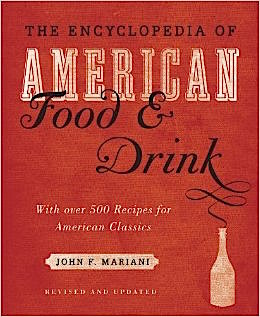 |
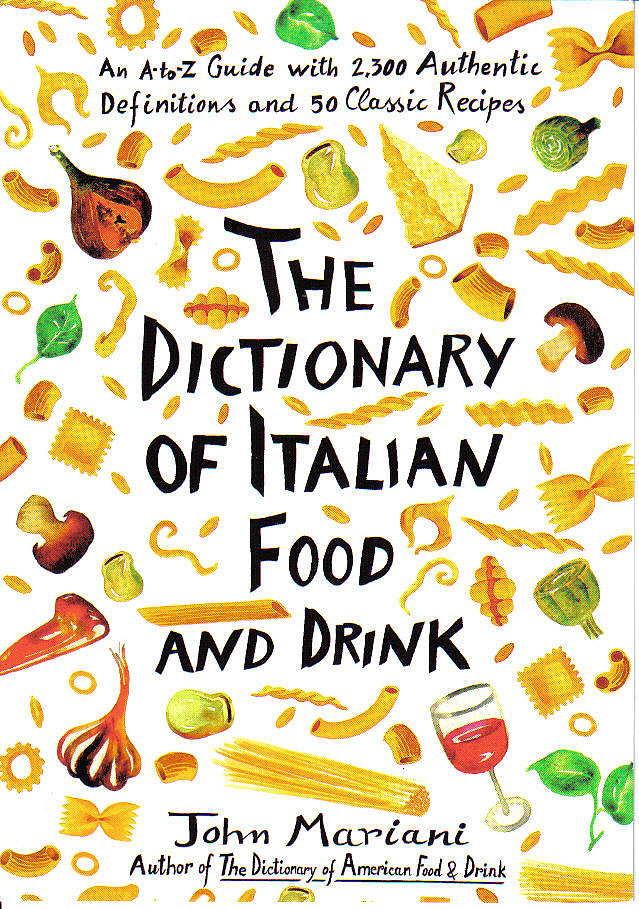
The Encyclopedia of American Food and Drink by John F. Mariani (Bloomsbury USA, $35) Modesty forbids me to praise my own new book, but let me proudly say that it is an extensive revision of the 4th edition that appeared more than a decade ago, before locavores, molecular cuisine, modernist cuisine, the Food Network and so much more, now included. Word origins have been completely updated, as have per capita consumption and production stats. Most important, for the first time since publication in the 1980s, the book includes more than 100 biographies of Americans who have changed the way we cook, eat and drink -- from Fannie Farmer and Julia Child to Robert Mondavi and Thomas Keller. "This book is amazing! It has entries for everything from `abalone' to `zwieback,' plus more than 500 recipes for classic American dishes and drinks."--Devra First, The Boston Globe. "Much needed in any kitchen library."--Bon Appetit. |
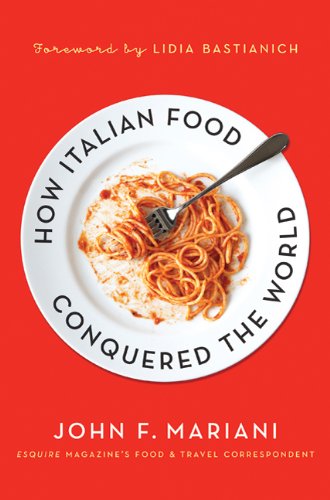
"Eating Italian will never be the same after reading John Mariani's entertaining and savory gastronomical history of the cuisine of Italy and how it won over appetites worldwide. . . . This book is such a tasteful narrative that it will literally make you hungry for Italian food and arouse your appetite for gastronomical history."--Don Oldenburg, USA Today. "Italian
restaurants--some good, some glitzy--far
outnumber their French rivals. Many of
these establishments are zestfully described
in How Italian Food Conquered the World, an
entertaining and fact-filled chronicle by
food-and-wine correspondent John F.
Mariani."--Aram Bakshian Jr., Wall Street
Journal.
"Equal parts
history, sociology, gastronomy, and just
plain fun, How Italian Food Conquered the
World tells the captivating and delicious
story of the (let's face it) everybody's
favorite cuisine with clarity, verve and
more than one surprise."--Colman Andrews,
editorial director of The Daily
Meal.com. "A fantastic and fascinating
read, covering everything from the influence
of Venice's spice trade to the impact of
Italian immigrants in America and the
evolution of alta cucina. This book will
serve as a terrific resource to anyone
interested in the real story of Italian
food."--Mary Ann Esposito, host of PBS-TV's
Ciao
Italia. "John Mariani has written the
definitive history of how Italians won their
way into our hearts, minds, and
stomachs. It's a story of pleasure over
pomp and taste over technique."--Danny Meyer,
owner of NYC restaurants Union Square
Cafe, The Modern, and Maialino.
|
 |
 |
 |
 |
 |
 |
MARIANI'S VIRTUAL GOURMET
NEWSLETTER is published weekly. Publisher: John Mariani. Editor: Walter Bagley. Contributing Writers: Christopher
Mariani, Misha Mariani, John A. Curtas, Gerry Dawes, Geoff Kalish.
Contributing
Photographer: Galina Dargery. Technical
Advisor: Gerry
McLoughlin.
If you wish to subscribe to this
newsletter, please click here: http://www.johnmariani.com/subscribe/index.html
© copyright John Mariani 2026